Last Updated June 15th, 2023 at 09:53 pm by Lisa
Unleash the Ultimate Flavor: How to Make a Twice Smoked Spiral Cut Ham
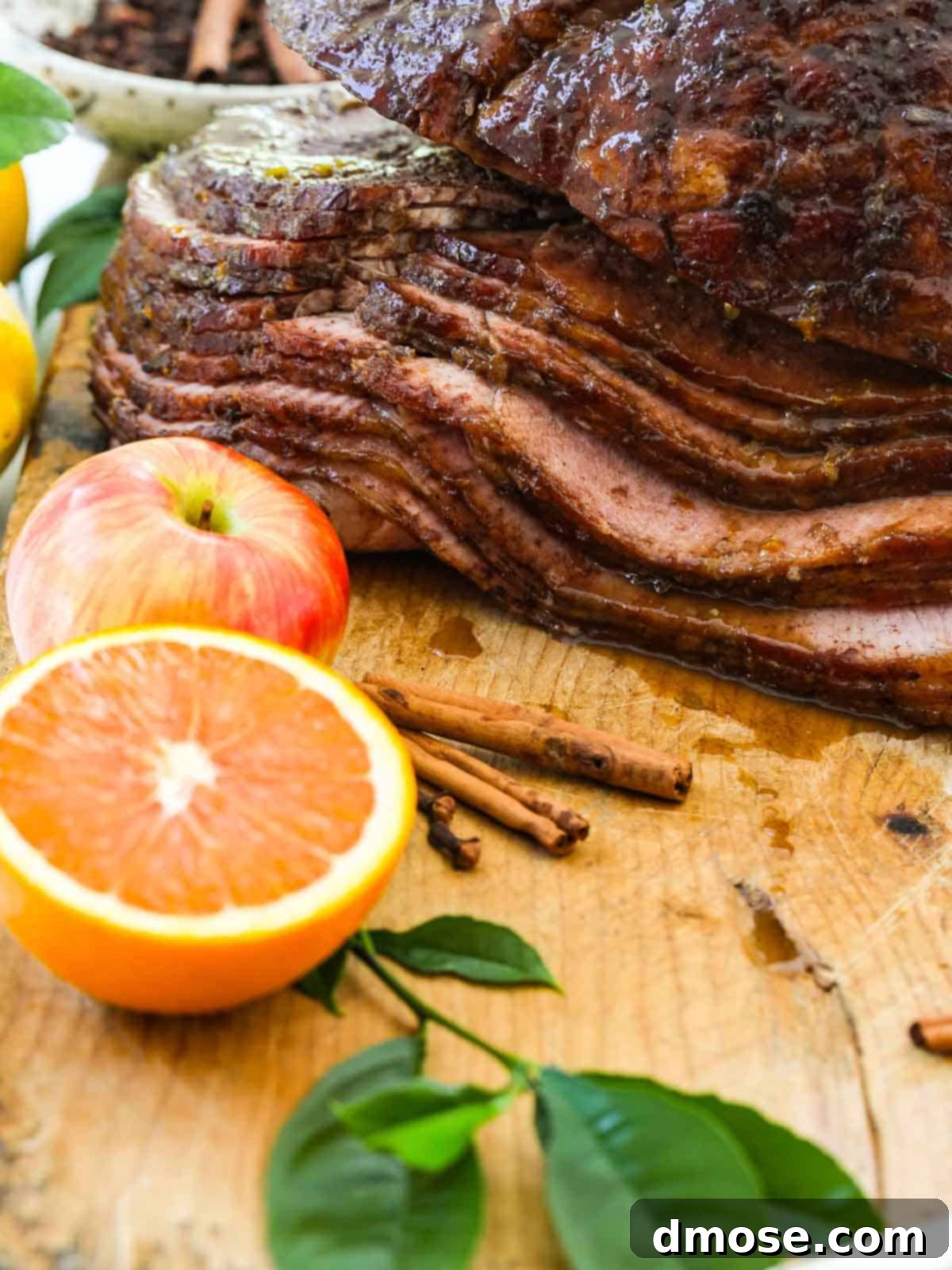
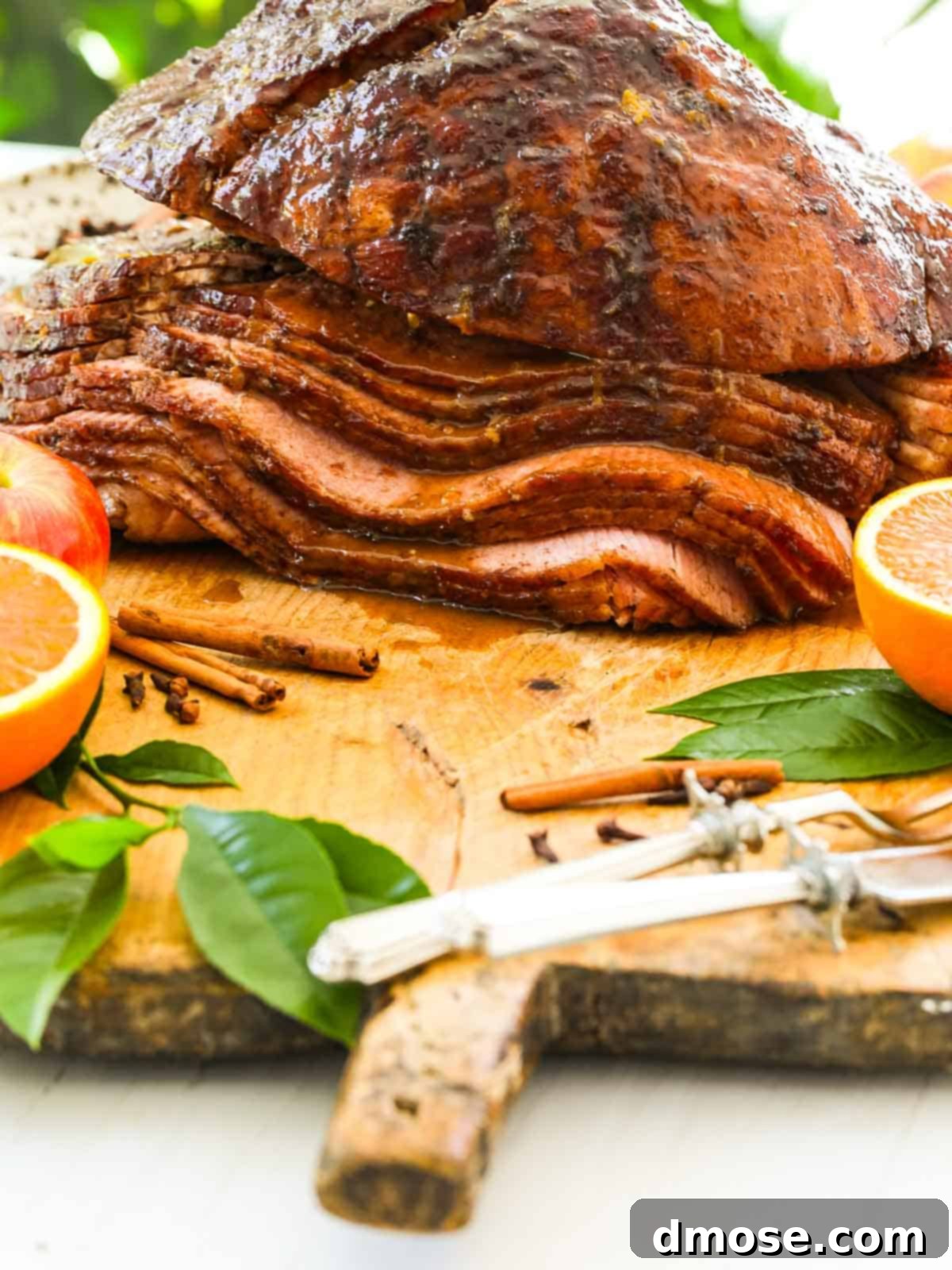
Transform your holiday feast or any special occasion into an unforgettable culinary experience with a show-stopping twice smoked spiral cut ham. This isn’t just any ham; it’s a masterpiece crafted just like a smokehouse pit boss would prepare it. Each slice boasts an incredible depth of smoky flavor, perfectly complemented by a vibrant, sweet, and tangy apple cider orange honey glaze. Get ready to impress your guests with a ham that goes far beyond the ordinary, delivering unparalleled succulence and a rich, complex taste.
This exceptional double-smoked ham recipe is a game-changer for major holidays such as Easter dinner, Thanksgiving, or Christmas. However, its irresistible charm isn’t limited to seasonal gatherings; it’s equally perfect for any celebratory meal throughout the year. One of the greatest practical advantages of preparing your ham in a smoker is the liberation of precious oven space. This allows you to effortlessly bake other side dishes, desserts, or roasts without the usual holiday kitchen juggle. The reward? A truly glorious ham, deep in flavor, tender to the bone, and an instant centerpiece for your dining table.
Imagine a leisurely weekend, the gentle plume of aromatic smoke wafting from your smoker, carrying promises of deliciousness. You’re out there, periodically basting the ham with its sweet, tangy glaze, watching it slowly transform into a beautiful, caramelized wonder. The anticipation builds with every passing hour, a true testament to the “low and slow” cooking philosophy that yields such extraordinary results. This isn’t just cooking; it’s an art form, a sensory journey that culminates in the perfect holiday ham.
Why Double Smoke a Ham? Unlocking Deeper Flavor and Juiciness
You might be asking, “Since most hams are already cured, smoked, and fully cooked, why go through the effort of double smoking?” This is an excellent question, and the answer is elegantly simple: we are relentlessly chasing that perfect, profound smoky flavor! Store-bought pre-cooked hams often undergo a minimal smoking process, or sometimes are merely injected with liquid smoke flavoring. While convenient, this approach often leaves much to be desired in terms of authentic, deep smoke penetration and complex flavor development.
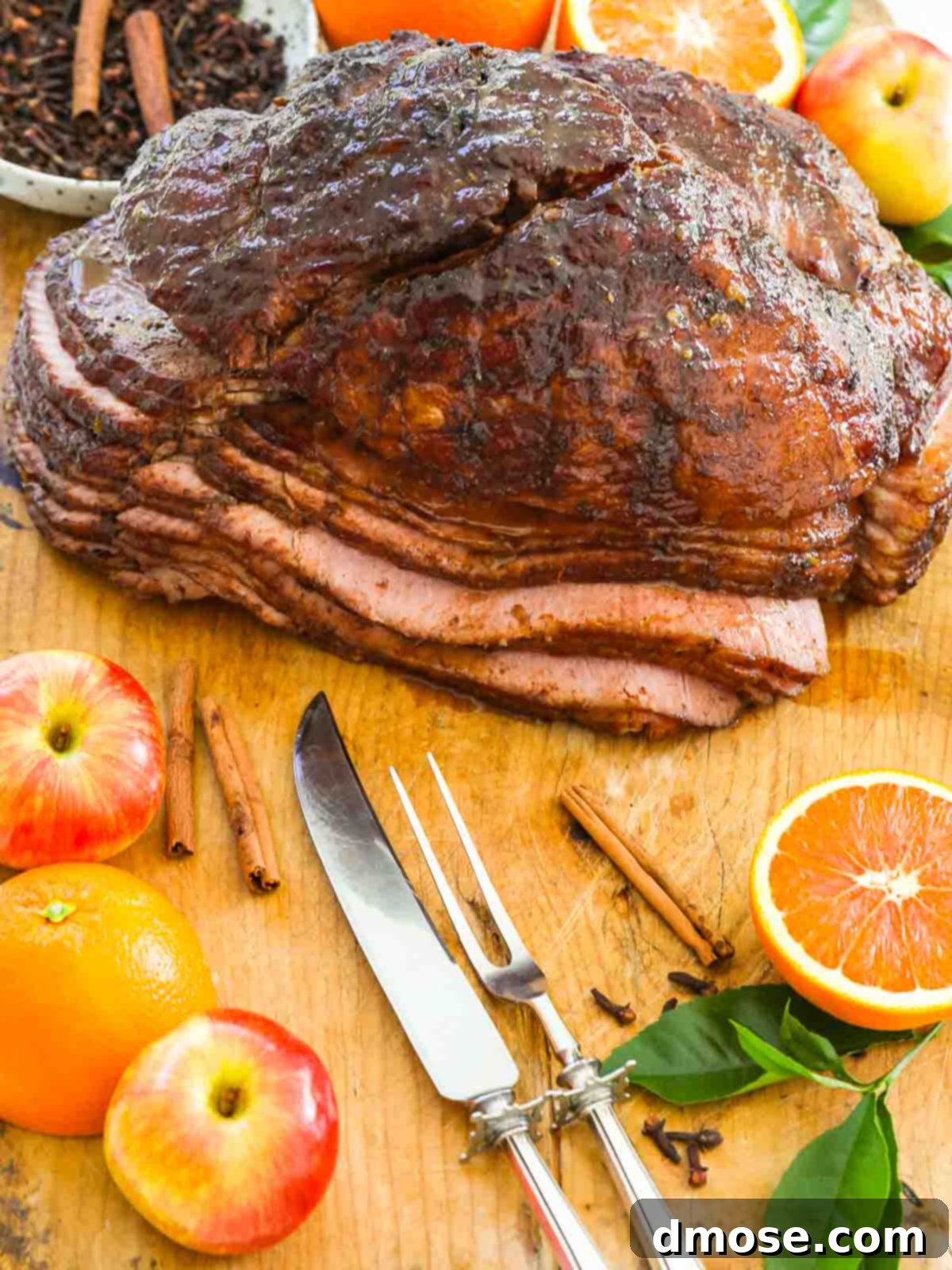
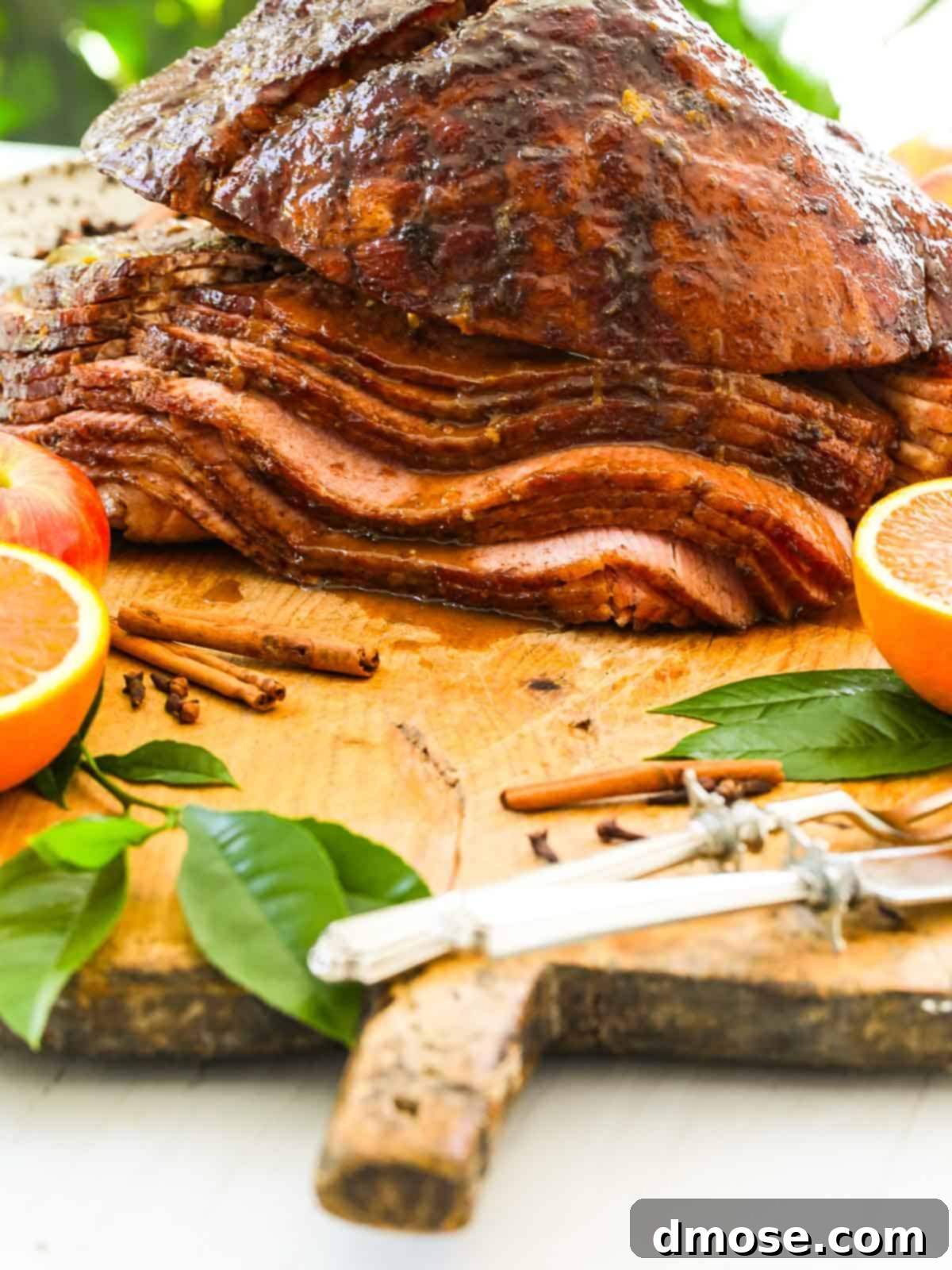
Double smoking elevates an already good ham to an entirely new level. The second round of low and slow smoking infuses the meat with a fresh, aromatic smoke that penetrates deeper into the ham’s spiral cuts. This process doesn’t just add flavor; it also gently reheats the ham, helping to tenderize it even further and render some of the fat, contributing to an incredibly juicy texture. Moreover, the sustained low heat allows the meticulously crafted apple cider orange honey glaze to caramelize beautifully, forming a delicious, sticky “bark” on the exterior that enhances every bite. This multi-layered process creates a ham with a richness and complexity that a basic brown sugar glaze and quick oven bake simply cannot replicate.
The entire double-smoking process, from preparation to resting, does require a bit of time and patience. However, every minute invested is profoundly rewarded with an extraordinary flavor profile and succulent texture that you’ll never find in a standard spiral ham package. The difference is truly astounding, turning a simple meal into a memorable culinary event.
PRO TIP: Planning for Your Feast: When calculating how much ham you’ll need, aim for approximately ½ pound of bone-in spiral ham per guest to ensure plenty for everyone and a few delightful leftovers!
Mastering the Art: How to Make a Double Smoked Ham
Crafting a truly spectacular double-smoked ham is a rewarding process that combines the right ingredients with a careful smoking technique. Here’s everything you need to know to achieve pit boss-level results in your own backyard.
Ingredients for Your Smoked Ham
- 1 large spiral-cut ham (ensure it’s pre-smoked and bone-in for the best flavor and moisture)
The Signature Smoked Ham Glaze Recipe
This unique glaze is the secret weapon for an unforgettable flavor, balancing sweetness with a zesty tang and warming spices.
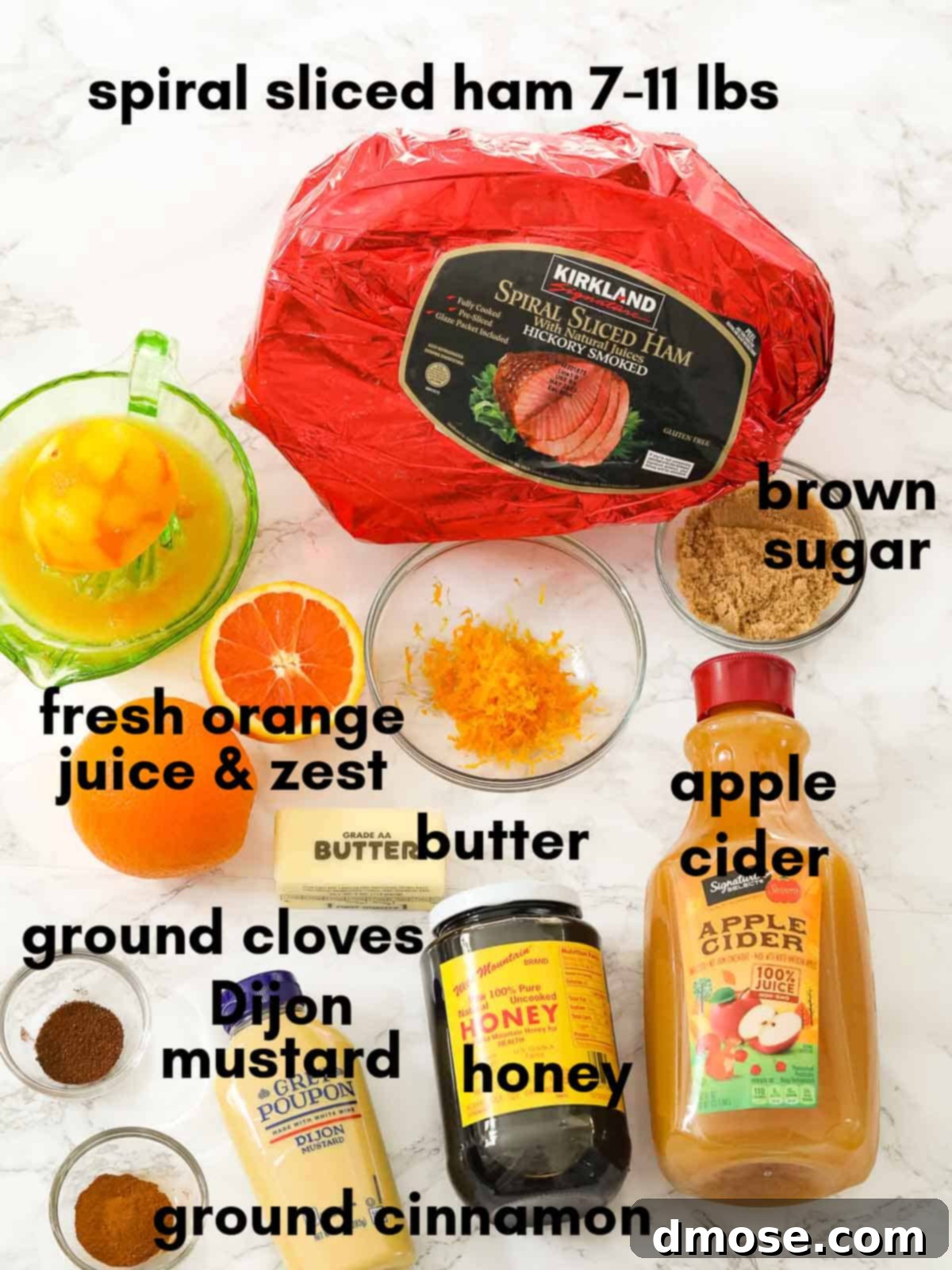
- ¼ cup melted butter
- ½ cup brown sugar (packed)
- ¼ cup honey (local honey adds a nice touch)
- 2 tablespoons Dijon mustard (adds a subtle, savory kick)
- 1 whole orange (you’ll need both the zest and the fresh juice)
- 2 cups apple cider (for depth and moisture)
- 1 teaspoon ground cinnamon
- 1 teaspoon ground cloves
Preparing Your Smoker and Ham
- Bring Ham to Room Temperature: The first crucial step for even cooking and optimal smoke penetration is to remove your ham from the refrigerator and allow it to sit at room temperature for at least 1-2 hours while you prepare your smoker and glaze. Placing a cold ham directly into a hot smoker can lead to uneven heating and a less effective smoke infusion.
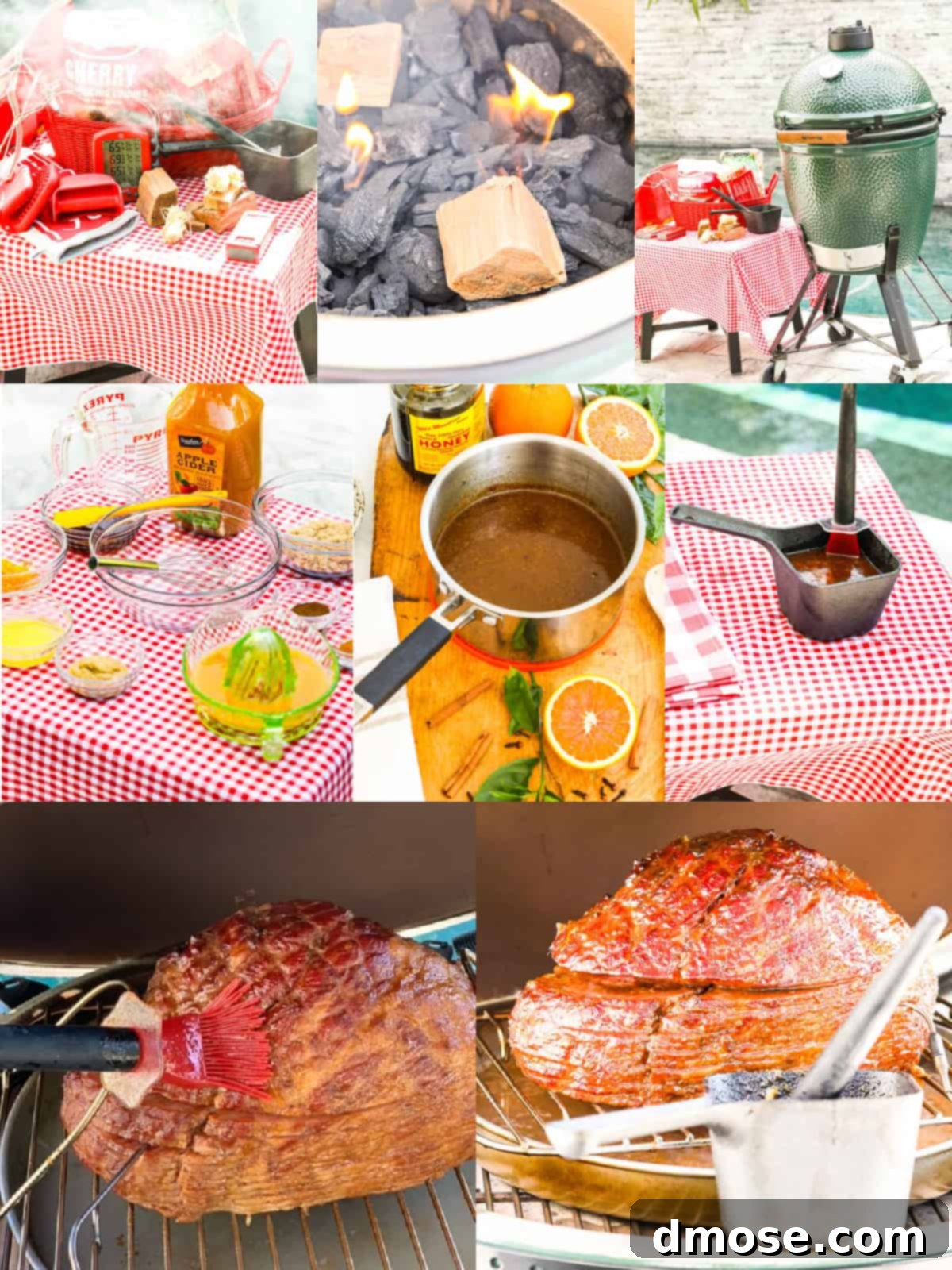
- Preheat Your Smoker: This recipe is specifically designed and tested for various types of dedicated smokers, utilizing indirect heat for a superior result. While some enthusiasts successfully adapt this to gas or charcoal grills (see below for more on grill smoking), for the authentic “pit boss” experience, a dedicated smoker is recommended. Preheat your smoker to a consistent low temperature of 250-275 degrees Fahrenheit.
- Choose Your Wood Wisely: For fuel, we’re using high-quality hardwood lump charcoal as the base. To impart that signature smoky essence, add a couple of small chunks of fruitwood, such as cherry or apple. These woods offer a milder, sweeter smoke that beautifully complements the ham and its glaze without overpowering it. Hickory or pecan are also excellent choices for a slightly bolder, nuttier flavor profile.
- Kamado Grill Specifics: If you’re using a Big Green Egg (BGE) or another Kamado-style ceramic grill, please refer to the dedicated section below for detailed setup tips to achieve perfect temperature control.
Crafting the Perfect Apple Cider Orange Honey Glaze
This glaze is incredibly flavorful and easy to prepare, making it an essential component of your twice-smoked ham.
- Combine and Cook: In a small saucepan, melt the butter over medium heat. Once melted, add the brown sugar, honey, Dijon mustard, the zest and juice of one whole orange, apple cider, ground cinnamon, and ground cloves.
- Whisk to Simmer: Continually stir the glaze ingredients with a whisk over medium to medium-high heat. Whisking ensures the sugar dissolves evenly and prevents burning. Cook just until the mixture comes to a gentle boil, then immediately remove it from the heat. The goal is a syrupy consistency, not a thick paste.
- Adjust Consistency (if needed): If your glaze appears too thick to brush easily, simply add a tablespoon or two of warm water or additional apple cider. Stir until you reach a smooth, brush-able consistency that will adhere beautifully to the ham.
The Smoking Process: Getting That Deep Flavor
This is where the magic happens! Proper setup ensures even smoke circulation and a moist, flavorful ham.
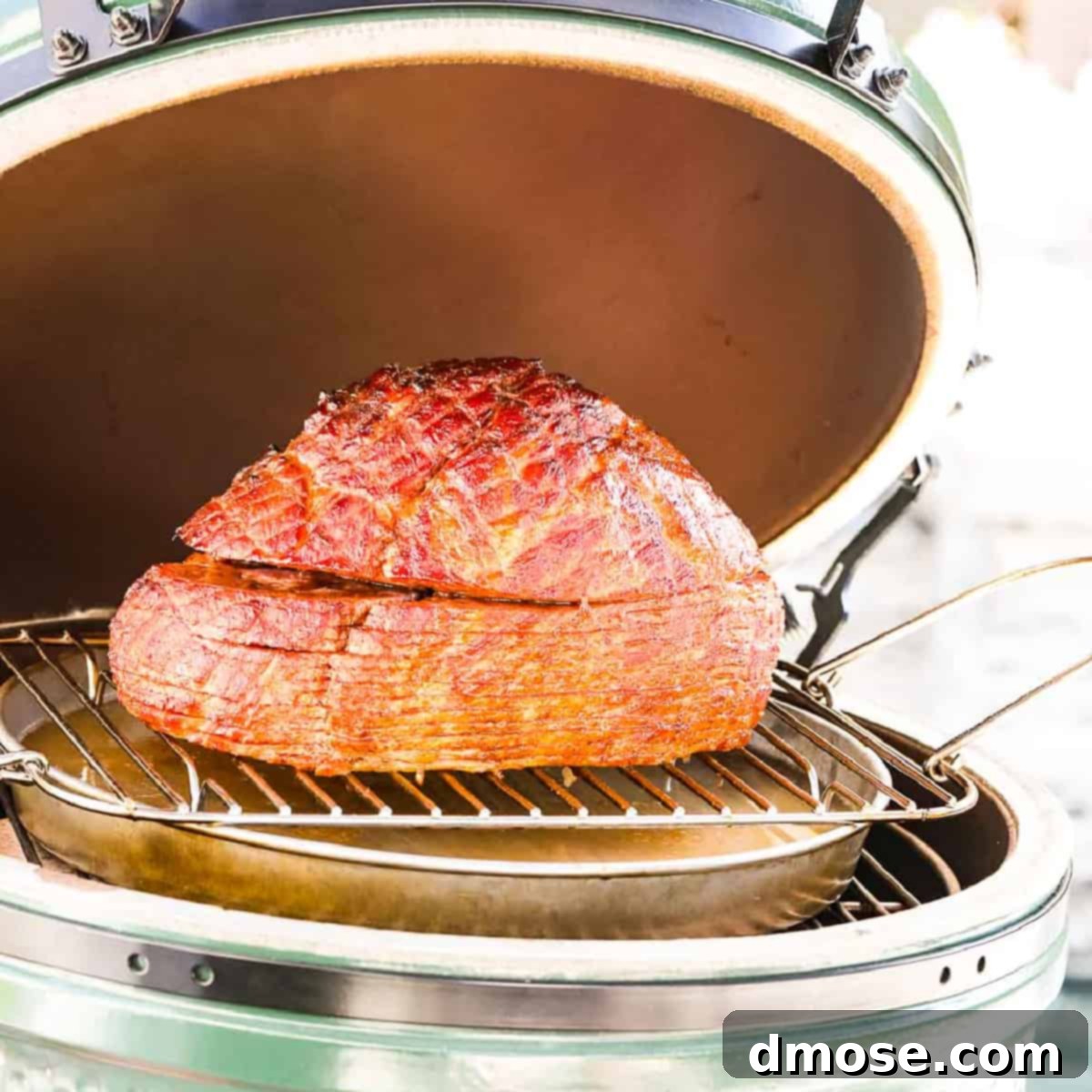
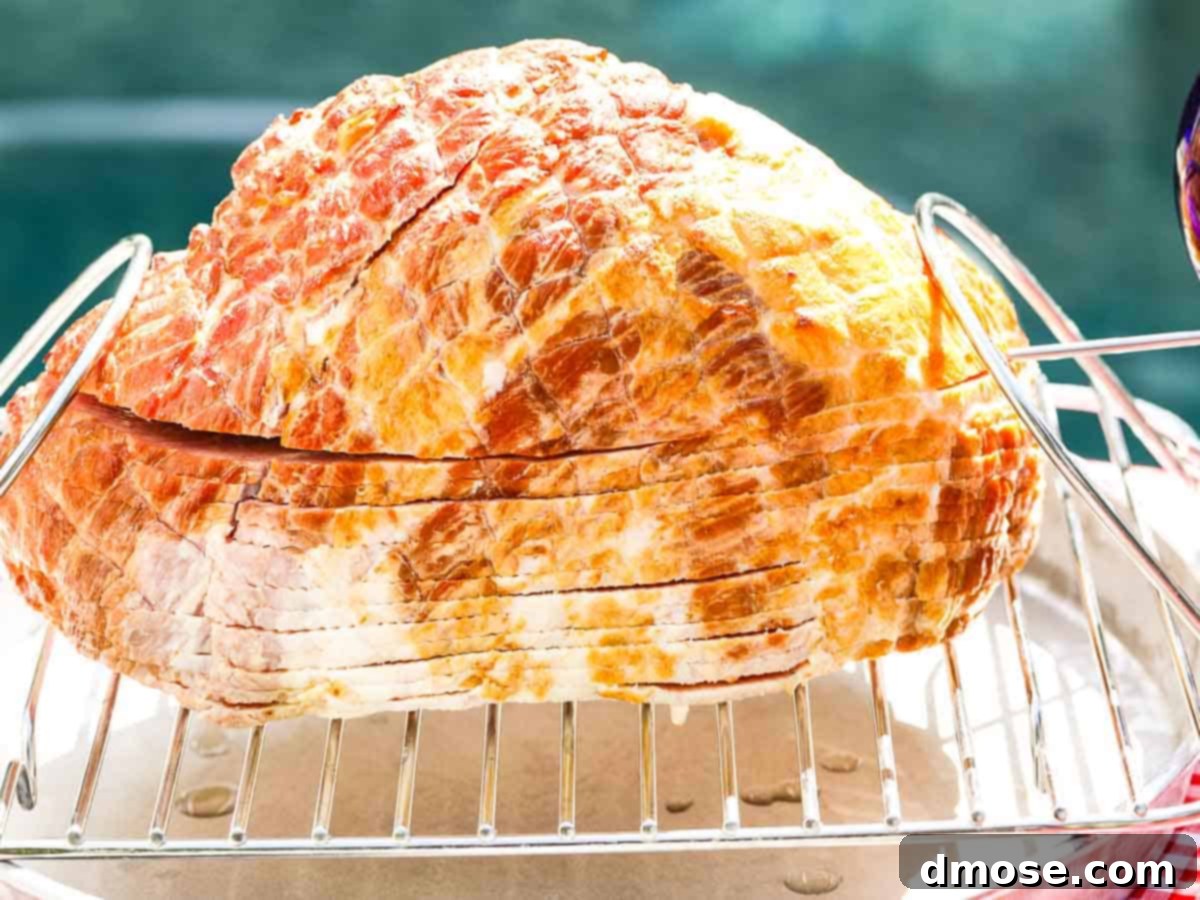
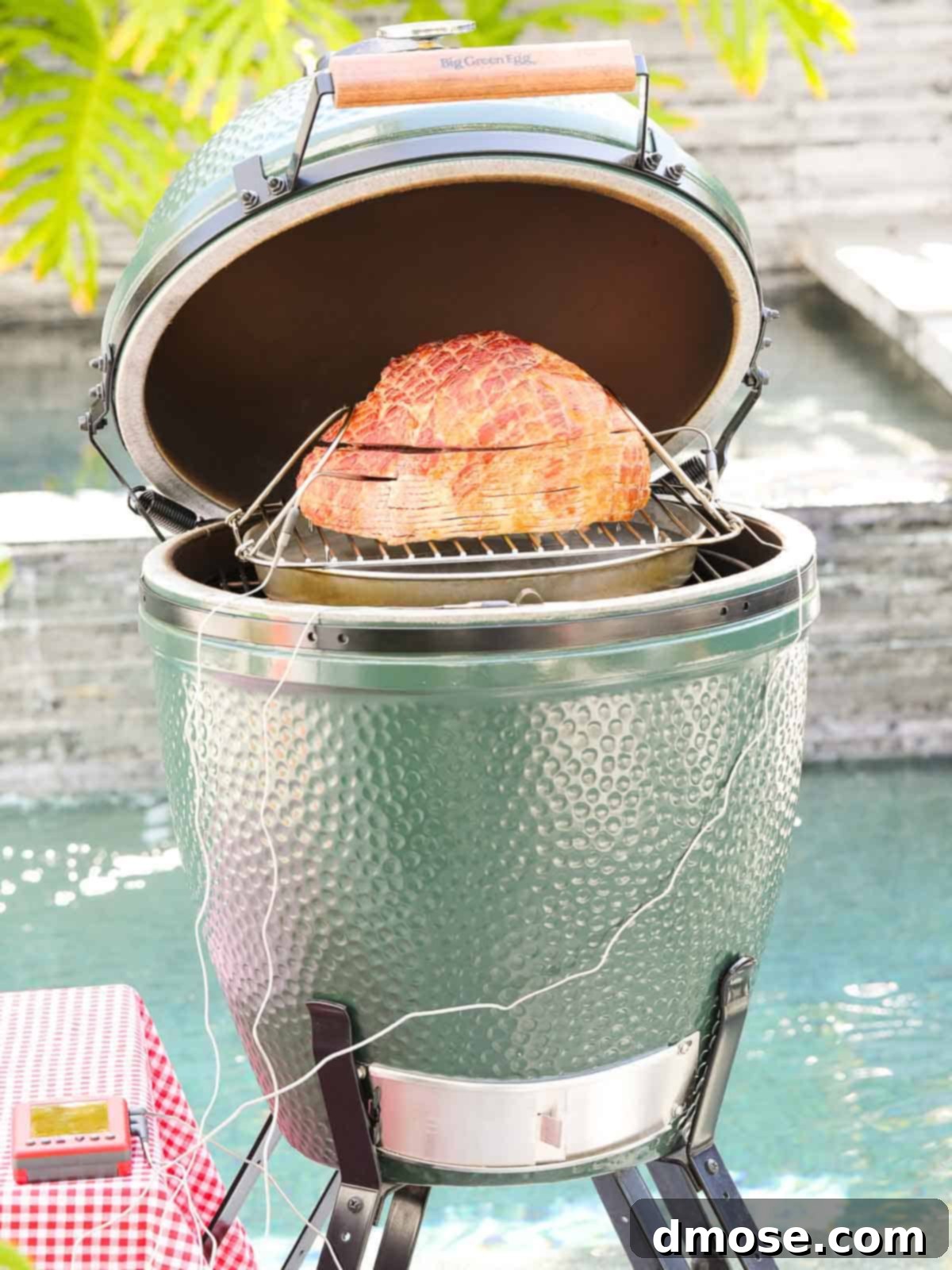
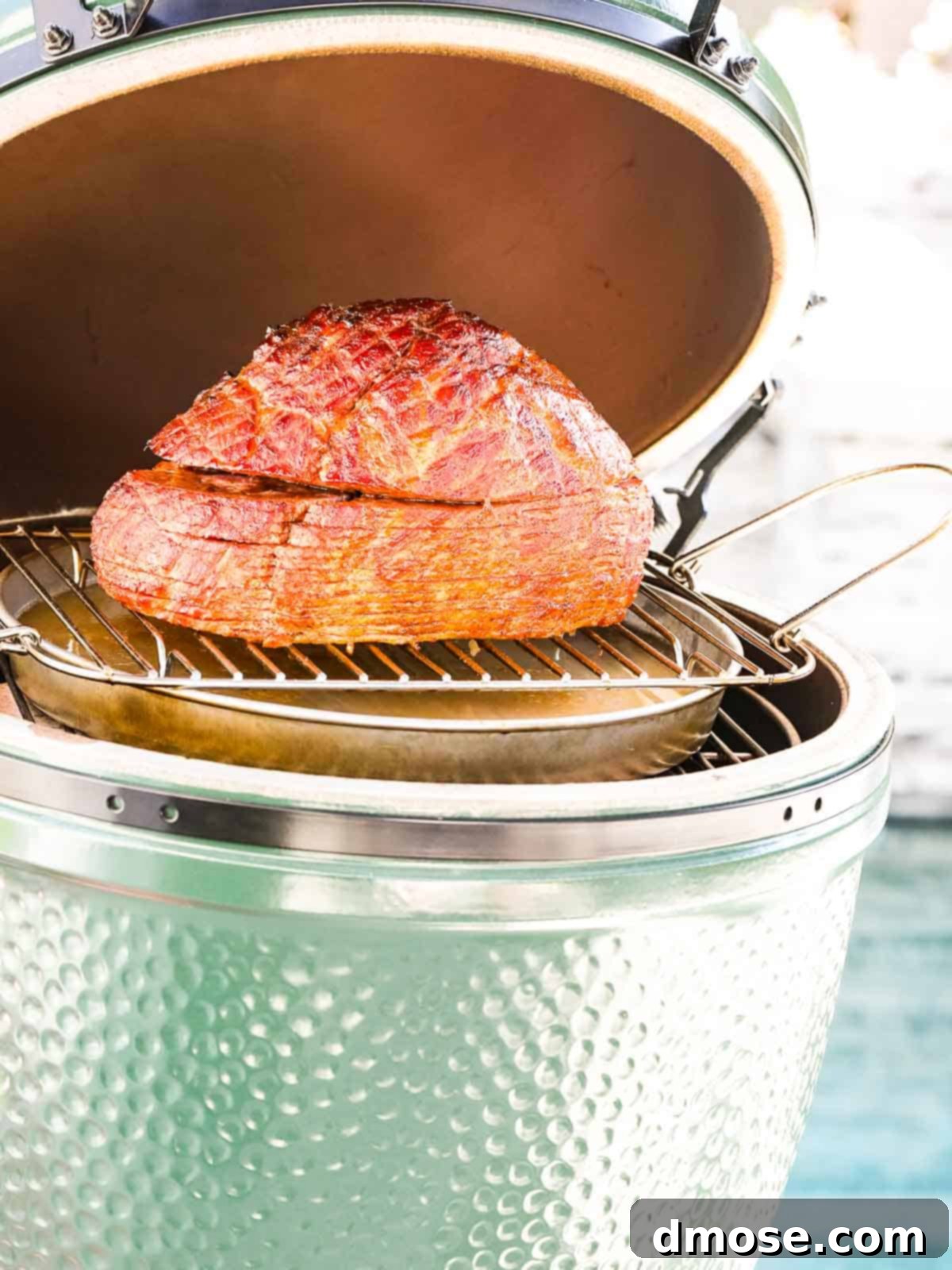
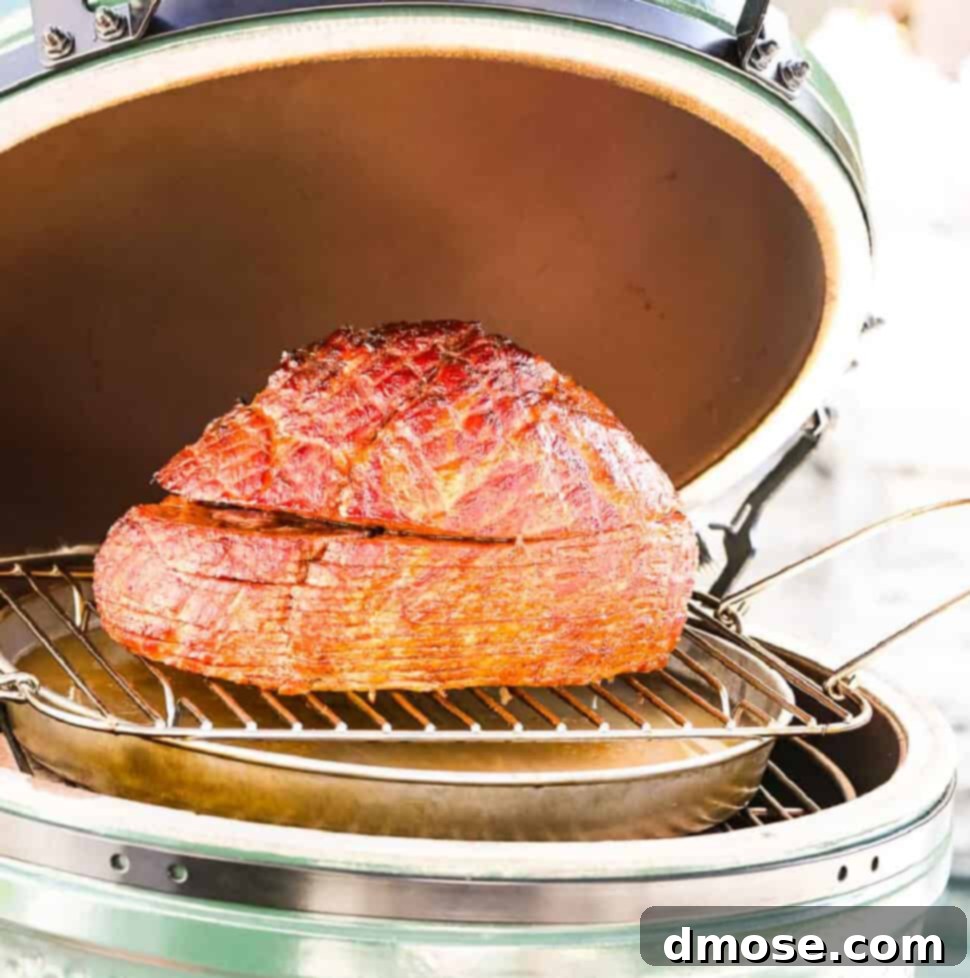
Setup for Success: Place your spiral-cut ham flat side down on a sturdy baking rack. This rack should then be placed over a robust pan (a deep-dish round pizza pan, a shallow low roasting pan, or a large cast iron skillet works perfectly) filled with about ½ inch of warm water. The rack is critical as it allows the smoke to circulate completely around the entire ham, ensuring every surface gets that beautiful smoky infusion. The water in the pan also plays a vital role in maintaining humidity within the smoker, which translates to a juicier ham and helps the smoke adhere better to the meat.
Precision Smoking: Controlling Your Smoker & Meat Temperature
Accuracy is paramount in smoking. Investing in a reliable thermometer system is non-negotiable for tender, safe, and perfectly cooked meat.
Monitor with Confidence: If you’re using a wireless probe thermometer (highly recommended for smoking), carefully insert the probe into the thickest part of the ham, ensuring it doesn’t touch the bone. The bone conducts heat differently and can give an inaccurate reading. Once your smoker temperature has stabilized at the desired 250-275 degrees Fahrenheit, carefully open the lid, place the pan with the ham inside, and quickly close the lid to minimize heat loss.
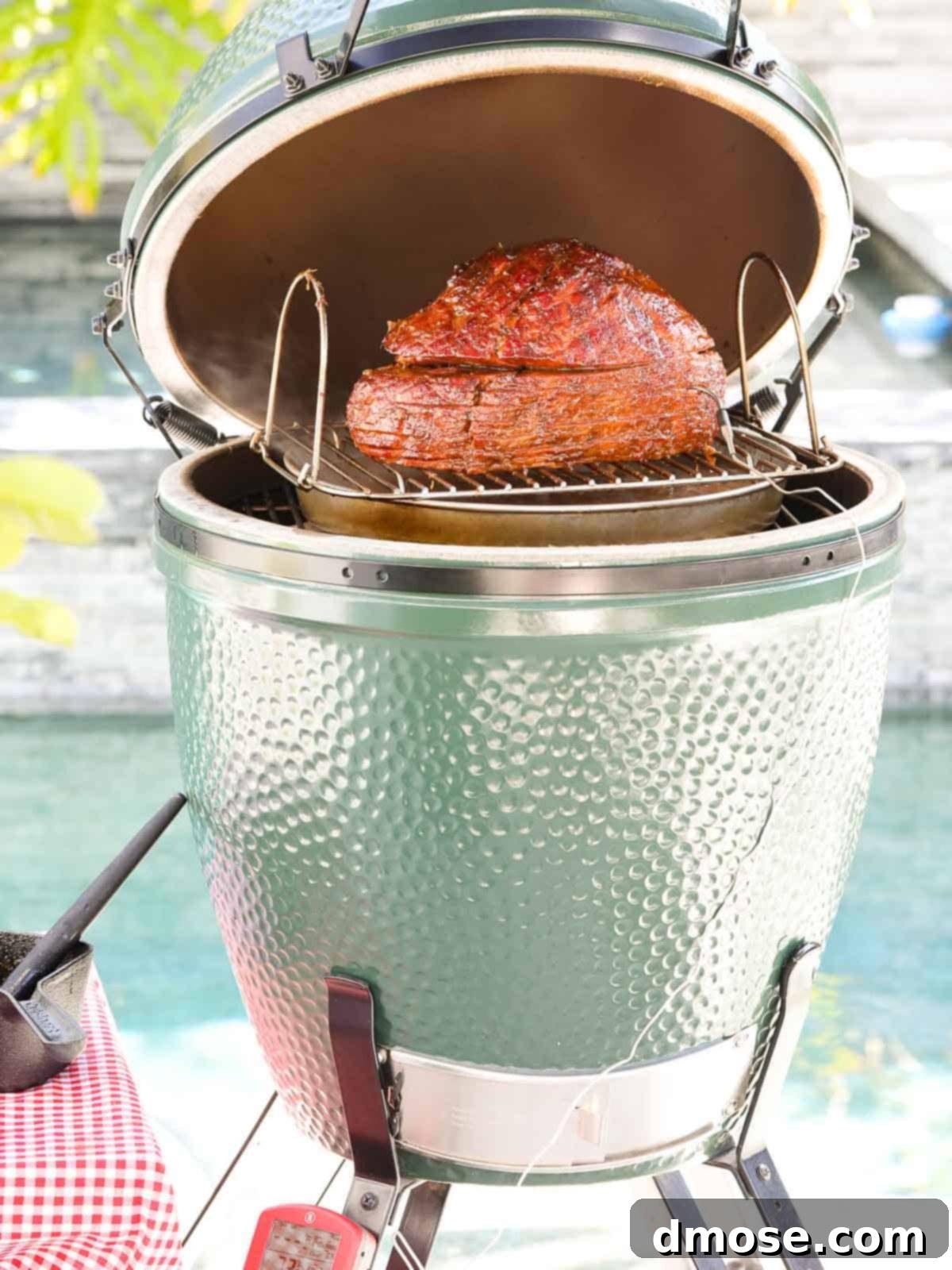
The Glazing Schedule: Allow the ham to smoke undisturbed for 1 hour. After the initial hour, it’s time to begin basting! Liberally brush your prepared orange honey glaze all over the top and exposed sides of the ham. Continue to reapply the glaze every 30-45 minutes throughout the remainder of the smoking process. This layering of glaze builds a beautiful, caramelized crust and infuses deep, complex flavor into every bite.
How Long Does It Take to Smoke a Ham?
The total smoking time will vary based on the size of your ham and the consistency of your smoker’s temperature. A general guideline is to smoke the ham for approximately 20 minutes per pound.
For example, a typical 10-pound spiral-cut ham will require about 3.5 hours of smoking time. However, remember that you are always cooking to an internal temperature, not strictly to a clock. The ultimate goal is for the ham’s internal temperature to reach 140 degrees Fahrenheit on a reliable meat thermometer. Since the ham is already pre-cooked, this final temperature ensures it is perfectly warmed through, juicy, and safe to serve.
Storing and Freezing Leftover Ham
One of the many joys of making a large, delicious ham is the abundance of leftovers! Proper storage ensures you can enjoy your smoked ham for days or even months to come.
Refrigeration: Once the ham has cooled, slice the meat off the bone using a sharp knife. Store the ham slices in airtight containers or zip-top bags in the refrigerator. It will remain fresh and delicious for 3-5 days.
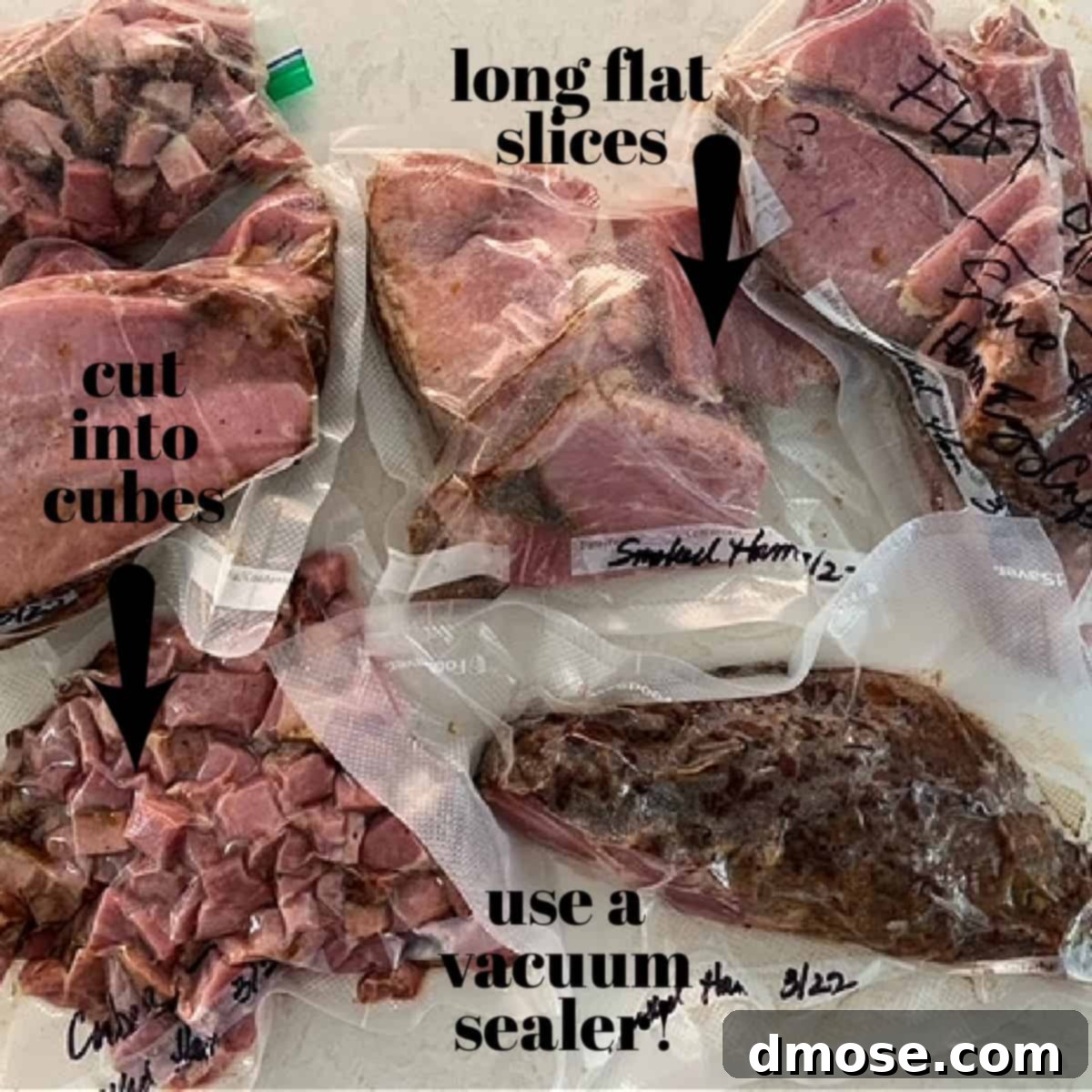
Freezing for Long-Term Storage: For longer storage, freezing is an excellent option. Place ham slices or cubes into freezer-safe zip-top bags, removing as much air as possible, or use a foodsaver vacuum sealer for optimal preservation. Frozen ham will maintain its quality for up to 2 months. Be sure to label and date your packages.
Versatile Leftover Ideas: These incredible leftovers can be transformed into a variety of delicious meals. Cut the ham into small cubes for savory ham salad, flavorful omelets, hearty casseroles, or added to soups and stews. Flat slices are perfect for classic ham sandwiches, breakfast alongside eggs, or as part of another traditional ham dinner. The possibilities are truly endless!
Glaze Variations & Creative Swaps
While our apple cider orange honey glaze is a proven winner, don’t hesitate to unleash your culinary creativity and experiment with your own savory glaze combinations! The beauty of smoking is the freedom to customize flavors. Here are a few ideas to mix it up and create a unique profile for your ham:
- Tropical Twist: Substitute pineapple juice for the apple cider for a sweet and tangy tropical note. A pineapple glaze is a classic for a reason!
- Rich Sweetness: Replace the honey with an equal amount of pure maple syrup for a deep, earthy sweetness that pairs wonderfully with ham.
- Citrus Zing: For an intensified orange flavor and a bit more texture, use orange marmalade in place of the fresh orange zest and juice.
- Unexpected Pop: For a surprisingly delicious and unique glaze, swap the apple cider with Root Beer, Coca-Cola, or Dr. Pepper. The carbonation and unique spice blends in these sodas create a fantastic, sticky, and flavorful bark.
Once you’ve chosen your glaze, get ready for that delightful basting and brushing ritual on the outside of the ham while it slowly smokes to perfection!
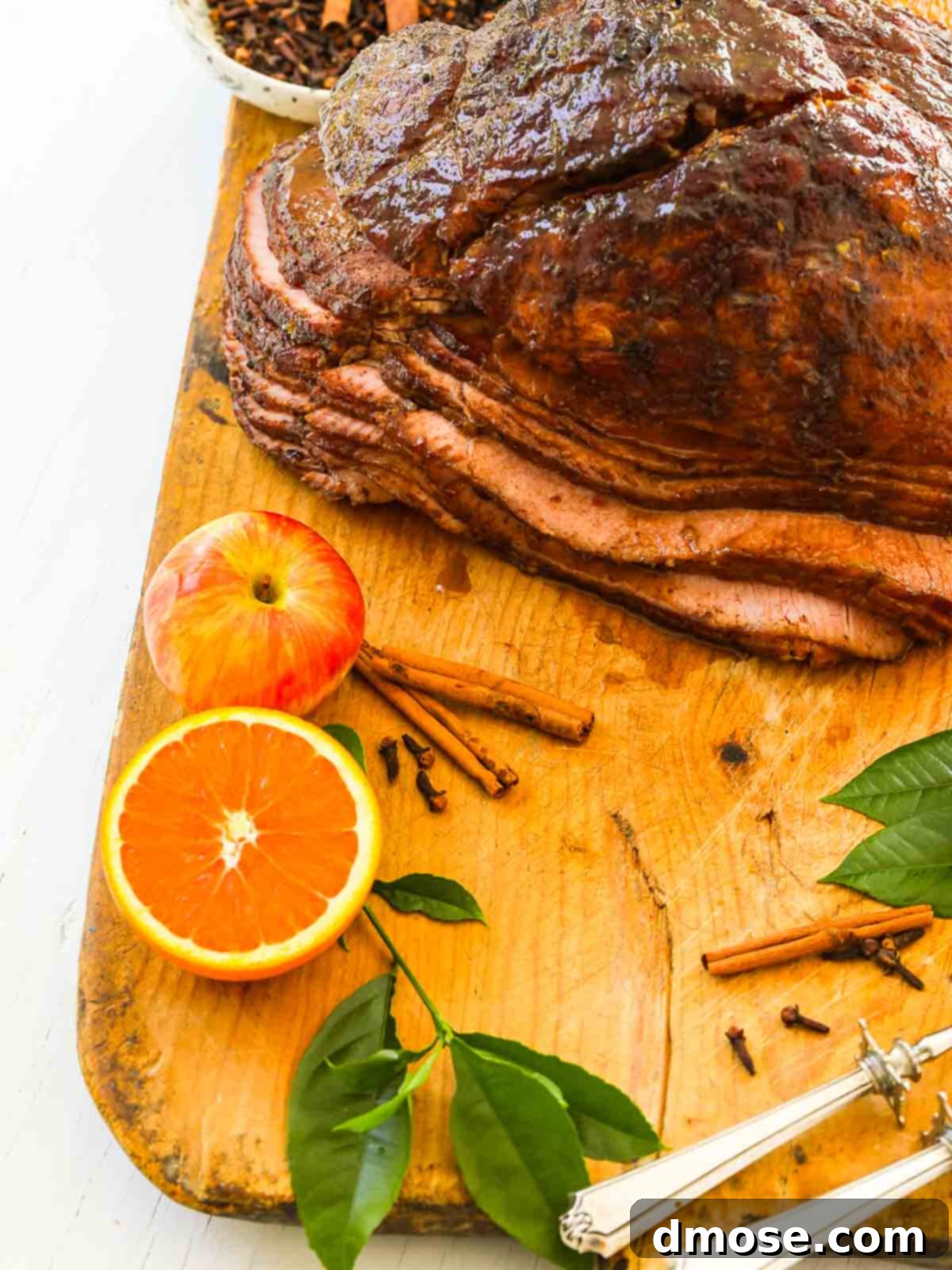
PRO SMOKE TIP: The Art of Airflow Control: Mastering your smoker’s temperature is all about controlling airflow. More air entering the firebox equates to higher heat, as it fuels the combustion. Conversely, restricting airflow starves the fire, leading to lower temperatures. Always adjust your smoker’s vents (dampers) meticulously to regulate the oxygen supply and, consequently, maintain your desired consistent cooking temperature.
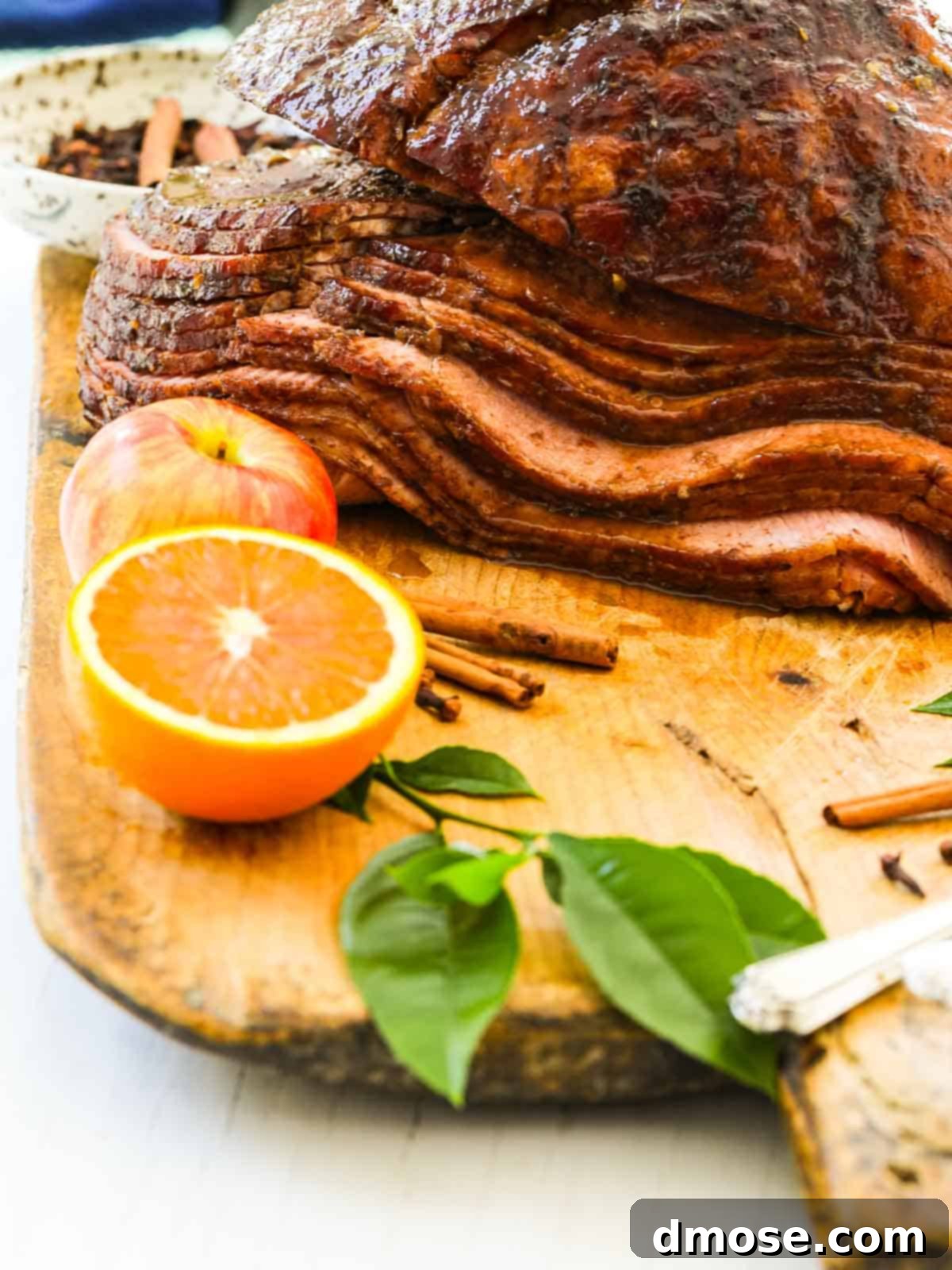
Can I Smoke a Ham in My Grill?
While this particular recipe is optimized for the consistent, indirect heat and dedicated smoke production of a smoker, it’s a common and successful practice to smoke meats on a regular grill. Many home cooks have mastered the art of achieving excellent smoky flavor on both gas and charcoal grills using indirect heat techniques.
Grill Smoking Essentials: To smoke a ham on a grill, the key is to create a “two-zone” cooking environment. On a charcoal grill, pile the hot coals to one side and place a drip pan on the other side, where the ham will sit. On a gas grill, light only one or two burners to a low setting and place the ham on the unlit side. In both cases, you’ll want to add wood chips or chunks to the heat source (using a smoker box or foil packet for chips) to generate smoke. The process still involves low temperatures (around 250-275°F) and indirect heat, but it often requires more active management of temperature and smoke replenishment compared to a dedicated smoker.
While I haven’t personally tested *this specific glaze recipe* on a grill, I have extensively experimented with smoking on my grill, which features a small tray for wood chips. There are numerous fantastic resources and recipes available that specifically detail successful grill-smoking techniques. If a dedicated smoker isn’t in your arsenal, I encourage you to explore these methods and give it a try!
For those looking to delve deeper into the vast world of smoking, a phenomenal resource is *Project Smoke* by Steven Raichlen. This comprehensive book is brimming with invaluable tips, techniques, and recipes that will transform your understanding of smoking. It covers everything from the various types of smokers available (pellet, electric, water, ceramic, offset) and their respective pros and cons, to selecting the best wood for a specific flavor profile, essential fire-starting tips, and a multitude of smoke recipes. Raichlen’s work truly encourages you to experiment and smoke almost anything, including cheeses, salts, beverages, and much more, expanding your culinary horizons.
Essential Gear for a Successful Smoking Session
Having the right tools makes all the difference in achieving perfect smoked ham. Here’s a breakdown of the essential gear:
- A Smoker: The star of the show! You have several options:
- Pellet Grill Smoker: Easy to use, consistent temperature control, uses wood pellets.
- Electric Smoker: Simple “set it and forget it” operation, great for beginners.
- Water Smoker (aka “Bullet” Smoker): Excellent for low and slow, uses water pan for humidity.
- Ceramic Cooker (Kamado Style like Big Green Egg): Versatile, excellent heat retention, can smoke, grill, and bake.
- Upright Barrel Smoker: Good for hanging meats, effective for consistent smoke.
- Offset Smoker: Classic design, allows for precise fire management.
- Lump Hardwood Charcoal: The preferred fuel for most smokers, providing a clean burn and excellent heat. Easily found at most hardware or home improvement stores.
- Tumbleweed Firestarters: These are inexpensive, chemical-free firestarters that efficiently get your lump charcoal going without imparting any off-flavors.
- Smaller Pieces of Fruit Wood Chunks or Wood Smoker Chips: Essential for smoke flavor. Cherry, apple, and pecan offer mild, sweet notes. Maple and hickory provide a slightly stronger, yet still pleasant, smoke. The type of wood you select significantly impacts the final smoke flavor.
- Sturdy Shallow Metal Pan: You’ll need this to hold the ham and the water pan. Opt for heavy-duty metal pans (like a deep-dish pizza pan or a roasting pan); thin foil or aluminum pans are often not sturdy enough to support the ham and rack throughout the long cooking process.
- Silicone Basting Brush and Sauce Pot: For preparing and applying that delicious glaze. Silicone brushes are easy to clean and heat-resistant.
- BBQ Gloves or Silicone Mitts: Essential for safely handling hot items in and around the smoker, protecting your hands from heat and mess.
- Wireless Bluetooth Smoke Thermometer or Instant Read Thermometer: Absolutely crucial for monitoring both the ambient smoker temperature and the internal temperature of your ham, ensuring food safety and perfect doneness. A wireless thermometer offers unparalleled convenience.
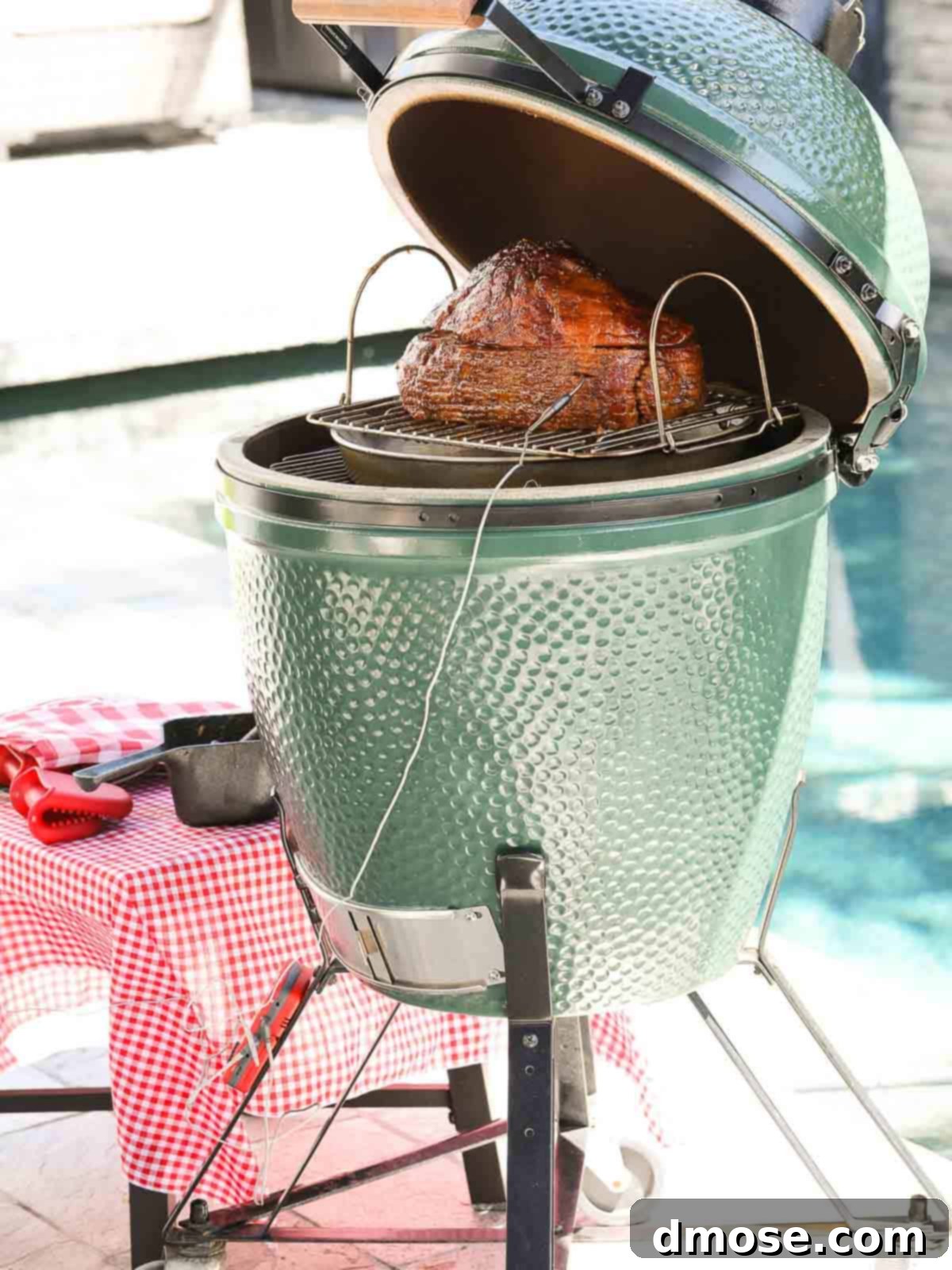
Smoking on a Big Green Egg or Kamado Grill
Kamado-style ceramic grills like the Big Green Egg (BGE) are renowned for their exceptional heat retention and versatility, making them ideal for low-and-slow smoking. Mastering their airflow control is key:
- Fuel Choice: Always use hardwood lump charcoal in your BGE or Kamado. For smoke flavor, add 3-4 smaller pieces of apple or cherry fruitwood chunks directly onto the hot coals. These premium fuels are readily available at major hardware stores and barbecue specialty shops.
- Avoid Contaminants: Never use charcoal briquettes or lighter fluid in a ceramic grill smoker. Briquettes contain binders and fillers that can produce an acrid, off-putting taste (creosote) that will ruin the delicate flavor of your smoked ham. Lighter fluid will leave a chemical residue and taste.
- Initial Startup: To begin, open all the top (daisy wheel or cap) and bottom vents completely. Light your hardwood lump charcoal. Allow the grill to heat up rapidly, typically reaching around 300 degrees Fahrenheit. This initial high heat burns off any impurities and helps establish a strong coal bed.
- Achieving “Low & Slow”: Once the temperature reaches approximately 300°F, it’s time to dial it down for a long, slow smoke. Close the bottom vent significantly, leaving just a tiny opening (about ⅛ inch). Simultaneously, close the top daisy wheel almost entirely, leaving just enough gap for exhaust. Each Kamado is slightly unique, and you’ll quickly learn the precise vent adjustments needed to consistently maintain your target smoking temperature of 250-275 degrees Fahrenheit. Patience is key during this stabilization phase.
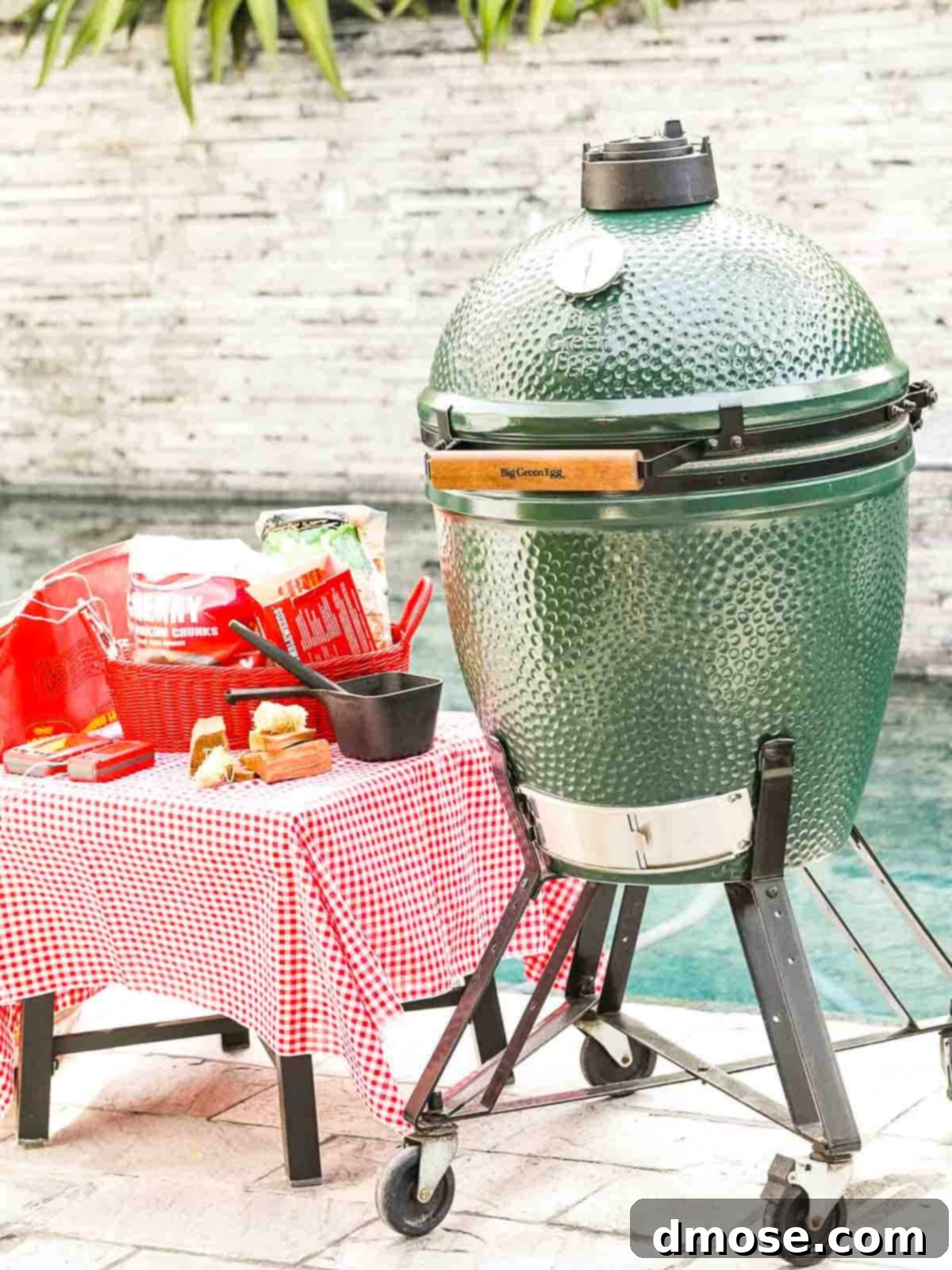
The Secret Weapon: Water Pan Tips & Advantages
Incorporating a water pan into your smoking setup is a simple yet incredibly effective technique that yields significant benefits, especially when smoking a ham.
Humidity is Key: The primary advantage of cooking with a water pan is the creation of a humid environment within your smoker. As the water heats up and approaches its boiling point, it begins to evaporate, turning into steam. This steam fills the smoke chamber, preventing the air from becoming overly dry. You can achieve this by simply placing your ham rack directly over a larger pan filled with water, as described in the recipe, or by placing a separate small aluminum pan of water off to the side, away from the direct heat source.
Consistent Temperatures: A water pan acts as a heat sink, absorbing excess heat and slowly releasing it back into the smoker. This helps to keep the smoker’s internal temperature lower and much more consistent throughout the entire smoking process. This stability is crucial for “low and slow” smoking, preventing drastic temperature fluctuations that can negatively impact the meat’s texture and overall cook time. It effectively evens out hot spots, creating a more uniform cooking environment.
Juicier Results and Enhanced Smoke Adhesion: The humidity generated by the water pan has a direct and profound impact on the final product: it makes the meat incredibly juicy! The moist environment helps to reduce evaporative moisture loss from the ham itself, preventing it from drying out over several hours of smoking. Furthermore, the humid air creates an ideal surface for the smoke compounds to adhere to the meat, enhancing the development of that desirable smoke ring and infusing every fiber with deep, delicious flavor. It’s a fundamental technique that every pit master utilizes for superior results.
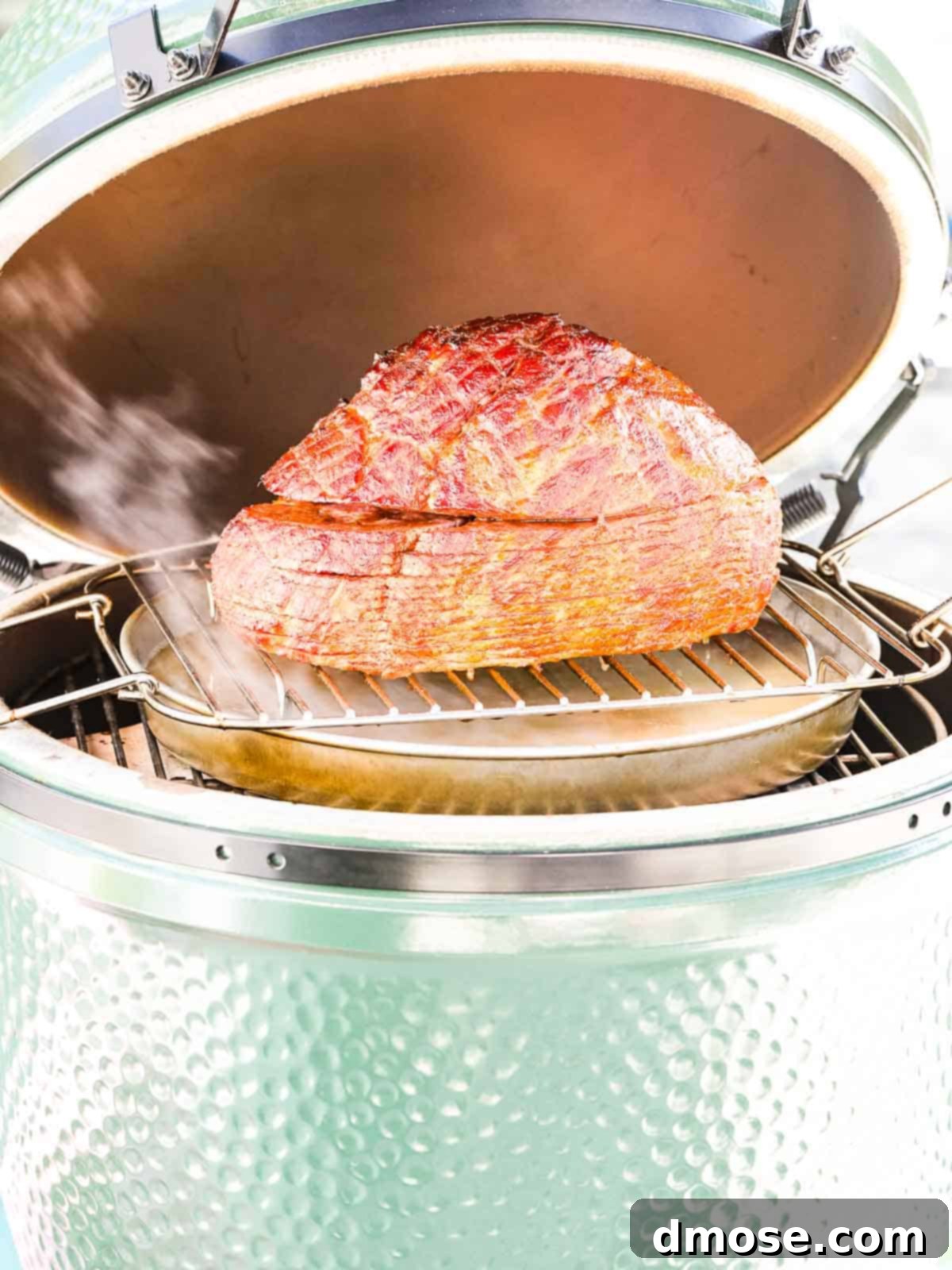
The Best Tool for Monitoring Ham Temperature: A Wireless Thermometer
When it comes to smoking, relying on guesswork or visual cues for doneness is a recipe for disappointment, or worse, an unsafe meal. The single most important tool in your arsenal for smoking a perfect ham is a reliable meat thermometer. For ultimate precision and convenience, a Wireless Bluetooth Meat Thermometer is highly recommended.
Unmatched Accuracy and Convenience: These sophisticated thermometers come with multiple probes (typically 2-4), allowing you to monitor both the internal temperature of your ham and the ambient temperature of your smoker simultaneously. The real game-changer is the wireless receiver, which often connects via Bluetooth to an app on your smartphone. This means you can keep the receiver nearby, or even relax in your house, while effortlessly monitoring your temperatures without needing to repeatedly open the smoker lid. Every time you open the smoker, you lose precious heat and smoke, extending cooking times and affecting consistency. A wireless thermometer eliminates this problem entirely.
Cook to Temperature, Not Time: Experienced BBQ pit masters universally agree that you should always cook to an internal temperature rather than relying solely on a timer. Factors like outside ambient temperature, ham size, and smoker consistency can significantly alter cooking times. A wireless probe ensures your ham reaches the safe and optimal 140°F internal temperature without being overcooked and dry. It’s a professional-grade tool that brings peace of mind and consistently perfect results to your home smoking endeavors.
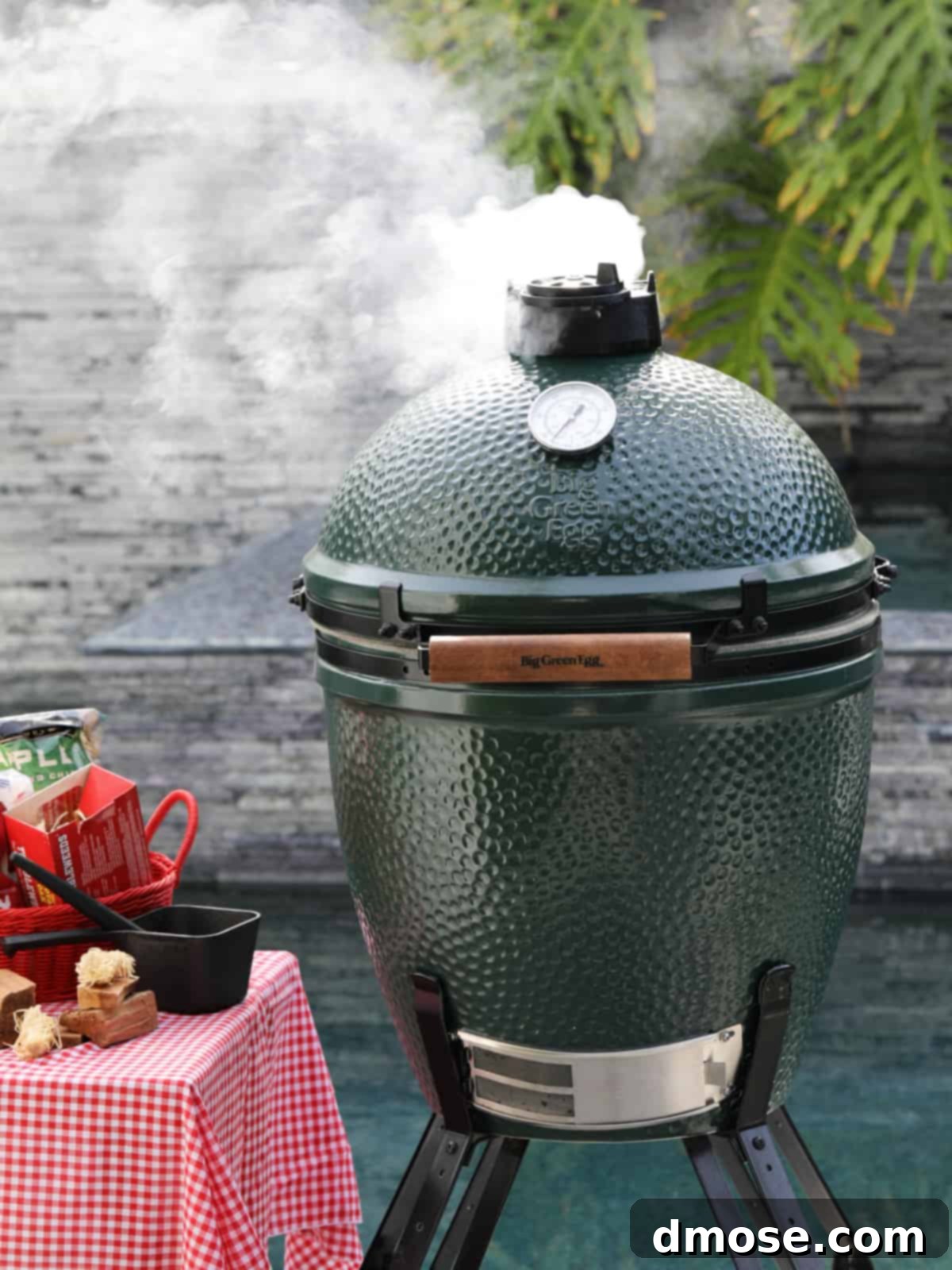
Ham Smoking: Frequently Asked Questions
Smoking a pre-cooked spiral ham typically takes about 20 minutes per pound at a consistent smoker temperature of 250-275 degrees Fahrenheit. So, for an average 10-pound ham, you can expect the process to last approximately 3.5 hours. The critical indicator for doneness is an internal temperature of 140 degrees Fahrenheit. Always cook to temperature, not just time, as various factors can influence the cooking duration. A useful tip for more even cooking: allow your ham to sit at room temperature for about an hour before placing it in the smoker to avoid putting cold meat directly into a hot environment. Spiral-sliced hams typically range from 7 to 10 pounds, so adjust your timing expectations accordingly.
When you first light your smoker, you’ll often see thick, white, puffy smoke. This is often referred to as “dirty smoke” because it indicates incomplete combustion. Resist the temptation to put your meat on at this stage, as this type of smoke contains creosote and other bitter compounds that will impart an unpleasant, acrid taste to your food. Instead, wait for the fire to settle down and for the combustion to become cleaner. The smoke will transform into a thin, almost invisible, wispy trail with a faint bluish tint—this is the coveted “blue smoke.” Blue smoke signifies clean, efficient combustion and pure wood flavor. It’s only when you see this beautiful sight that your smoker is truly ready, and that’s when you should place your ham inside for the best possible results and an incredible, clean smoky flavor.
No, you generally do not need to score a spiral-cut ham. Spiral hams are pre-sliced, which means the glaze and smoke can easily penetrate the meat between the cuts. This design is perfect for absorbing flavors and creating a delicious bark without additional scoring.
Look for a fully cooked, bone-in spiral-cut ham. The bone adds flavor and helps keep the ham moist, while the spiral cuts allow the smoke and glaze to reach more surface area. Avoid uncured or fresh hams unless you’re preparing a different type of recipe, as they require a much longer cooking time and different preparation.
Explore More Holiday Ham Delights
If you’re a true ham enthusiast, I invite you to explore my other cherished holiday ham recipe. This Kahlua Pineapple Glazed Ham offers a unique and festive twist. It features juicy pineapple rings roasted right alongside the ham, infusing it with tropical sweetness. The ham’s surface is then brushed with a gorgeous, rich Kahlua glaze, creating an absolutely incredible and sophisticated flavor profile perfect for any celebratory occasion.
GET THE RECIPE
PIN IT
More Irresistible Pork Recipes to Savor
If you appreciate the rich flavors of pork, explore these other fantastic recipes from my kitchen:
For something undeniably fancy yet surprisingly simple, this Cherry Balsamic Roasted Pork Loin takes only minutes to prep and presents a truly gorgeous, elegant dish. I’ve proudly served this holiday meal for New Year’s Eve, always to rave reviews.
Our super popular Oven Roasted Pulled Pork is made low and slow right in your oven, ensuring tender, melt-in-your-mouth results. Best of all, you can use the delicious leftovers for these incredible Cuban Pulled Pork Sliders, which are absolutely perfect for a casual lunch or a satisfying dinner.
Or, for effortless weeknight cooking, try our Slow Cooker Pulled Pork, made with tender pork loin that cooks down to an incredibly juicy perfection. Serve it piled high on a golden bun, topped with crisp coleslaw, tangy pickle chips, and your favorite BBQ sauce for a truly satisfying meal.
- Cherry Balsamic Pork Loin
- Oven Roasted Pulled Pork
- Pulled Pork Sliders
- Slow Cooker Pulled Pork
CRAVING MORE?
Did you love this recipe? We would love to hear from you! If you make this recipe and love it, give it a 5-star rating ⭐⭐⭐⭐⭐ with a comment. THANK YOU!! Follow Delicious Table with my free newsletter and share this recipe with your friends on Facebook, Pinterest, and Instagram.
Print
Pin Recipe
Twice Smoked Ham With Orange Honey Glaze Recipe
Equipment
Ingredients
- 1 large spiral ham smoked and bone in
Glaze Ingredients
- ¼ cup melted butter
- ½ cup brown sugar
- ¼ cup honey
- 2 tablespoons Dijon mustard
- 1 whole orange – zest and juice
- 2 cups apple cider
- 1 teaspoon ground cinnamon
- 1 teaspoon ground cloves
Instructions
Heat The Smoker
- Remove ham from refrigerator 1-2 hours before cooking to bring closer to room temperature. Preheat your smoker (this recipe is not tested on a gas grill) to cook indirect 250-275 degrees Fahrenheit, using hardwood lump charcoal and a couple of small chunks of fruitwood like cherry or apple.
- If using a Big Green Egg or similar Kamado grill, see notes below for more detailed tips on vent control and fuel.
Prepare Glaze
- In a medium saucepan, melt the butter. Add the brown sugar, honey, Dijon mustard, orange zest and juice, apple cider, ground cinnamon, and ground cloves. Cook over medium-high heat, stirring continuously with a whisk just until the glaze comes to a gentle boil. Remove from the heat immediately.
- If the glaze becomes too thick, add a tablespoon or two of warm water or more apple cider to achieve a smooth, brush-able consistency.
Let’s Get Smoking!
- Set the ham flat side down on a sturdy baking rack. Place this rack on a robust pan (a deep dish round pizza pan or shallow low roasting pan works well) filled with ½ inch of warm water. This water pan helps keep the ham moist and the smoker temperature stable. Set the pan with the rack and ham down onto your smoker’s grill grates.
- If using a wireless probe thermometer, insert it into the thickest part of the ham, ensuring it does not touch the bone.
- Once your smoker temperature consistently reaches 250 degrees Fahrenheit, place the ham inside, close the lid, and smoke the ham for the first 1 hour undisturbed.
- After the initial 1 hour, begin brushing the glaze liberally all over the top and exposed sides of the ham. Repeat this glazing process every 30-45 minutes until the ham reaches its target internal temperature.
- Continue to smoke the ham for approximately 20 minutes per pound. For instance, a 10-pound ham will take about 3.5 hours, or until the internal temperature reaches 140 degrees F on your meat thermometer.
- To store leftover ham, slice the ham from the bone and use within 3-5 days when refrigerated. For longer storage, freeze slices or cubes in zip-top bags or a foodsaver vacuum sealer for 1-2 months.
Notes
Big Green Egg & Kamado Grill Tips
- Always use hardwood lump charcoal with 3-4 smaller pieces of apple or cherry fruitwood chunks. These are easily available at big box hardware stores.
- If using a BGE or similar, never use charcoal briquettes or lighter fluid! These will impart an off-taste to your cook due to their chemical additives.
- To start, open all the top and bottom vents completely. Light the hardwood lump charcoal and allow the heat to rise quickly, around 300 degrees F.
- Once at temperature, close the bottom vent to just a ⅛” opening, and the daisy wheel (top vent) almost all the way closed. Fine-tune these to maintain a steady 250-275 degrees F. Each smoker is a bit unique; you probably know yours quite well!
Variations & Swaps
Create your own savory glaze the way you like it! Here are a few ideas to mix it up. Then get basting and brushing on the outside of the ham while it slowly smokes…
- pineapple juice instead of apple cider for a tropical flavor.
- maple syrup in place of honey for a richer, earthy sweetness.
- orange marmalade in place of orange zest and juice for added texture and intense citrus.
- Root Beer, Coca-Cola, or Dr. Pepper in place of apple cider for a unique, tangy, and sweet glaze.
Essential Gear Overview
- a smoker – choose from pellet grill, electric, water (bullet), ceramic (Kamado), upright barrel, or offset smokers.
- lump hardwood charcoal – best for clean burn and flavor.
- tumbleweed firestarters – for easy, chemical-free ignition.
- smaller pieces of fruit wood – cherry, apple, pecan (mild/sweet) or maple, hickory (bolder).
- sturdy shallow metal pan – essential for water and ham, avoids flimsy foil pans.
- silicone brush and pot for glaze – for easy, even application.
- BBQ gloves or silicone mitts – for protection and safe handling.
- wireless smoke thermometer or instant read thermometer – crucial for accurate temperature monitoring.