
Last Updated September 6th, 2023 at 05:12 pm by Lisa
Easy Refrigerator Pickled Green Beans: Your Go-To Dilly Bean Recipe
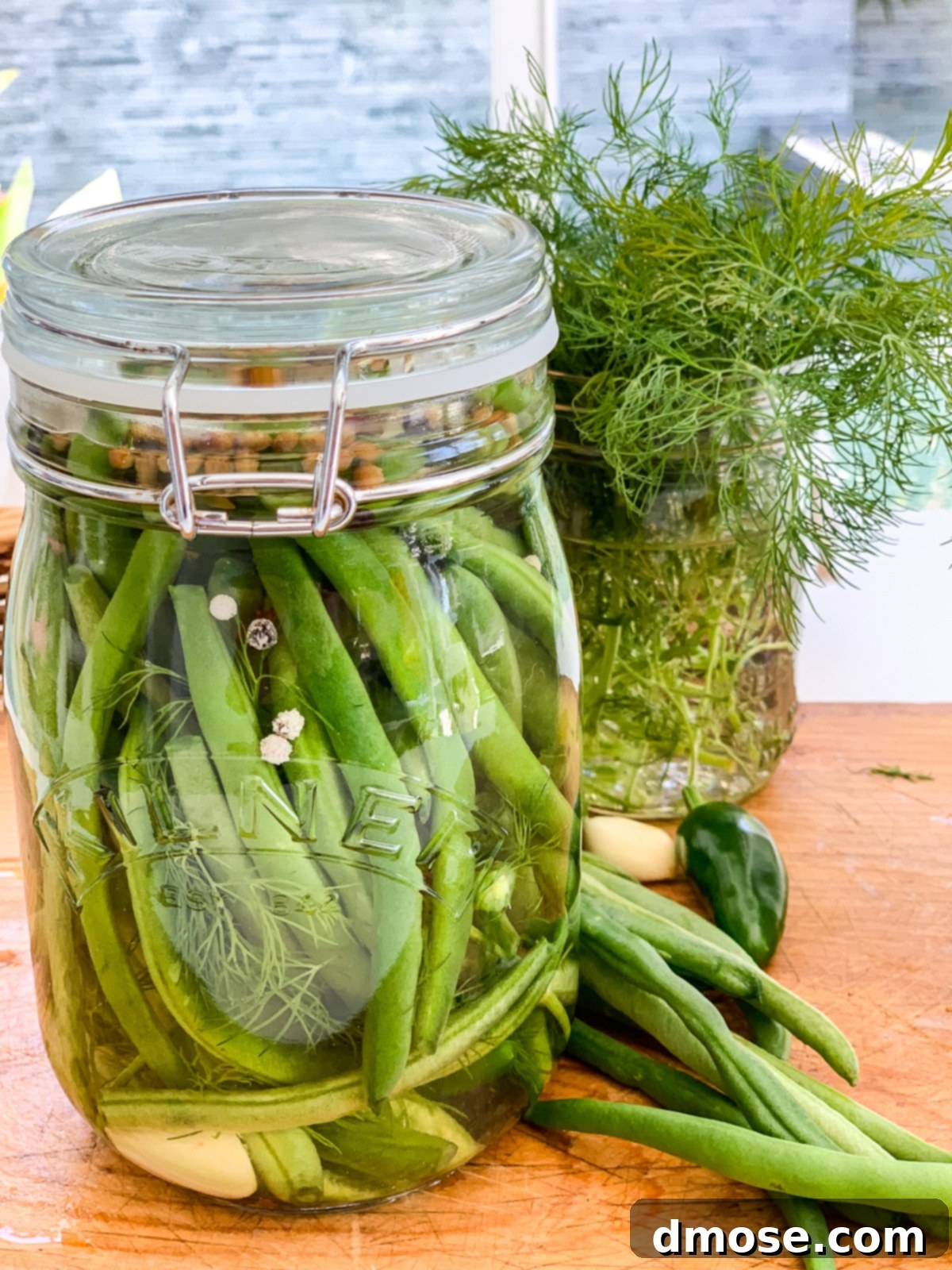
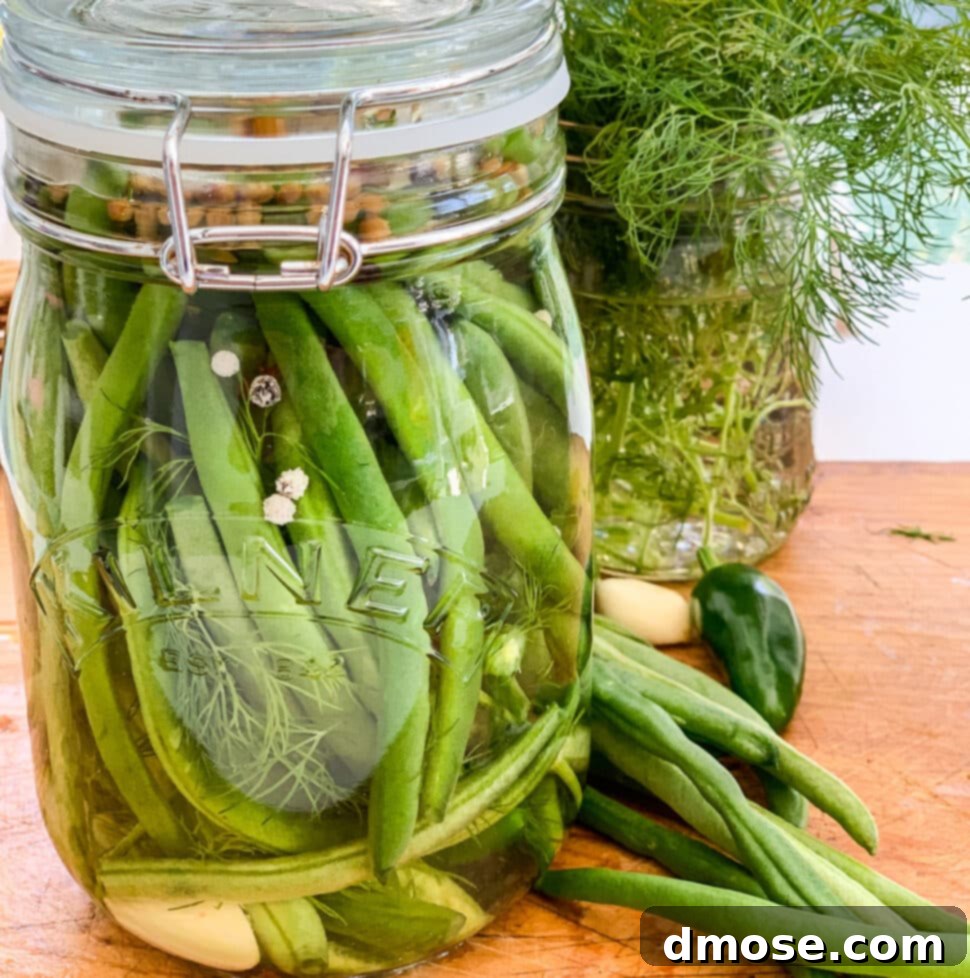
Looking for a vibrant, crunchy addition to your meals or a zesty snack that’s bursting with flavor? Look no further than this incredibly simple recipe for Pickled Green Beans, affectionately known as Dilly Beans. This quick pickling method requires absolutely no traditional canning equipment, making it accessible for even the most novice home cooks. Prepare to elevate your relish trays, charcuterie boards, or even your morning Bloody Mary with these irresistible green bean pickles!
These crisp and tangy dilly beans are not only delicious but also remarkably versatile. Pop them straight from the jar for a satisfying snack, chop them up to add a bright crunch to your salads, or use them as a distinctive garnish in your favorite cocktails. Stored chilled in your refrigerator, these delightful homemade pickles will keep for up to one month – if they manage to last that long!
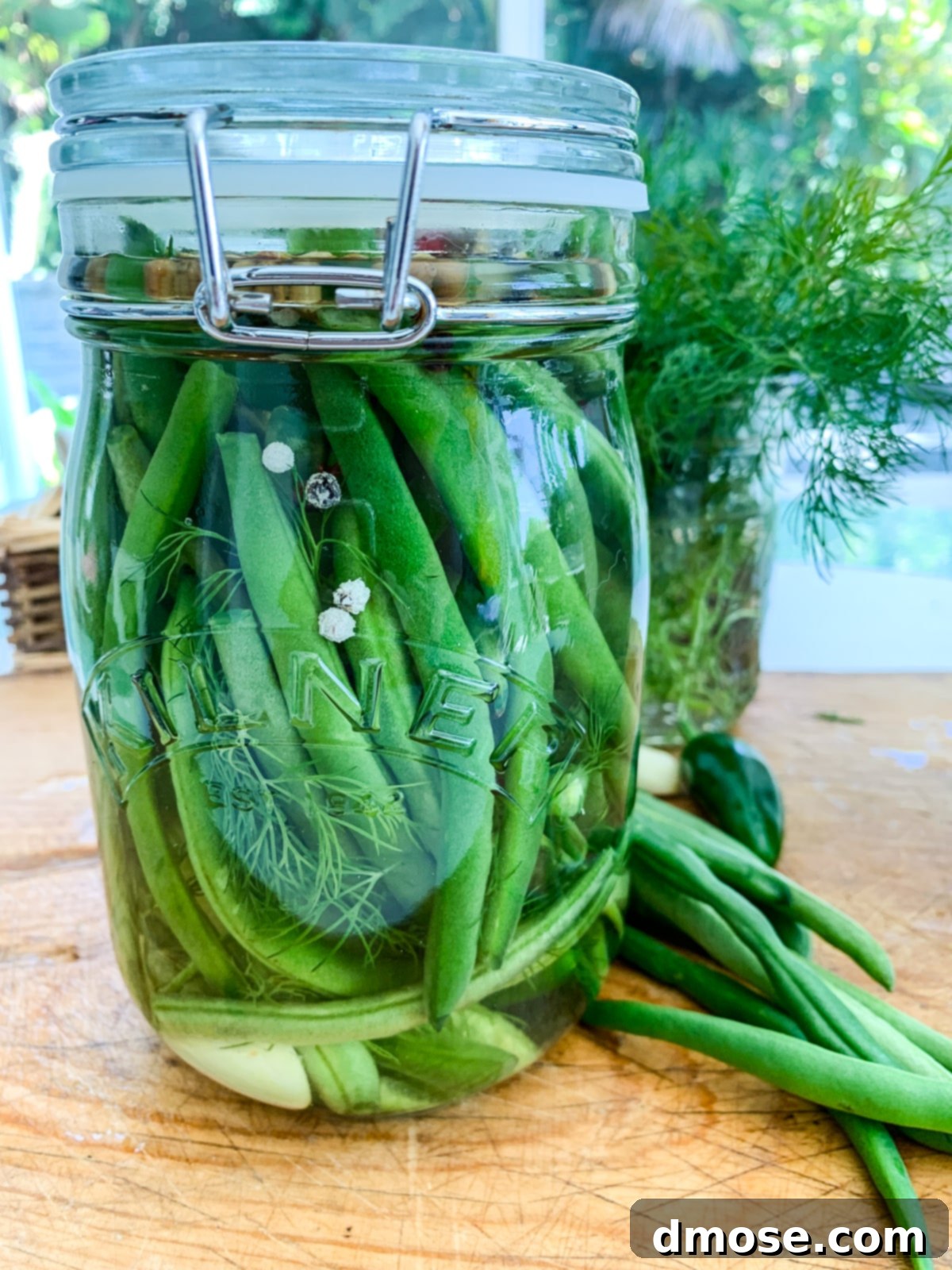
PRO TIP: Refrigerator pickles are incredibly fast to prepare using this quick pickling method. Since they are not processed in a canner, it is essential that they are always stored in the fridge to maintain their freshness and safety.
The Joy of Homemade Pickled Green Beans (Dilly Beans)
There’s nothing quite as satisfying as enjoying fresh produce, and pickling offers a fantastic way to extend its life and infuse it with exciting new flavors. This no-canning recipe for pickled green beans is not only easy but also an excellent method for utilizing a bountiful harvest of green beans from your garden or a great find from the farmers market. Forget complex equipment or lengthy sterilization processes; this recipe is all about simple ingredients and straightforward steps.
These aren’t just any green beans; they are fresh green beans transformed by a flavorful, vinegar-based brine. The magic happens when they are seasoned with a thoughtful blend of whole black or mixed peppercorns, fragrant fresh dill (or dill seeds for convenience), and other delightful spices like red chili flakes and coriander seeds. The result is a vibrant, crunchy, and tangy pickle that’s far superior to anything store-bought.
Whether you’re looking to preserve a bumper crop of green beans, create a unique gift for a foodie friend, or simply want to have a healthy, flavorful snack on hand, this recipe is perfect. It’s easily scalable, so you can make a small batch in a single jar or a larger quantity to enjoy for weeks.
Essential Ingredients for Perfect Dilly Beans
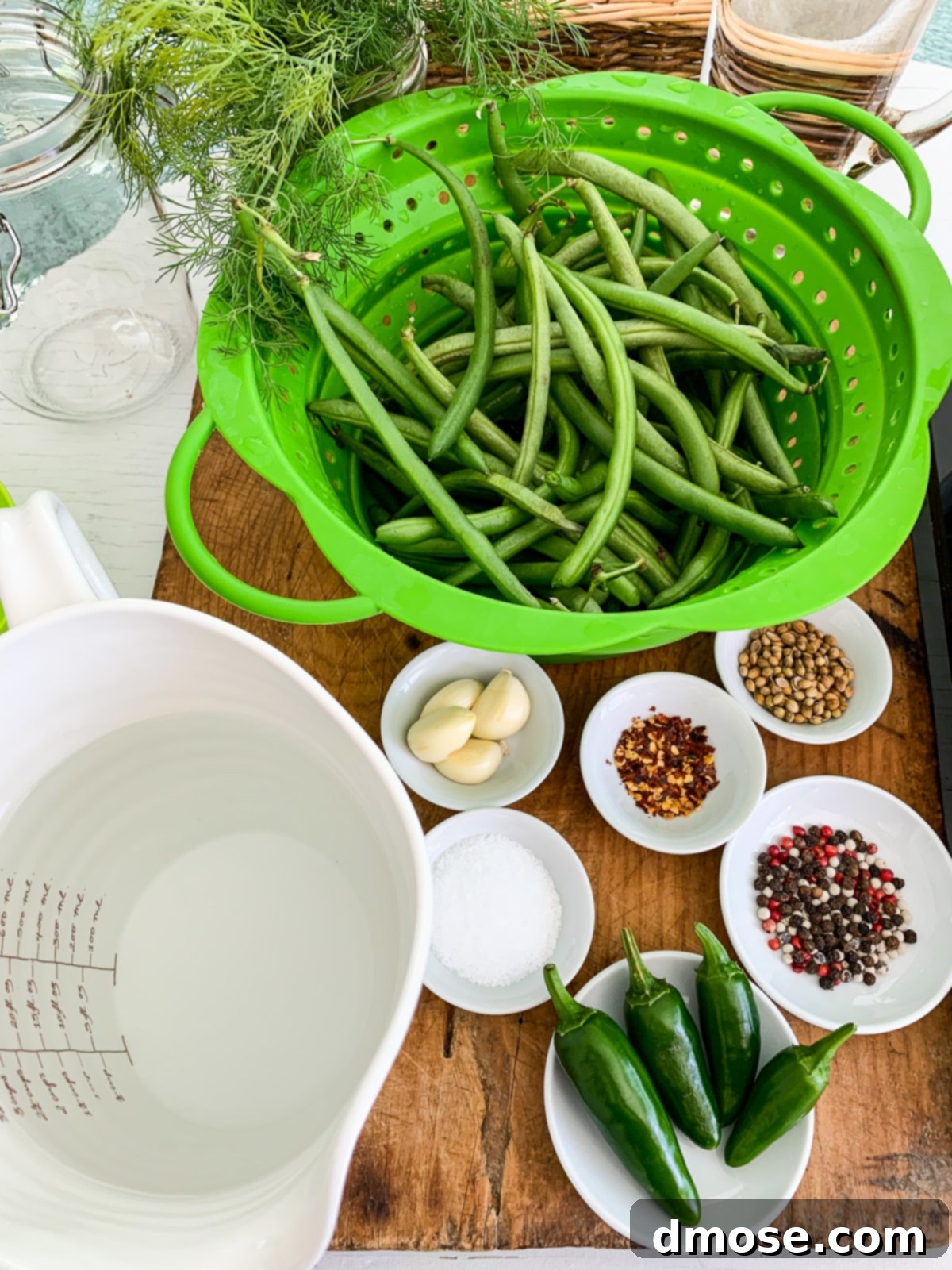
Crafting the perfect batch of pickled green beans begins with selecting high-quality ingredients. For this recipe, you’ll need two main components: the fresh produce and aromatics for the jar, and the tangy liquid that will transform them into pickles. Here’s a detailed look at what you’ll need:
Jar Ingredients: The Heart of Your Pickles
- Clean Quart Jar (with lid and ring): While the recipe mentions a quart jar, pint jars also work, especially if you want smaller batches or need to cut your beans to fit.
- Whole Green Beans or Yellow Wax Beans: Select fresh, firm, blemish-free beans. One pound of beans typically fills a quart jar.
- Garlic Cloves: 1-2 cloves per jar, providing a pungent, aromatic kick. Feel free to adjust based on your garlic preference.
- Chili Peppers (fresh or dried): One small chili pepper per jar adds a subtle heat. Options include jalapeños, serranos, or even dried red chilis for consistent spice.
- Fresh Dill: 2-3 sprigs per jar for that classic “dilly” flavor. Fresh dill offers a brighter taste compared to dried dill.
- Mixed Color or Black Peppercorns: Approximately 1 teaspoon per jar. Whole peppercorns release their flavor slowly, adding depth.
- Red Chili Flakes: About ¼ teaspoon per jar for an extra layer of warmth and visual appeal.
- Coriander Seeds: ½ teaspoon per jar. These seeds contribute a wonderful citrusy, slightly nutty note that complements the dill and chili.
Pickling Liquid (Brine) Ingredients: The Flavor Foundation
- Distilled White Vinegar: This is the backbone of your brine, providing the necessary acidity for preservation and classic tangy flavor. Its neutral profile allows other spices to shine.
- Water: Used to dilute the vinegar, creating a balanced brine that isn’t overly sharp.
- Sea Salt or Kosher Salt: Approximately 2 tablespoons. It’s crucial to use non-iodized salt (like sea salt or kosher salt) as iodine can turn your pickles dark and cloudy. Pickling salt is also an excellent choice. Avoid regular table salt.
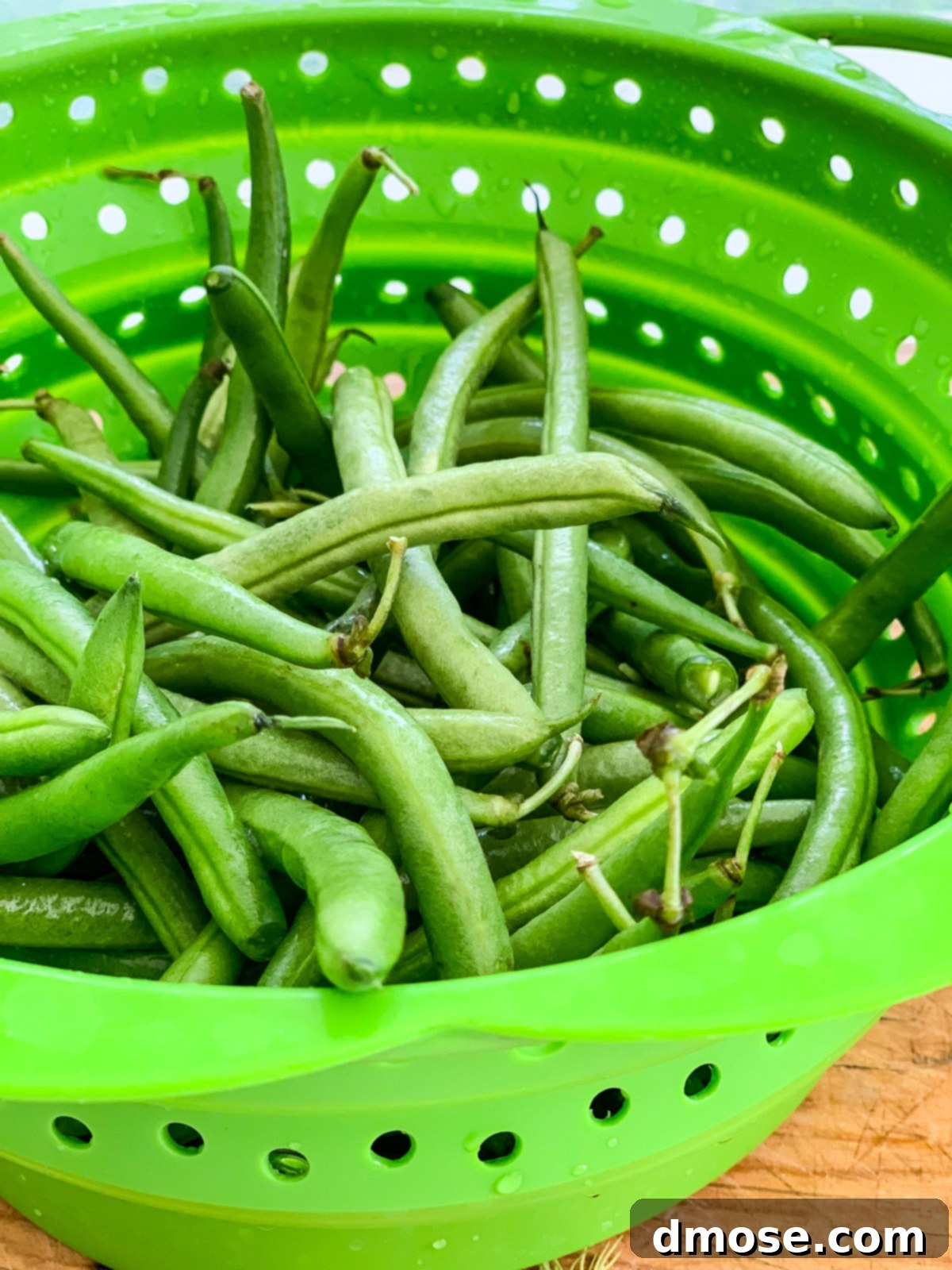
PRO TIP: A good rule of thumb is that one pound of fresh green beans will neatly fit into a standard quart (4-cup) Mason jar. To prepare them, simply snip off the stem ends with clean kitchen scissors. If you’re using smaller pint jars, you can easily cut the beans to a shorter length to accommodate the jar size. This ensures a snug fit and optimal brining.
Step-by-Step: Let’s Pickle Refrigerator Dilly Beans
Making your own dilly beans is a straightforward process that anyone can master. Follow these steps for crunchy, flavorful pickles every time:
1. Prepare Your Jars and Beans
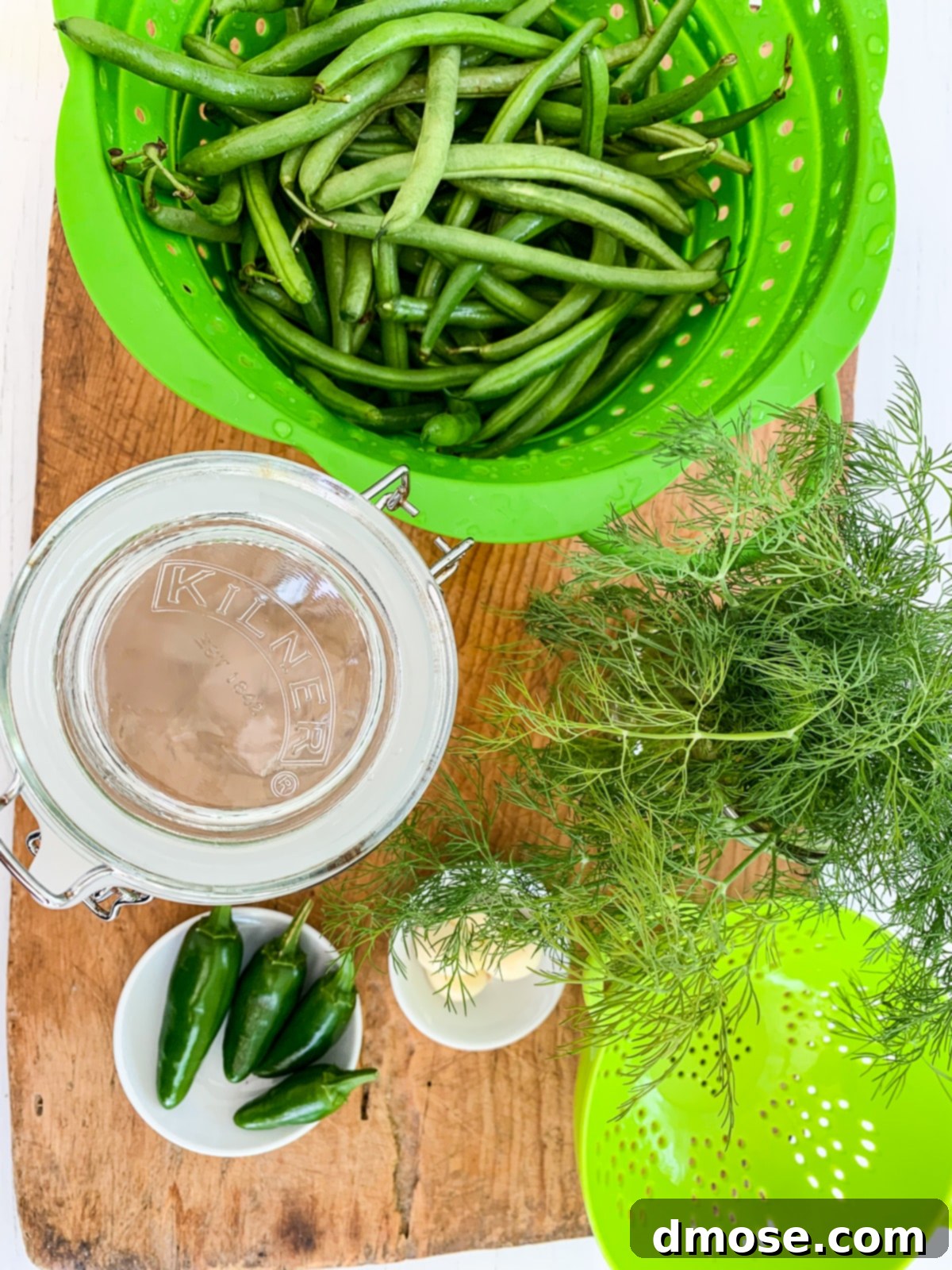
- Begin by ensuring your Mason jars or canning jars are impeccably clean. Wash them thoroughly with hot, soapy water, or run them through your dishwasher on a hot cycle. For refrigerator pickles, extreme sterilization isn’t necessary, but cleanliness is key to preventing spoilage and ensuring good flavor. You can use either quart or pint glass jars for your spicy pickled green beans.
- While your jars are cleaning, prepare your green beans. Wash them well under cold running water. Trim off the tough stem ends of each bean using a sharp knife or clean kitchen scissors. If you are using pint jars, you may need to cut the beans into shorter pieces to fit comfortably.
2. Make The Pickling Liquid
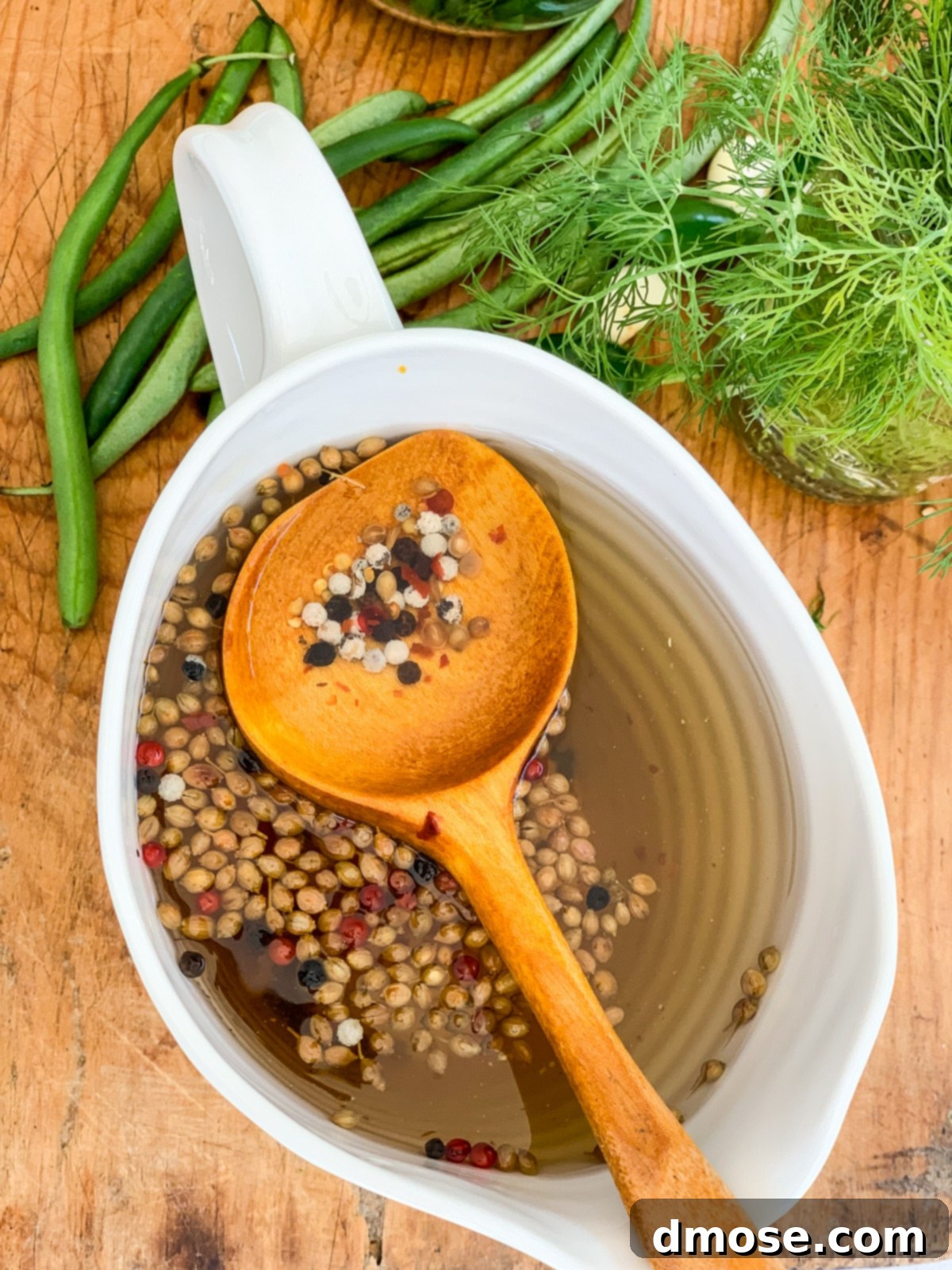
- In a medium-sized pot or large saucepan on your stovetop, combine the distilled white vinegar, water, black or mixed peppercorns, red pepper flakes, coriander seeds, and sea salt.
- Turn the heat to medium-high and bring this mixture to a rolling boil. Stir occasionally to ensure the salt fully dissolves into the hot vinegar solution. Once boiling and the salt is dissolved, remove the pot from the heat.
- **Crucially, allow the hot brine mixture to cool completely to room temperature before pouring it over your green beans.** Pouring hot liquid over the fresh beans will partially cook them, resulting in softer, duller pickles instead of the bright green, crisp texture we’re aiming for. This cooling step is paramount for truly crunchy dilly beans.
3. Assemble The Jars
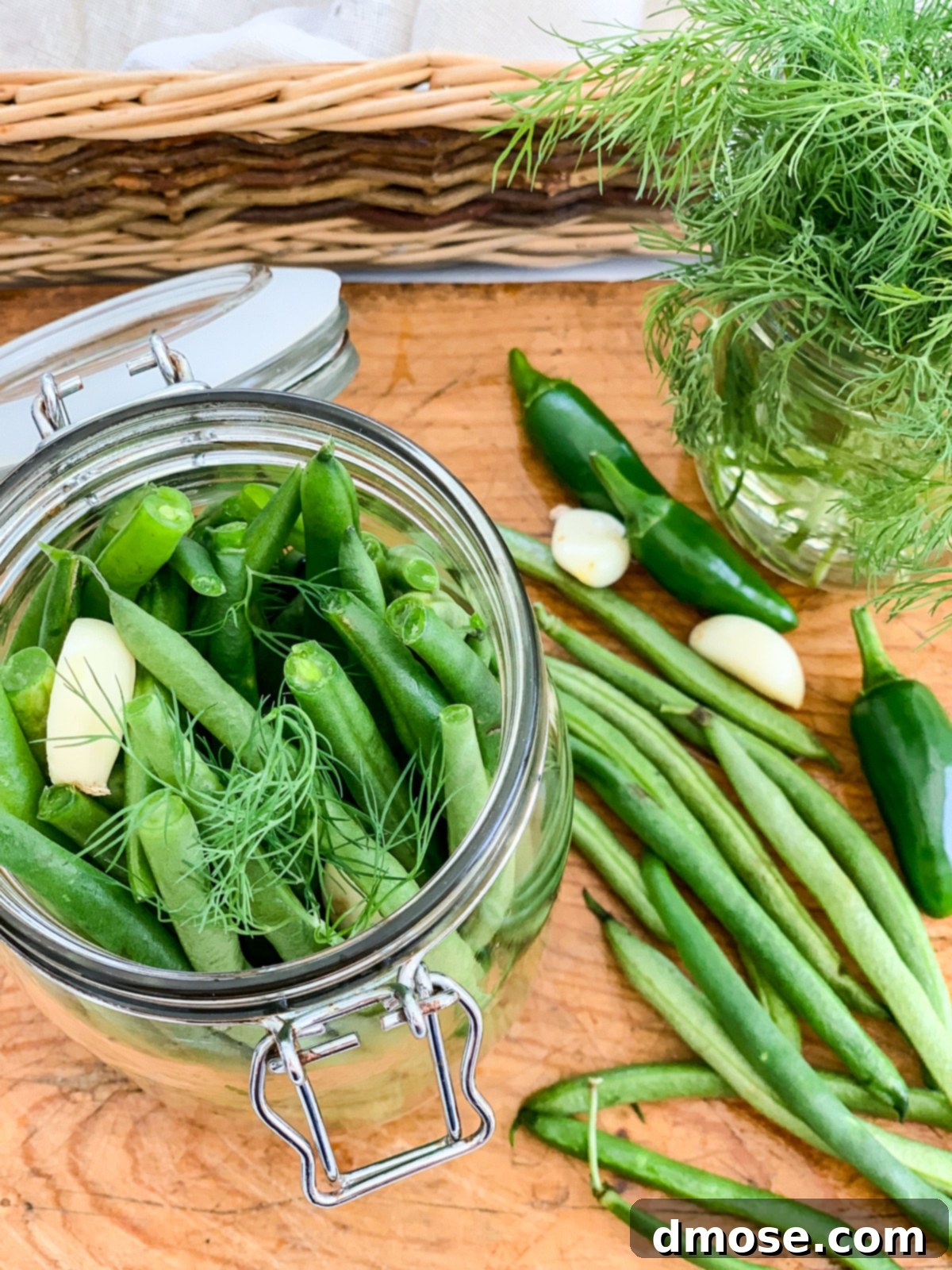
- Into the bottom of each clean quart (or pint) jar, place your aromatics: 1-2 garlic cloves (sliced or whole, as preferred), 1 hot chili pepper (cut in half lengthwise for better flavor dispersion), and 2-3 sprigs of fresh dill.
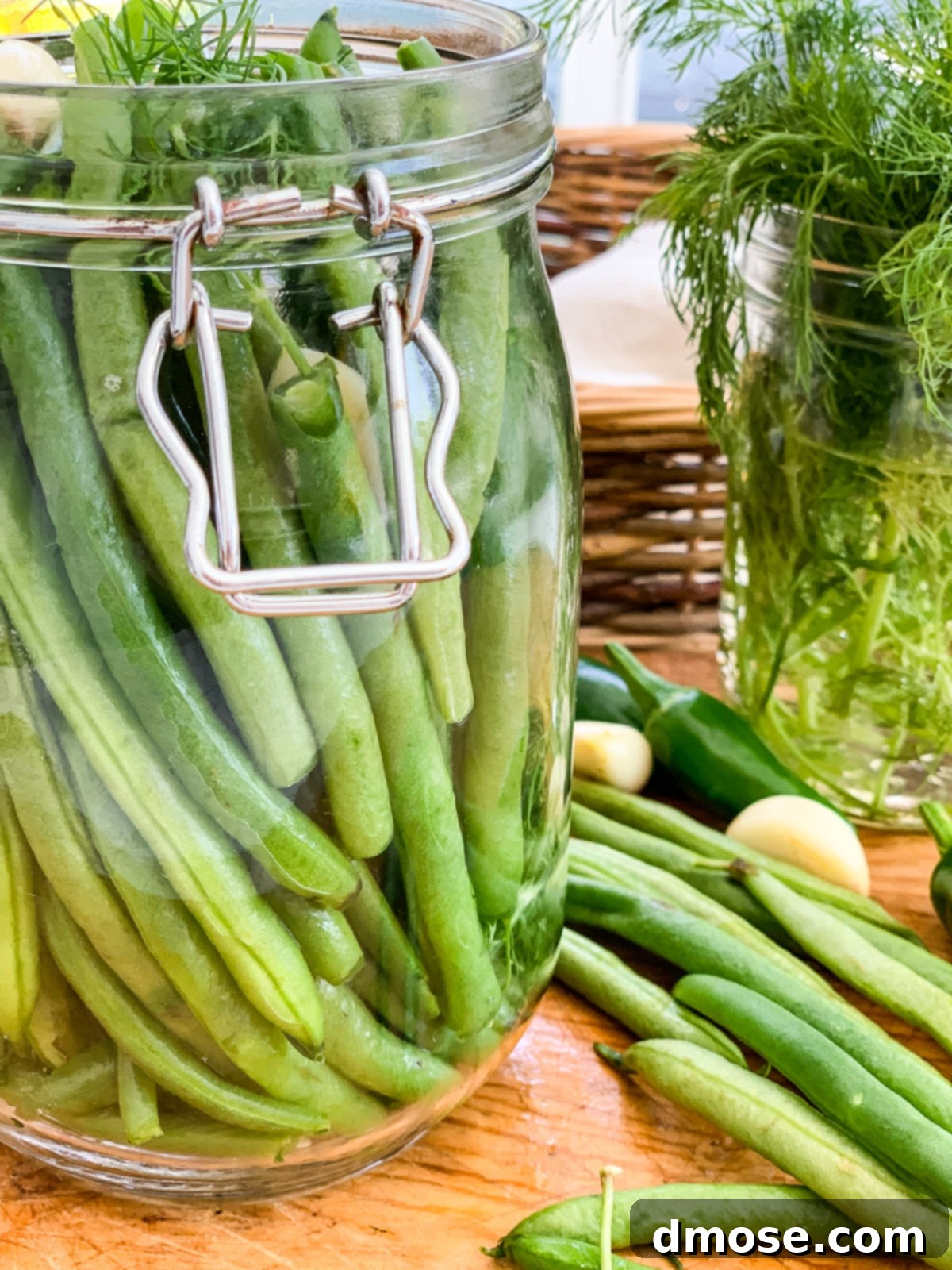
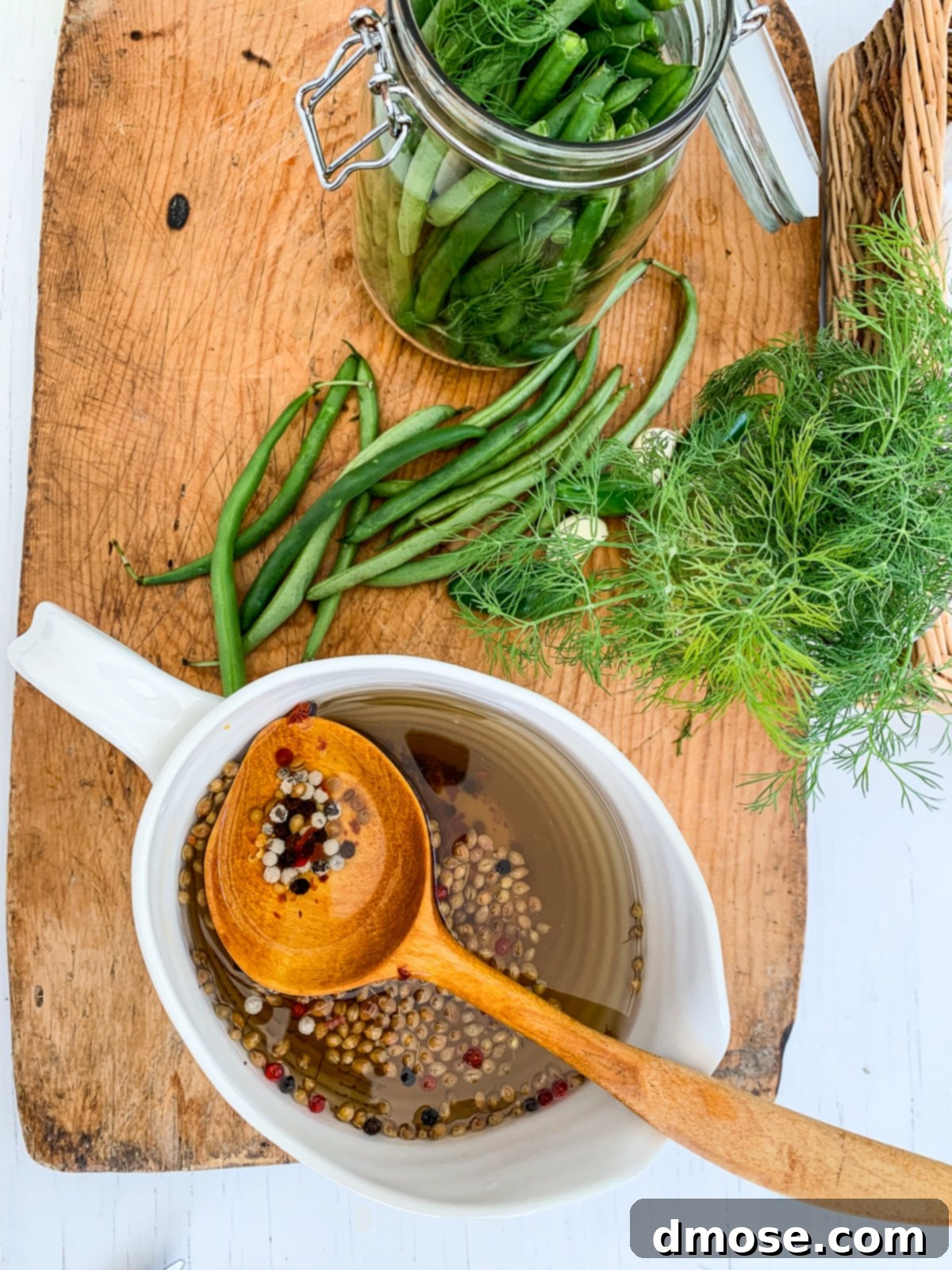
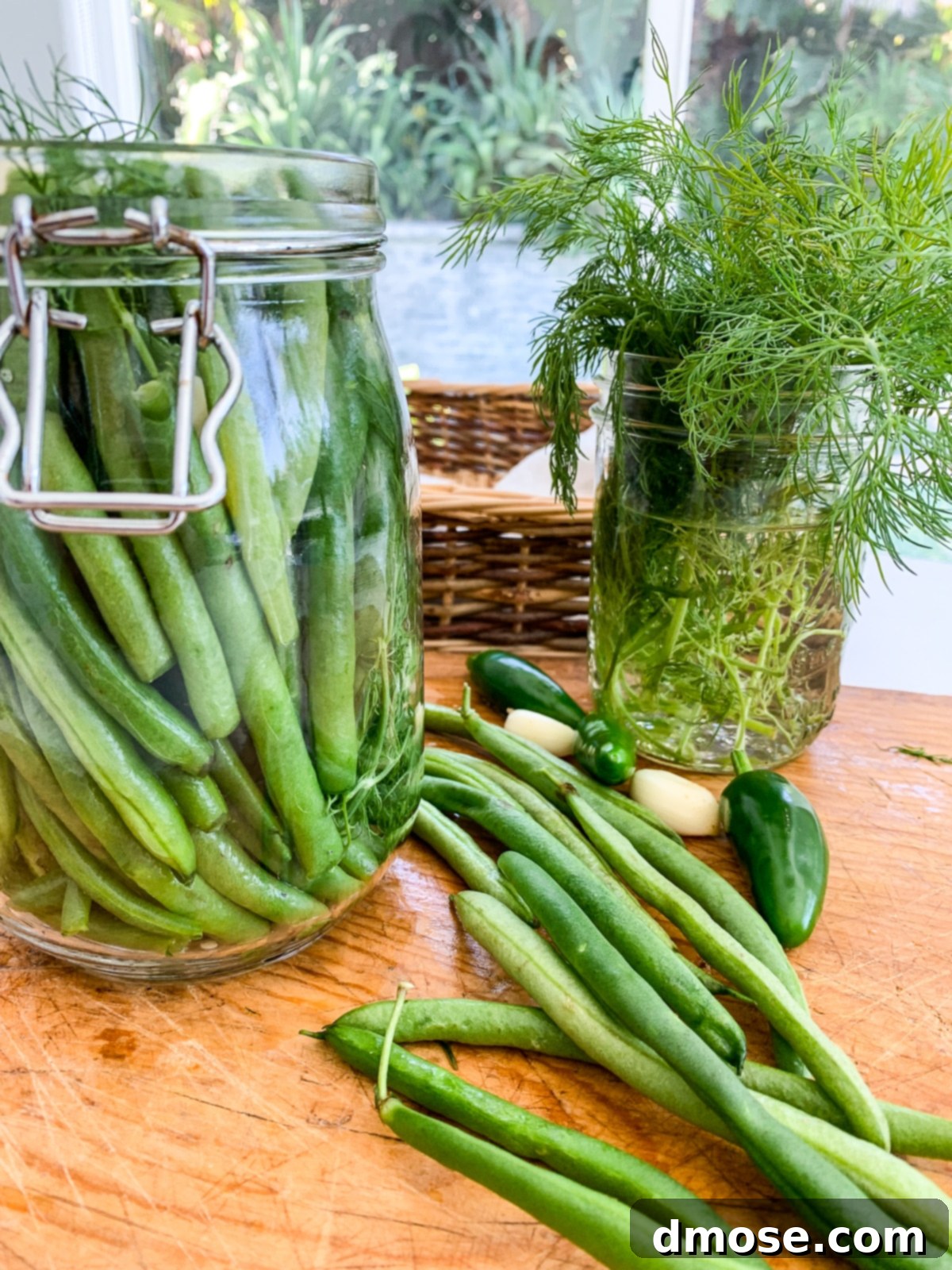
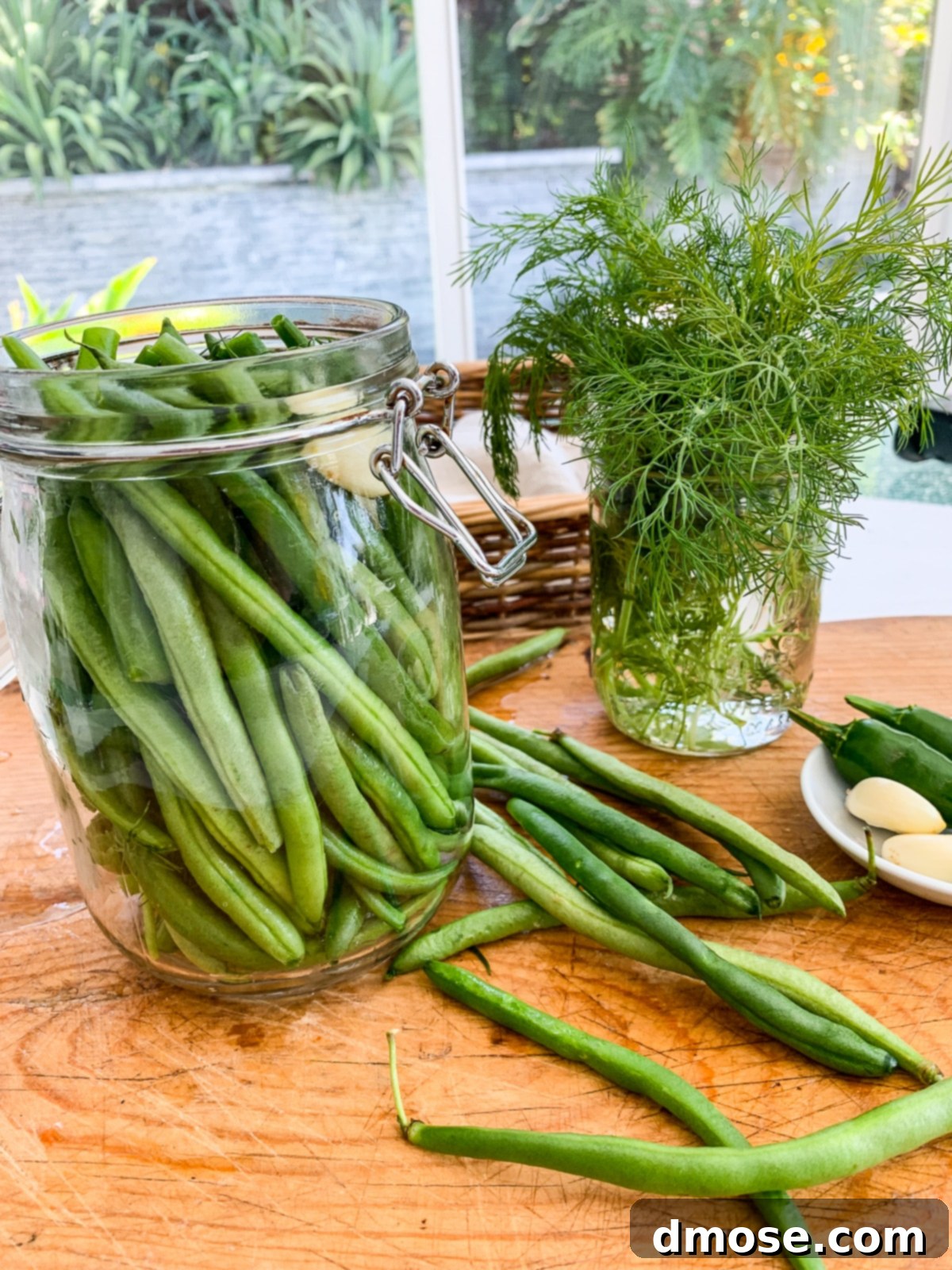
- Now, it’s time to pack the green beans. The most effective way to load the beans is to lay the glass jar on its side. Carefully arrange the trimmed green beans tightly into the jar so they are standing upright. Packing them densely helps keep them submerged in the brine once added. If using pint jars, remember to cut your beans shorter to fit snugly.
- Once the brine has completely cooled to room temperature, carefully pour or ladle it over the packed green beans in each jar. Ensure the beans are fully submerged. Fill the jars to within ½ inch of the top of the jar rims, leaving a small headspace.
- Place the lids and bands securely on the jars. Immediately transfer the filled jars to the refrigerator. For the best flavor development, allow them to marinate for at least 24-48 hours before enjoying, though a few days will yield deeper flavor. Consume these refrigerator pickles within one month.
Unleash the Flavor: Creative Ways to Enjoy Pickled Green Beans
Pickled green beans, affectionately known as Dilly Beans or even “Silly Beans” due to their playful name, are experiencing a resurgence in popularity, not just for their delightful crunch but also for their incredible versatility. These tangy, crisp vegetables are a fantastic addition to a variety of dishes and occasions.
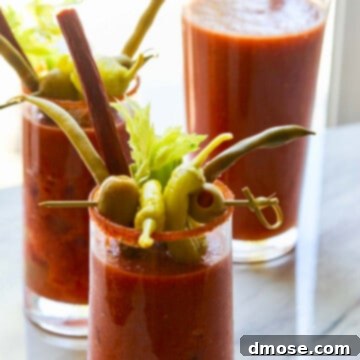
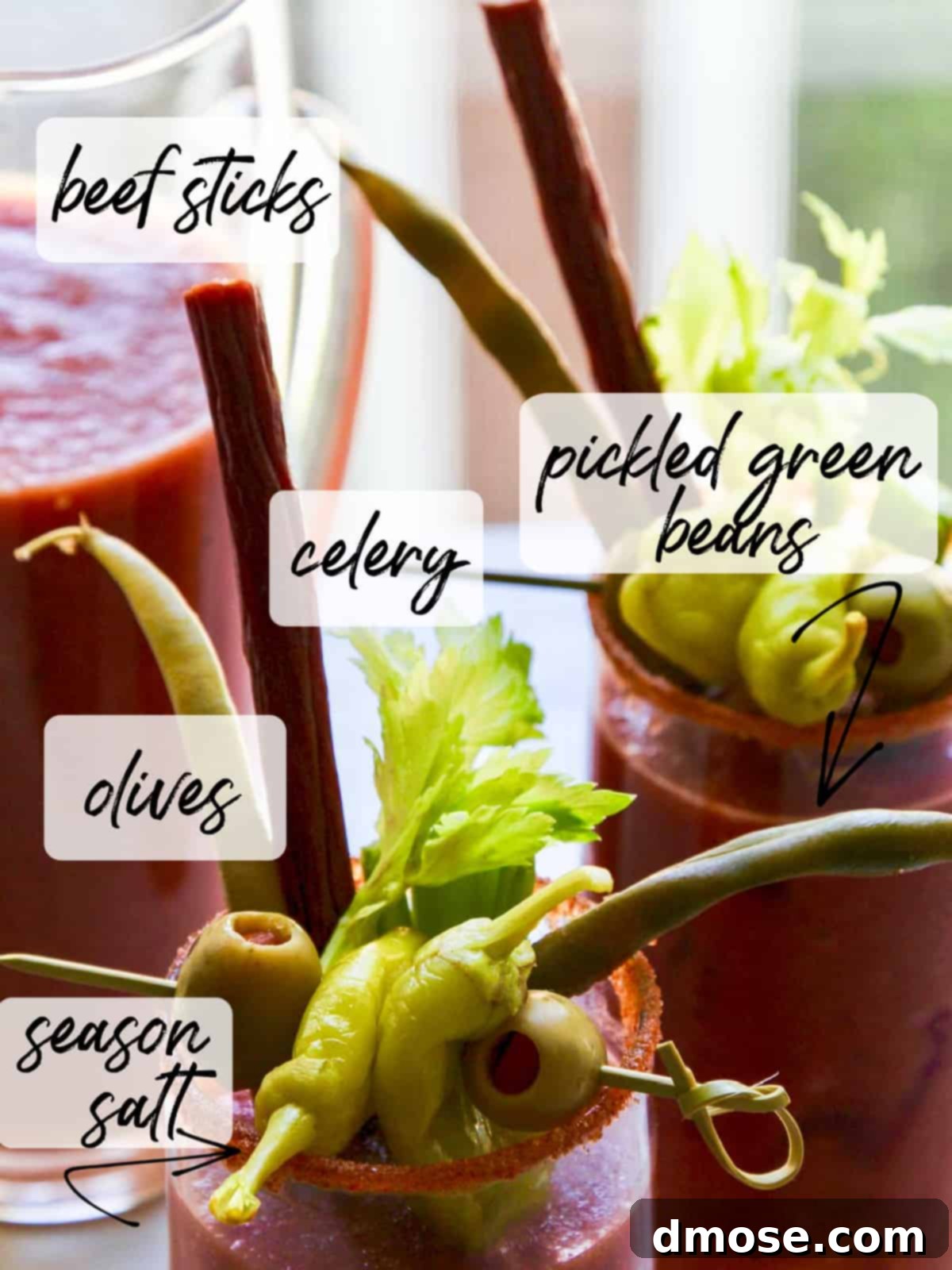
One of their most celebrated uses is as a sophisticated garnish for cocktails. Dilly beans are a star in drinks like the classic Bloody Mary and its Canadian cousin, the Caesar cocktail. For those unfamiliar with the Caesar, it’s primarily enjoyed in Canada and typically features vodka, a unique Clamato juice mix (tomato juice and clam broth), hot sauce, and Worcestershire sauce. It’s traditionally served over ice in a salt-rimmed glass and garnished with a stalk of celery and a lime wedge. Adding a dilly bean to a Bloody Mary or Caesar elevates the drink with a burst of briny flavor and a satisfying crunch.
Beyond cocktails, their culinary applications are endless. Enjoy them simply as a healthy, low-calorie snack straight from the jar. Their satisfying crunch and tangy flavor make them an addictive treat. For salads, chop them into bite-sized pieces or leave them whole to add a vibrant pop of color and texture. They’re also an absolutely perfect addition to elaborate charcuterie boards and antipasto platters, offering a refreshing counterpoint to rich cheeses, cured meats, and olives.
If you’re a fan of the Bloody Mary, we highly recommend trying these pickled green beans with a homemade mix. For an exceptional experience, try this Spicy Bloody Mary Mix. Its fresh, vibrant flavors, packed with roasted chilies, onions, and ripe garden tomatoes, create a complex and extraordinary base that pairs magnificently with the tangy crunch of dilly beans. Once you taste the difference, you’ll never go back to bottled mixes!
GET THE RECIPE
PIN IT
Swaps, Variations, and Best Flavor Additions for Your Pickled Green Beans
One of the beauties of making homemade refrigerator pickles is the freedom to customize the flavors to your exact preference. Don’t be afraid to experiment with different ingredients to find your perfect dilly bean!
Kinds of Vinegar
While distilled white vinegar is the traditional choice for its clean, sharp flavor, you can certainly explore other vinegars to introduce different nuances:
- Apple Cider Vinegar: Offers a slightly fruitier, mellower tang.
- White Wine Vinegar: Provides a delicate, sophisticated acidity.
- Red Wine Vinegar: Will add a bolder, slightly sweeter and fruitier note, but be aware it might slightly alter the color of your beans.
- Rice Vinegar: A good choice for a milder, slightly sweeter flavor, often used in Asian-inspired pickling.
Just ensure you use vinegar with at least 5% acidity for proper preservation.
Spice Variations
The spices are where you can truly make this recipe your own.
- Dill Seeds or Mustard Seed: If fresh dill isn’t available, or you prefer a more concentrated flavor, a teaspoon of dill seeds or mustard seeds (yellow or brown) works wonderfully.
- For Extra Heat: Amp up the spice by adding a pinch of cayenne pepper directly to the brine, or increase the amount of red pepper flakes.
- Other Aromatic Seeds: Consider adding a few fennel seeds for a subtle licorice note, or caraway seeds for an earthy, slightly rye-like flavor.
Bean Varieties
This recipe isn’t exclusively for green beans!
- Yellow Wax Beans: These vibrant yellow beans pickle beautifully and offer a slightly milder flavor, adding a lovely color contrast.
- Snap Green Beans: Any variety of snap green beans will work perfectly. Ensure they are fresh and firm for the best crispness.
Peppers for Heat
Tailor the heat level to your palate by choosing different chili peppers.
- Jalapeños: Provide a moderate, approachable heat.
- Serranos: A step up in heat from jalapeños, for those who like a spicier kick.
- Cayenne Peppers: Bring a more intense heat, use sparingly if you’re sensitive to spice.
- Red Fresno Peppers: Offer a nice balance of heat and a subtly sweet, fruity flavor.
You can use them fresh, sliced, or even dried for a more concentrated spice.
Garlic
Garlic is a key player in the flavor profile.
- You can certainly add more cloves of garlic if you’re a garlic lover.
- For a more intense garlic flavor, slice the cloves into smaller pieces or even mince them. The smaller pieces will infuse the brine more quickly and powerfully.
- Roasting the garlic cloves lightly before adding them can also introduce a sweeter, deeper flavor.
Salt Choices
The type of salt you use matters for both flavor and appearance.
- Kosher Salt or Sea Salt: These are ideal due to their purity and lack of anti-caking agents, which can make your brine cloudy.
- Pickling Salt: Specifically designed for pickling, it’s pure salt without additives.
- Table Salt: While it can be used in a pinch, iodized table salt contains iodine and anti-caking agents that can discolor your pickling liquid and make the finished pickles cloudy or dark. It’s best avoided for superior results.
Herbs
Dill is traditional, but other herbs can also be incorporated.
- Fresh Dill vs. Dill Seed/Heads: Fresh dill sprigs provide a bright, herbaceous flavor. Dill seeds offer a more concentrated, earthy dill flavor, and even the flower heads (dill heads) from dill plants are excellent for pickling, releasing a strong dill essence.
- Other Herbs: Consider a bay leaf for a subtle herbal note, or a few sprigs of fresh thyme or oregano for an Italian-inspired pickle.
Quick Pickled Green Beans: Top Tips for Success
Achieving perfectly crisp and flavorful dilly beans is simple when you keep a few key tips in mind. These pointers will help you avoid common pitfalls and ensure your refrigerator pickles are a resounding success:
- Maintain Crispness: The golden rule for crunchy pickles is to only add *cooled* pickling brine to your jars of beans. Pouring hot liquid over fresh green beans will blanch and soften them, resulting in a less desirable texture. For vibrant green, wonderfully crisp pickles, let that brine come to room temperature before combining.
- Customize Flavors: Don’t hesitate to adjust the flavor profile to your liking. Love garlic? Add more cloves. Crave extra heat? Increase the amount of chili peppers or red pepper flakes. This is your chance to make truly personalized spicy dilly beans.
- Sweetness Factor: While traditional dilly beans are savory and tangy, some people prefer a hint of sweetness in their pickles. If you fall into this camp, simply add a tablespoon or two of granulated sugar to the hot brine mixture while it’s boiling. Stir until the sugar is fully dissolved for a perfectly balanced sweet and savory result.
- Proper Chilled Storage: Because these are refrigerator pickles and not heat-processed for shelf-stability, they must always be stored in the fridge. For best results and to prevent spoilage, ensure that all the beans remain submerged beneath the pickling liquid. If any beans float above the brine, they are more susceptible to mold. Use a fermentation weight or a small, clean food-safe object to keep them under if necessary. Enjoy your dilly beans within a month for optimal freshness.
- Important Canning Note: This recipe is specifically for quick refrigerator pickles. These are not shelf-stable and require constant refrigeration. To make pickles that can be stored at room temperature for extended periods using a water bath canner or a pressure canner method, it is crucial to consult a comprehensive and reliable guide to canning, such as the Ball Blue Book. This resource provides tested recipes, detailed instructions, and essential safety guidelines for processing your pickles in a boiling water bath, including specific canning times, to ensure they are safe for long-term storage.
Green Bean Pickling FAQ
For pickling, the best green beans are fresh, firm, and blemish-free. Terms like green beans, string beans, wax beans, and snap beans are often used interchangeably to describe various types of pole or bush beans. These varieties, despite slight differences in color and shape, all perform admirably in most pickle recipes, holding their crisp texture well.
Beyond the classic green, you’ll often find delightful light yellow (wax) and even purple hues at markets. It’s worth noting that purple beans, while beautiful raw, tend to lose their vibrant color and turn green once cooked or processed in a hot brine.
One specific variety to generally avoid for pickling is the French variety known as Haricots Verts. These are typically very small, thin, and delicate beans that tend not to hold up well to the pickling process, often becoming mushy rather than crisp.
Since this is a quick refrigerator pickle recipe and not a traditional canning method, these dilly beans have a shorter shelf life. For optimal flavor and texture, it’s best to allow them to marinate in the refrigerator for at least 24-48 hours (or up to 2 weeks for deeper flavor) and then consume them within one month. The acidity of the vinegar combined with the cool refrigerator temperature helps preserve them, but without the heat processing of true canning, they will not keep for long periods at room temperature or even beyond a month in the fridge. Always ensure the beans remain submerged under the brine for best preservation.
While it might seem convenient, using frozen green beans for pickling is generally not recommended for this recipe. Freezing and thawing green beans can break down their cell structure, leading to a softer, less crisp texture once pickled. For the best crunchy dilly beans, always opt for fresh, firm green beans.
No, you don’t necessarily need “canning specific” jars that are designed for heat processing. For refrigerator pickles, any clean glass jar with a tight-fitting lid will work perfectly well. Mason jars are a popular choice due to their durability and reliable seals, but repurposed jars (like those from pickles, jam, or spaghetti sauce) can also be used, as long as they are thoroughly cleaned and have a lid that seals securely.
More Delicious Quick Pickle Recipes to Explore
If you’ve fallen in love with the ease and flavor of refrigerator pickling, there’s a whole world of quick pickle recipes waiting for you! Expand your pickling repertoire with these fantastic ideas:
- Make Dill Pickles in various forms – spears, chips, or halves. Just one day of marinating allows the vibrant flavors to develop in these classic cucumber pickles. Once you can’t wait any longer, crack open a jar of these refreshing homemade delights. They’re so good, you’ll want to make extra jars for friends and neighbors!
- Give your abundant summer squash a zippy transformation with these Zucchini Pickles. The tangy pickling brine imparts a bright flavor and a wonderfully crisp texture, making it a brilliant way to utilize fast-growing garden zucchini.
- Quick Pickled Red Onions are an absolute game-changer. These vibrant, tangy onions keep well in the fridge for 3-4 weeks and are incredibly versatile. Try them on hamburgers, as a side dish for salads, piled onto tacos, mixed with pulled pork, or even grilled cheese sandwiches for a gourmet touch.
- For a unique and flavorful snack or side, try these Spicy Pickled Eggs. With just the right touch of heat, they’re undeniably addictive. As a bonus, this recipe also provides a fantastic way to pickle garlic and jalapeños alongside the eggs!
- Zucchini Pickles (Easy No Canning)
- Refrigerator Dill Pickles
- Mexican Pickled Red Onions
- Jalapeno Pickled Eggs Recipe
CRAVING MORE?
Did you love this recipe? We would love to hear from you! If you make this recipe and love it, give it a 5-star rating ⭐⭐⭐⭐⭐ with a comment. THANK YOU!! Follow Delicious Table with my free newsletter and share this recipe with your friends on Facebook, Pinterest, and Instagram.
Print Recipe
Pin Recipe
Pickled Green Beans Recipe
25 minutes
25 minutes
8
34 kcal
Lisa Hatfield
Equipment
- 1 (4- 1 Quart) Mason jars, lids, rings
- Epicurean Non-Slip Cutting Board
- Small Serrated Knife
- Global Kitchen Scissors
Ingredients
Jar Ingredients
- 1 pound whole green beans (or yellow wax beans)
- 1-2 whole garlic cloves
- 1 hot chili pepper (jalapeno, serrano, etc.)
- 2-3 sprigs fresh dill
- 2 teaspoons mixed color or black peppercorns (½ teaspoon peppercorns/jar)
- ½ teaspoon red pepper flakes (¼ teaspoon/jar)
- 2 teaspoons coriander seeds (½ teaspoon/jar)
Pickling Liquid
- 2 cups white vinegar
- 2 cups water
- 2 tablespoons sea salt (kosher salt) or pickling canning salt
Instructions
- Wash your Mason jars or canning jars with hot soapy water or in the dishwasher. You can use either quart or pint glass jars.
Make The Pickling Liquid
- In a pot or large saucepan on the stove, combine vinegar, water, peppercorns, red pepper flakes, coriander, and salt.
- Turn the heat to medium-high and bring the water vinegar mixture to a boil, dissolving the salt. Cool this mixture completely to room temperature.
Fill The Jars
- In the bottom of each quart jar, place: 1-2 garlic cloves, 1 hot chili pepper cut open, and 2-3 sprigs of dill.
- Trim ends of each green bean using a clean pair of kitchen scissors. Pack green beans into the jars so they are standing on their ends. The easy way to load the beans in the jars is to lay the glass jar on its side to fit them all inside. You can make pints and cut the beans shorter to fit your pint jars.
- Cool the boiling brine to room temperature. Note: High heat hot liquid will cook the crisp pickled green beans so they won’t be bright green and crunchy.
- Pour or ladle the room temperature mixture into the jars. Fill to within ½ inch of the top of the jar rims. Place lids and bands on jars. Place jars in the refrigerator and eat within a month!
Notes
Jars
Use clean Mason jars and lids. Running your jars through the dishwasher is a good way to ensure they are clean.
Eat in a Month
It is best to allow them to marinate in the fridge for 2 weeks and use them within a month. Always keep them submerged under the brine liquid. The vinegar combined with the cool fridge temperature aids in preserving them, but the lack of heat and true canning means they won’t keep for long periods of time.
Use as a snack, in salads, with a sandwich, or in a Bloody Mary as a garnish.
Canning
This recipe is for refrigerator quick pickles only.
Kinds of Vinegar: Apple cider vinegar, white wine vinegar, red wine vinegar, or rice vinegar will all work in this recipe.
Spice Variations: Add in a teaspoon of dill seeds or mustard seed; all work. For some additional heat in this great recipe, add in a pinch of cayenne pepper or red pepper flakes.
Bean Varieties: Use up your wax yellow beans or snap green bean bounty for pickling with some other basic ingredients.
Peppers: Try to add different hot peppers depending on the heat level you prefer. Jalapenos, habaneros, and cayenne peppers all are great options.
Garlic: You can add more cloves of garlic if you wish, either small cloves or even minced garlic is fine. Slice the cloves of garlic into smaller pieces to up the flavor of the brine.
Salt: Table salt, pickling salt, and kosher sea salt can all be used in pickling. Table salt does work in a pinch. However, iodized salt has iodine and tends to discolor the pickling liquid and jar contents.
Herbs: Try fresh dill, dill seed, flower heads of dill plants (aka dill heads). All are usable for pickling, canning, and cooking dishes to add flavor.
Nutrition
Calories: 34kcal | Carbohydrates: 5g | Protein: 1g | Fat: 0.3g | Saturated Fat: 0.1g | Polyunsaturated Fat: 0.1g | Monounsaturated Fat: 0.1g | Sodium: 1754mg | Potassium: 150mg | Fiber: 2g | Sugar: 2g | Vitamin A: 457IU | Vitamin C: 9mg | Calcium: 37mg | Iron: 1mg
Tried this recipe?Let’s see it on Instagram! Follow us @Delicious.Table and tag us on your recipe photo with #delicioustable
Need ingredients or equipment to make this recipe?Shop Now Every cooking product recommended I own, use, and love how they perform in my kitchen. Happy Cooking! Lisa
Disclosure: As an Amazon Associate, Delicious Table earns advertising fees from qualified purchases linking to Amazon.com