
Last Updated January 4th, 2024 at 11:09 pm by Lisa
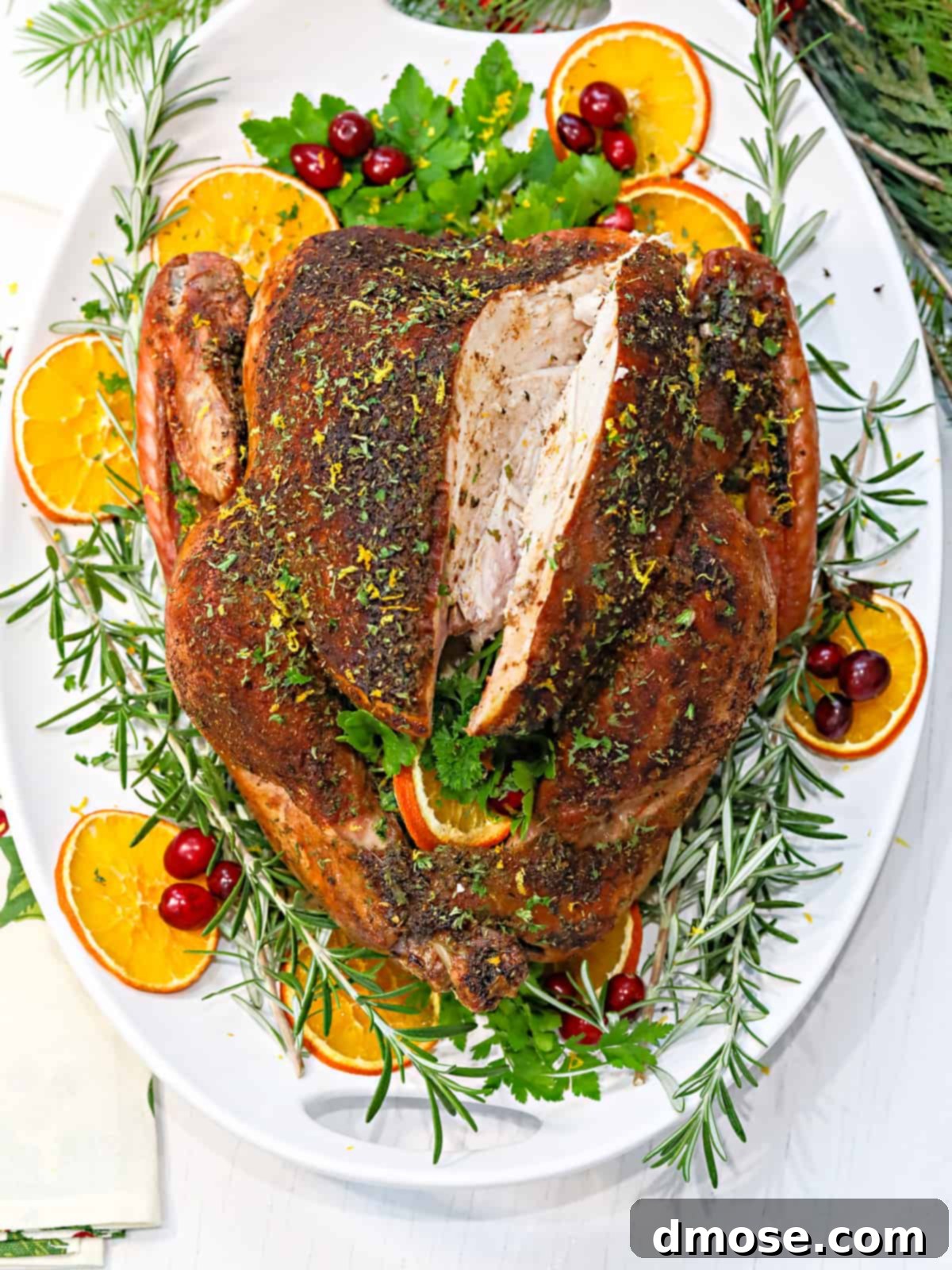
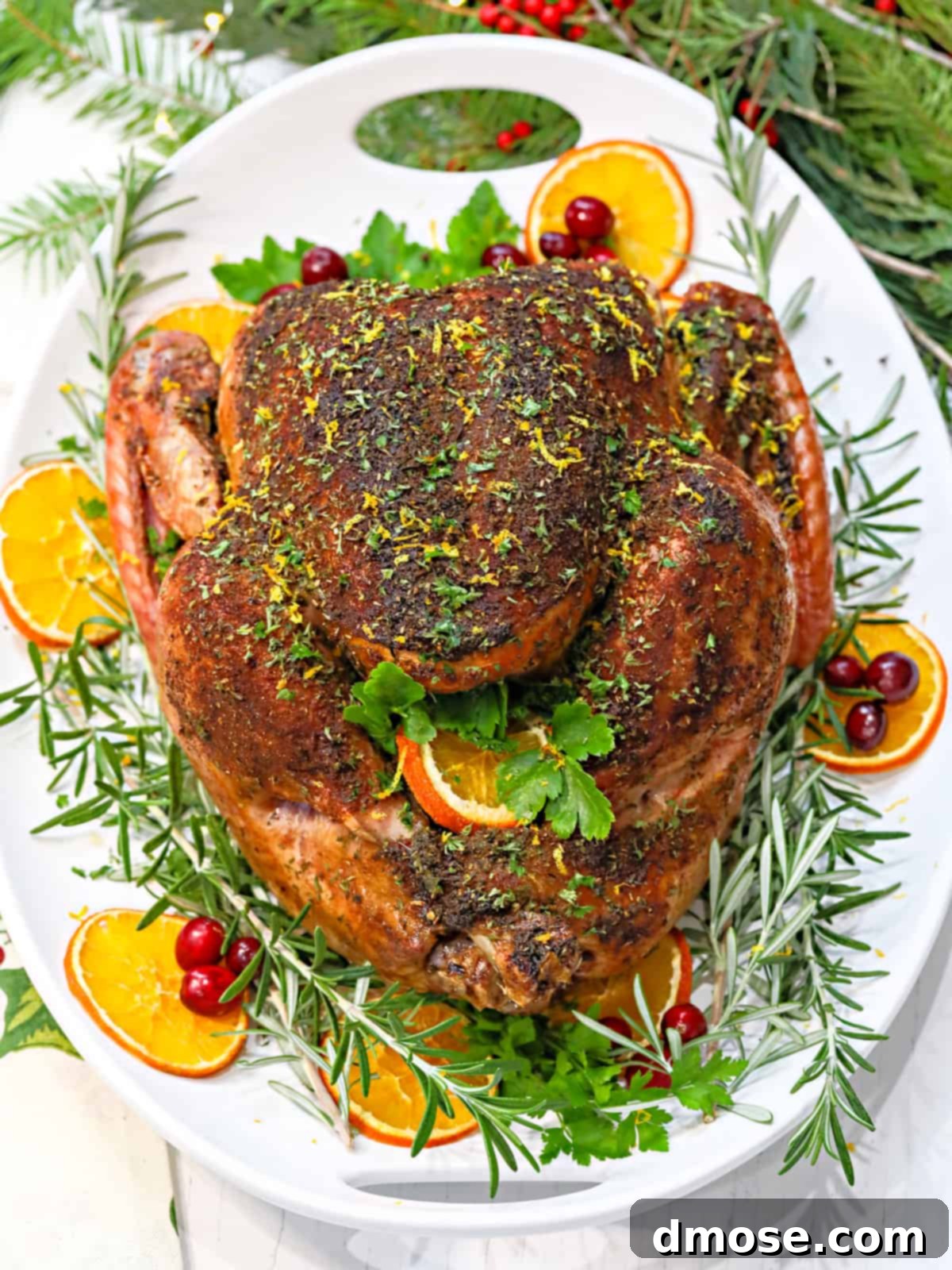
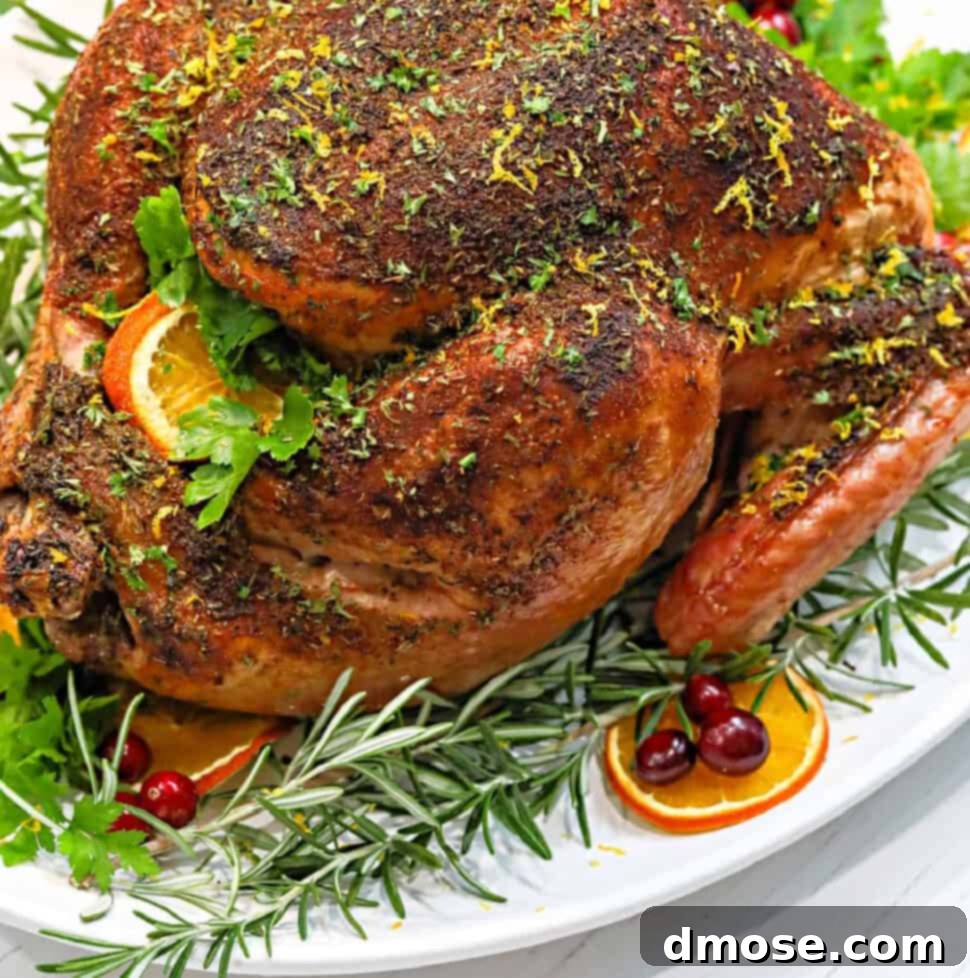
Achieving a perfectly cooked turkey—one that boasts incredible flavor, succulent meat, and famously crispy skin—is a culinary dream for any holiday host. While traditional methods often fall short, leaving parts of the bird dry or bland, a Turkey Dry Brine stands out as a superior technique. This simple yet effective method infuses the entire bird with bold flavor, drawing moisture into the meat and ensuring a wonderfully crisp exterior. Forget about messy wet brines or expensive store-bought mixes; the secret to a memorable Thanksgiving or Christmas turkey lies in a thoughtfully crafted homemade spice blend, easily assembled from your pantry.
This comprehensive guide provides step-by-step instructions to create the ultimate turkey rub, promising juicy slices and golden, crispy skin every time. Whether it’s your first time hosting or you’re a seasoned chef looking to perfect your holiday bird, this dry brining method will elevate your turkey from good to truly exceptional. The beauty of a dry brine lies in its simplicity and the profound impact it has on the turkey’s texture and taste, making it an indispensable secret for the juiciest, most flavorful bird you’ve ever served.
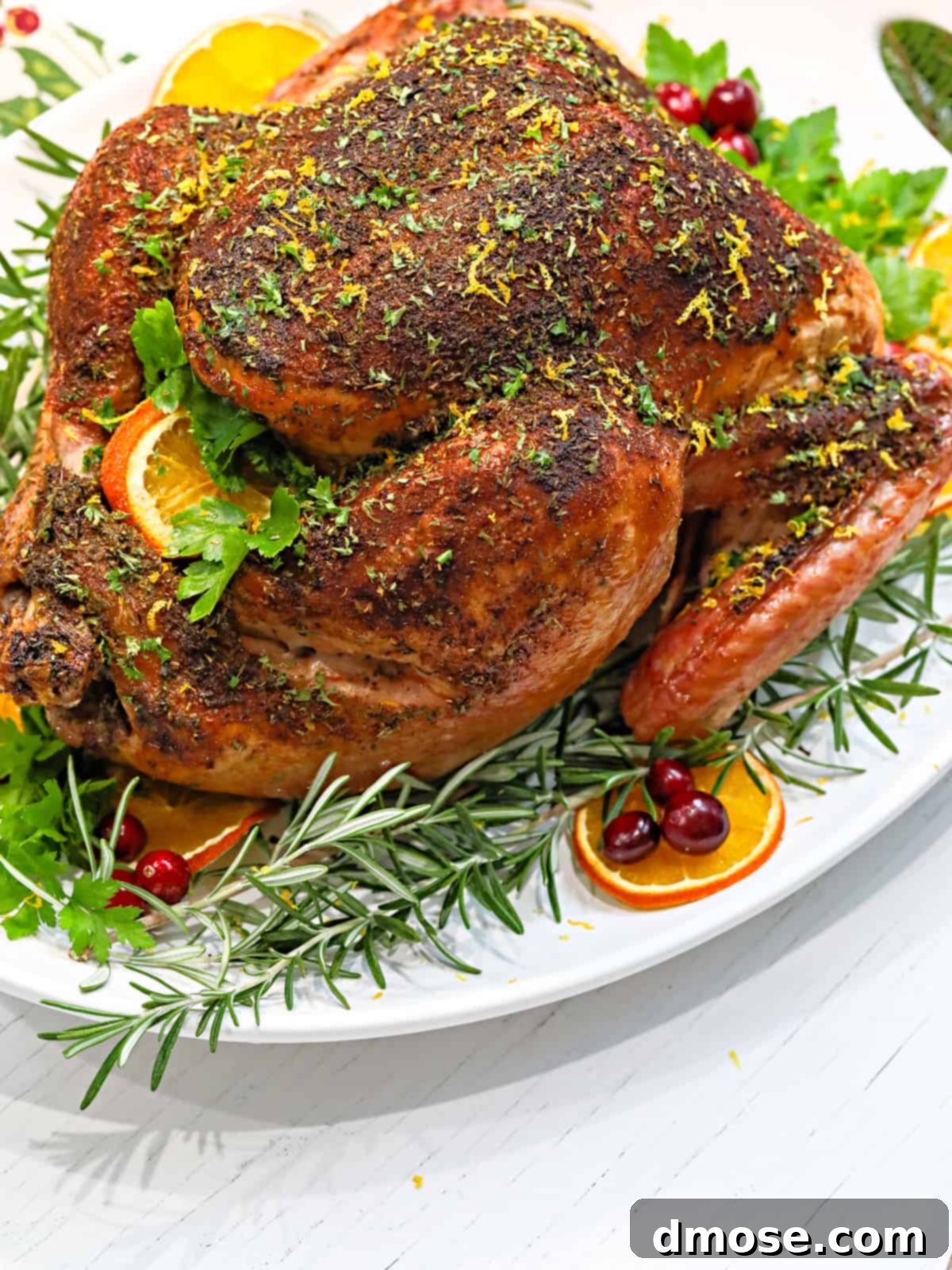
Table of Contents
- The Ultimate Turkey Dry Brine Recipe
- Crafting Your Signature Dry Brine Mixture
- Preparing and Roasting Your Turkey to Perfection
- Applying the Flavorful Rub
- Maximizing Flavor & Moisture While Roasting
- Roasting Techniques for Golden Crispy Skin
- Achieving the Perfect Internal Temperature
- Turkey Seasoning Recipe: Flavor Variations and Tips
- Transforming into a Wet Rub
- Elevating Flavor with Additional Aromatics
- Essential Safe Cooking Temperatures for Turkey
- More Irresistible Holiday & Christmas Recipes
- Delectable Thanksgiving Side Dishes
- Additional Thanksgiving Dinner Turkey Recipes
The Ultimate Turkey Dry Brine Recipe
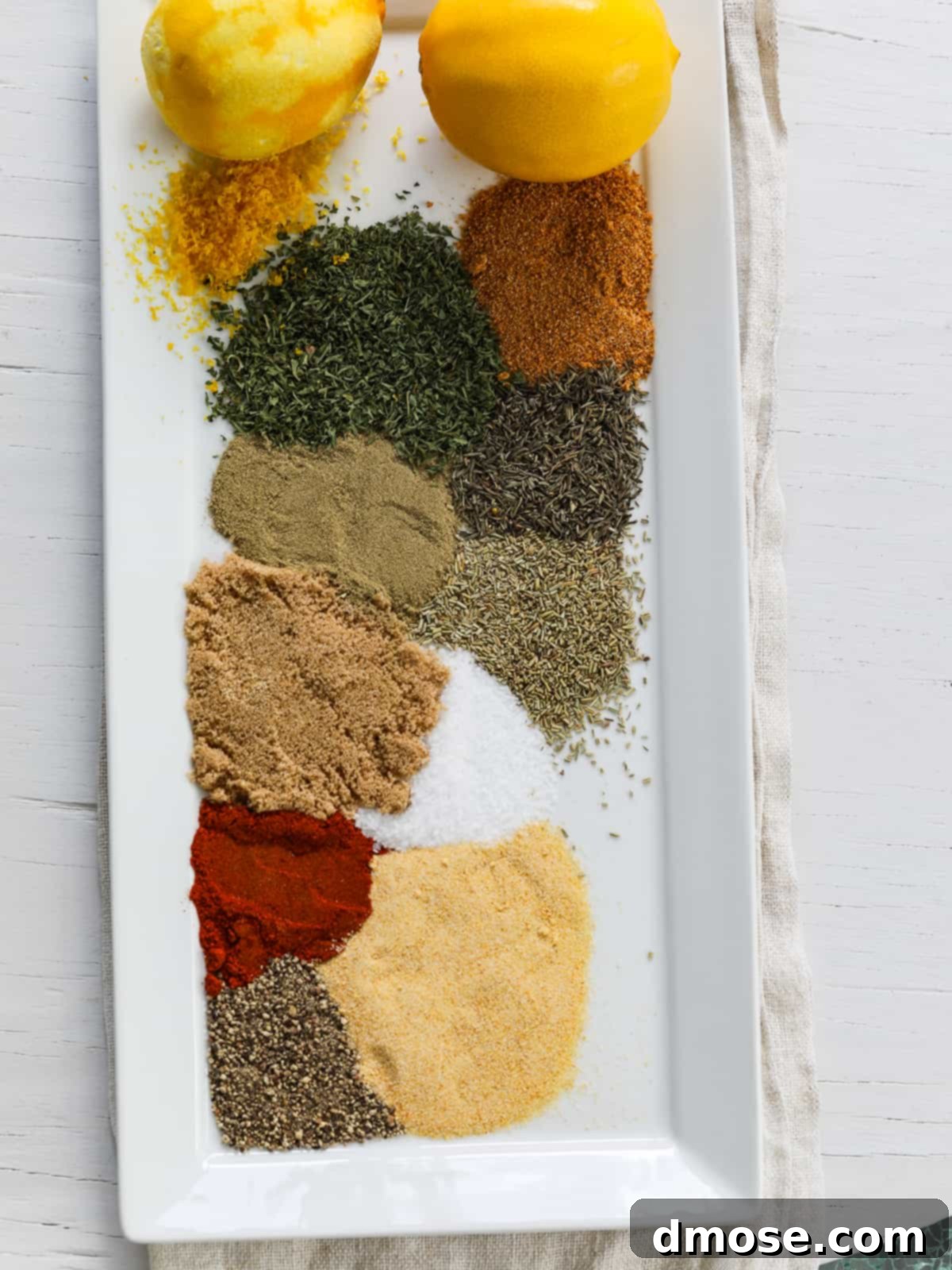
The beauty of this homemade turkey dry brine lies in its simplicity and the accessibility of its ingredients. All the Thanksgiving turkey spices listed below are readily available at any local grocery store. For convenience and to ensure you always have enough on hand, consider purchasing larger spice jars online. Making a double batch of this versatile rub is a smart move; you can store any excess in a small clamp spice jar or an airtight container, ready for your next holiday meal or even a simple weeknight roast chicken. Be sure to save or print the recipe card below so you have these precise measurements at your fingertips for that special time of year!
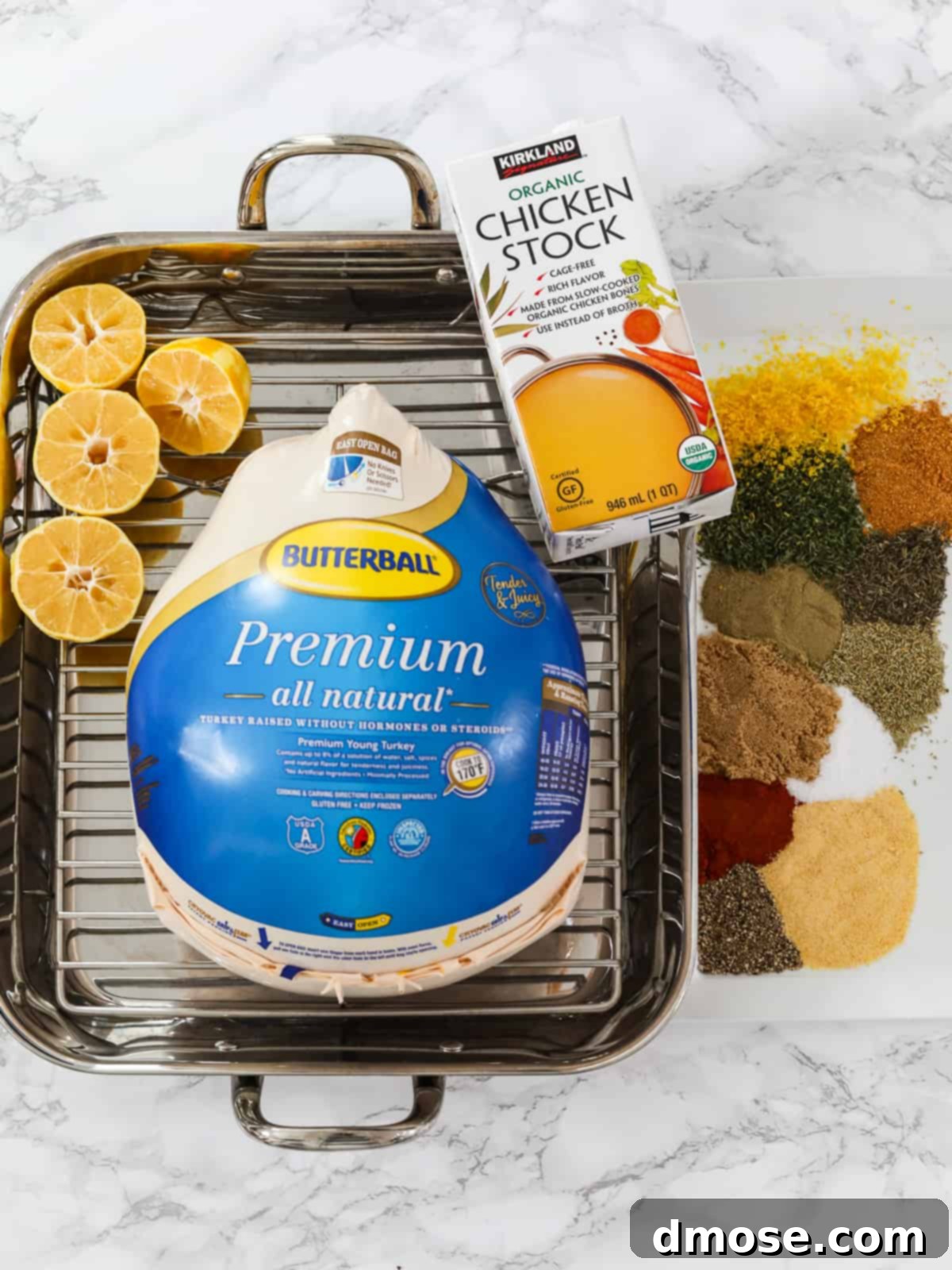
Here’s what you’ll need to prepare for the perfect roasted turkey:
- Whole Turkey (The recipe is optimized for a 12-pound bird, but adaptable for various sizes.)
- Chicken Stock – essential for moisture and gravy base, homemade or high-quality store-bought.
- Whole Lemons and Lemon Zest – providing bright, fresh citrus notes.
- Granulated Garlic Powder – for a foundational savory aroma.
- Granulated Onion Powder – complementing the garlic with a milder, sweet onion flavor.
- Brown Sugar – aids in caramelization for beautiful browning and a hint of sweetness.
- Sea Salt (Morton kosher salt is highly recommended for its crystal structure and even salting.)
- Black Pepper – freshly ground for the best pungency.
- Dried Parsley – adds a fresh, herbaceous touch.
- Dried Thyme – a classic poultry herb, offering earthy and slightly floral notes.
- Crushed Rosemary – imparting a robust, aromatic pine-like flavor.
- Paprika (Ensure it’s sweet paprika, not smoked or hot, to avoid overpowering the natural turkey flavor.)
- Poultry Seasoning – a blend of traditional turkey herbs, adding depth and complexity.
PRO TIP FOR MAXIMIZING FLAVOR: The quality and freshness of your seasonings significantly impact the final taste of your roasted turkey. Take a moment to refresh your spice cupboard. Replace any expired spices or those older than a year, as their potency diminishes over time. A simple trick is to write the date you opened each jar with a black marker, making it easy to identify and discard those that have lost their vibrant aromas and distinct flavors. Fresh spices ensure maximum potential flavor!
Crafting Your Signature Dry Brine Mixture
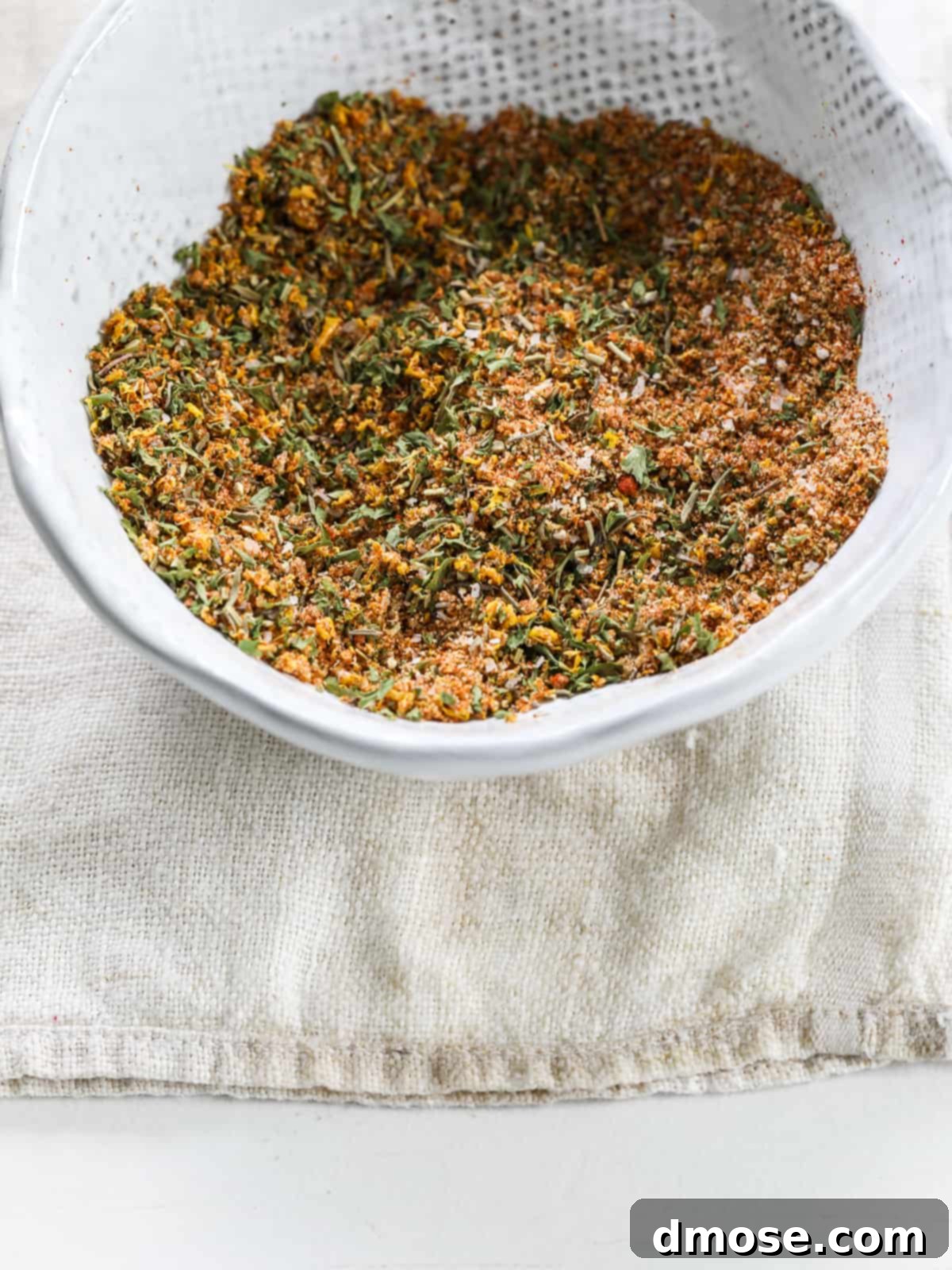
Creating this flavorful dry brine turkey rub is incredibly straightforward. Simply combine all the listed spices and seasonings in a small bowl. Use a whisk to ensure they are thoroughly mixed and evenly distributed. This meticulous blending ensures that every application delivers a consistent burst of flavor across your turkey. If you’re preparing the dry brine ahead of time – which is highly recommended for holiday planning – transfer the mixture to a large clamp spice jar or any other airtight container. Stored properly, your homemade rub will retain its potency and be ready whenever you are, making your cooking process smoother and more enjoyable.
Preparing and Roasting Your Turkey to Perfection
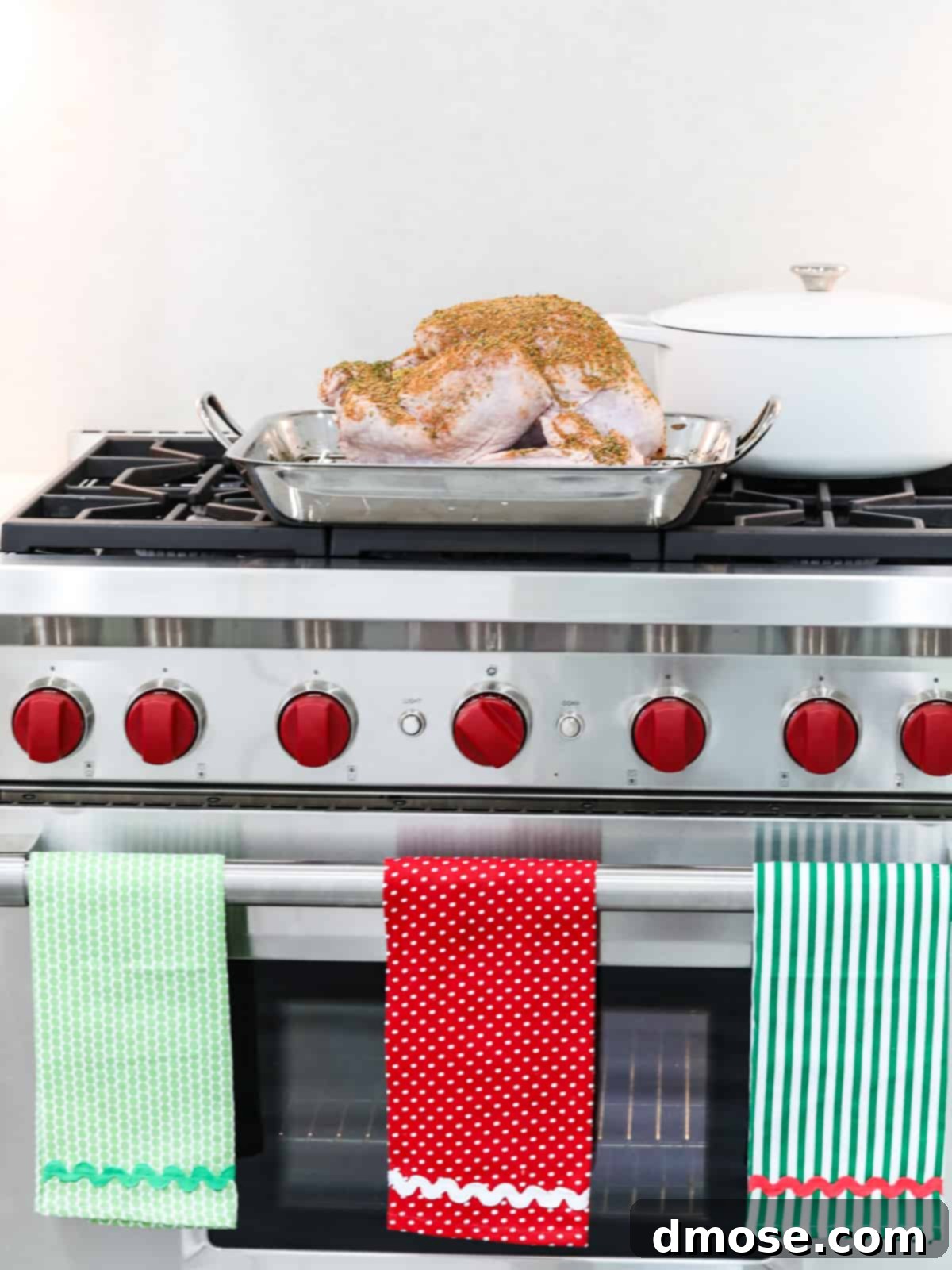
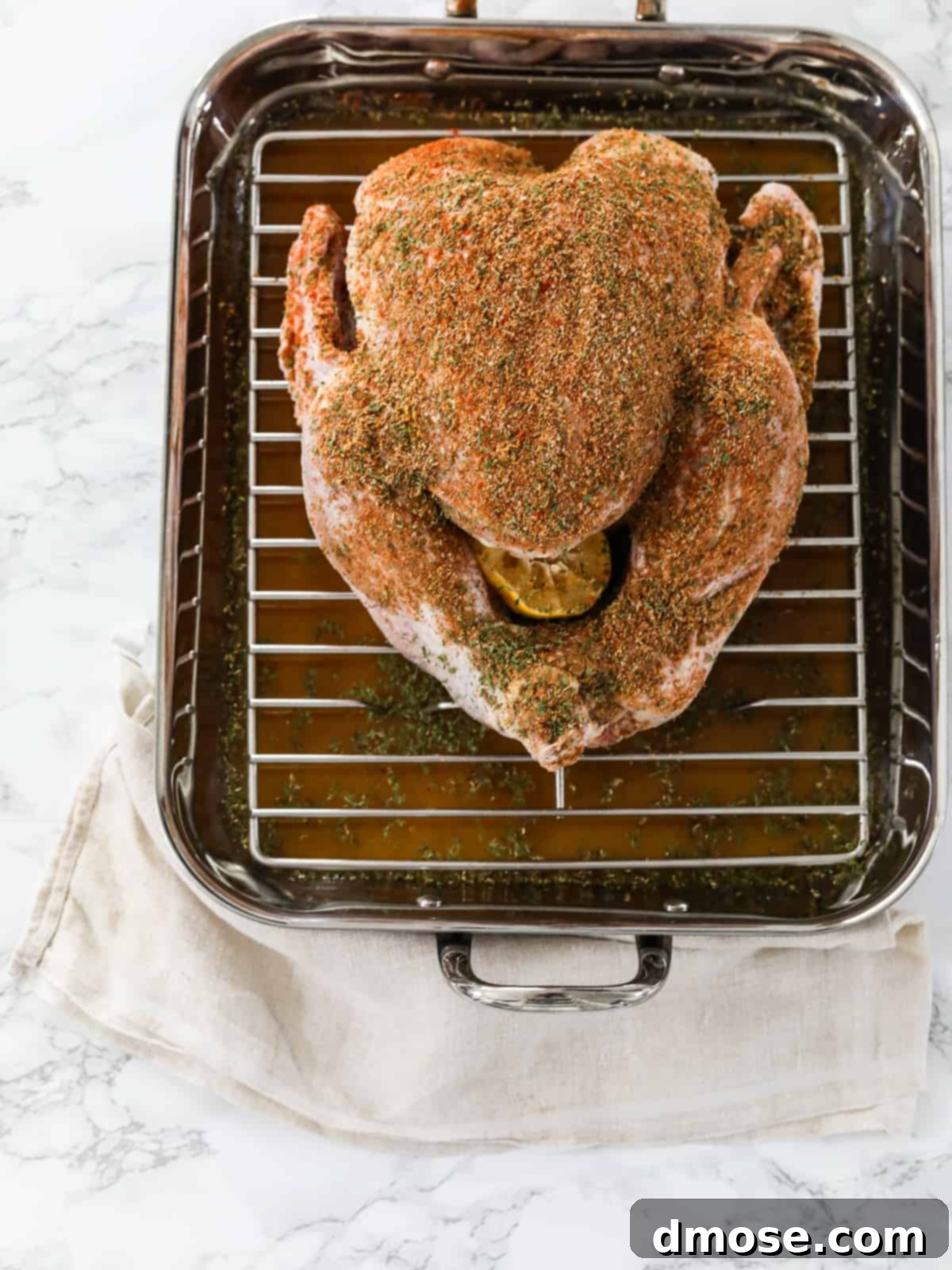
The journey to a show-stopping holiday turkey begins with proper preparation. For roasting, you will need a large, shallow roasting pan equipped with a sturdy wire rack. This rack is crucial as it elevates the turkey, allowing hot air to circulate evenly around the entire bird, preventing the bottom from getting soggy and promoting an all-around golden, crispy skin. Before anything else, carefully remove the turkey from its wrapper, then locate and remove the neck and giblets from both cavities. Place the turkey breast-side up on the wire roasting rack, ensuring it sits securely within the pan.
Applying the Flavorful Rub
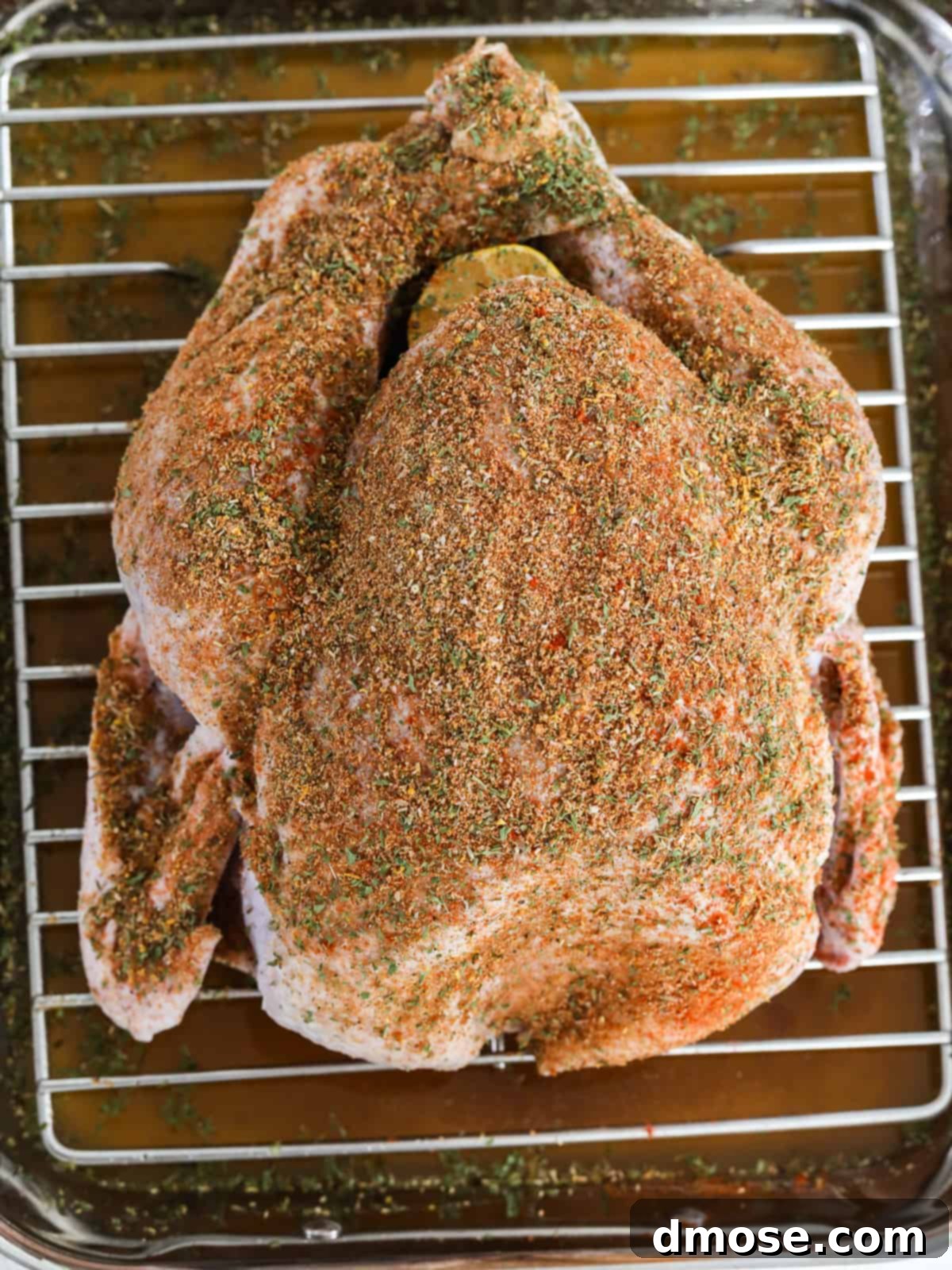
One of the most critical steps for achieving that coveted golden-brown, crispy skin is to thoroughly pat the entire surface of the turkey dry with paper towels. Any residual moisture will steam the skin instead of allowing it to crisp up. Once dry, generously season the outside of the turkey, paying particular attention to the breast, which tends to be the largest and most visible part. For optimal flavor penetration and skin crisping, consider applying the rub and chilling the turkey uncovered in the refrigerator overnight (or for at least 12-24 hours). This not only acts as a superb prep-ahead strategy but also allows the salt in the brine to draw moisture from the skin, resulting in an even crispier texture. Don’t forget to tuck the wing tips under the bird; this simple step prevents them from over-roasting and burning, ensuring every part of your turkey is perfectly cooked.
Maximizing Flavor & Moisture While Roasting
Beyond the dry brine, several techniques can further enhance the turkey’s flavor and maintain its moisture during roasting. Begin by cutting lemons in half and squeezing their juice directly into the turkey’s cavity, then place the halves inside. The citrus notes will subtly infuse the meat as it cooks. For an even more aromatic experience, add a fresh herb mixture such as sprigs of rosemary, parsley, and sage leaves into the cavity. Whole garlic cloves can also be added for an additional layer of savory depth.
Next, pour at least 4 cups of high-quality chicken stock (homemade or store-bought) into the bottom of the roasting pan. This liquid serves multiple vital purposes: it helps maintain a high-moisture environment within the oven, contributing to a juicier bird, and critically, it creates incredibly flavorful pan juices. These drippings are the foundation for a rich, delicious gravy. In a pinch, cold water with some chicken bouillon can be used, though chicken stock will yield superior flavor for your gravy.
Roasting Techniques for Golden Crispy Skin
Achieving a beautifully roasted turkey with golden, crispy skin and tender, juicy meat requires a precise roasting strategy. Start by preheating your oven to a high temperature of 400 degrees Fahrenheit (200°C). Roast the turkey at this initial higher temperature for 1 hour. This initial blast of heat helps to quickly crisp the skin and kickstart the browning process, significantly reducing overall cooking time. After the first hour, check the turkey. If the skin is browning too rapidly, loosely tent it with a piece of aluminum foil to prevent over-browning while the interior continues to cook. At this point, add another 4 cups of chicken stock to the pan if the liquid level is low, and baste the turkey using a bulb baster to keep the skin moist and promote even browning.
Reduce the oven temperature to 375 degrees Fahrenheit (190°C) and continue roasting for another 90 minutes or more, depending on the turkey’s size. Continue to monitor the skin and tent with foil as needed, especially around the 60-minute mark of this lower-temperature phase. Basting every 30-45 minutes also contributes to a uniformly golden and flavorful crust. This two-stage temperature approach ensures a thorough cook, tender meat, and that irresistible crispy skin.
Achieving wonderfully crispy turkey skin is a goal for many, and it’s easier than you think! The key is a multi-step approach. First, always place your turkey on a wire rack within a shallow roasting pan to ensure air circulation. Second, and crucially, pat the entire surface of the bird thoroughly dry with paper towels before applying any seasoning. Moisture is the enemy of crispiness. Third, generously season with a good dry rub – the salt in the rub helps draw out additional moisture. Finally, for the absolute best results, preseason the turkey and chill it uncovered in the refrigerator overnight. This allows the skin to air-dry further, setting the stage for an incredibly crisp and golden finish during roasting.
Achieving the Perfect Internal Temperature
Accurately checking your turkey’s internal temperature is non-negotiable for food safety and optimal tenderness. Invest in a good wireless meat thermometer with probes or a reliable instant-read thermometer. Wireless probe thermometers are particularly convenient, allowing you to monitor temperatures remotely via Bluetooth on your phone, minimizing oven door opening and heat loss. To ensure accuracy, insert the thermometer into the thickest part of the turkey breast, being careful to avoid touching the breast bone, as this can give a false, higher reading.
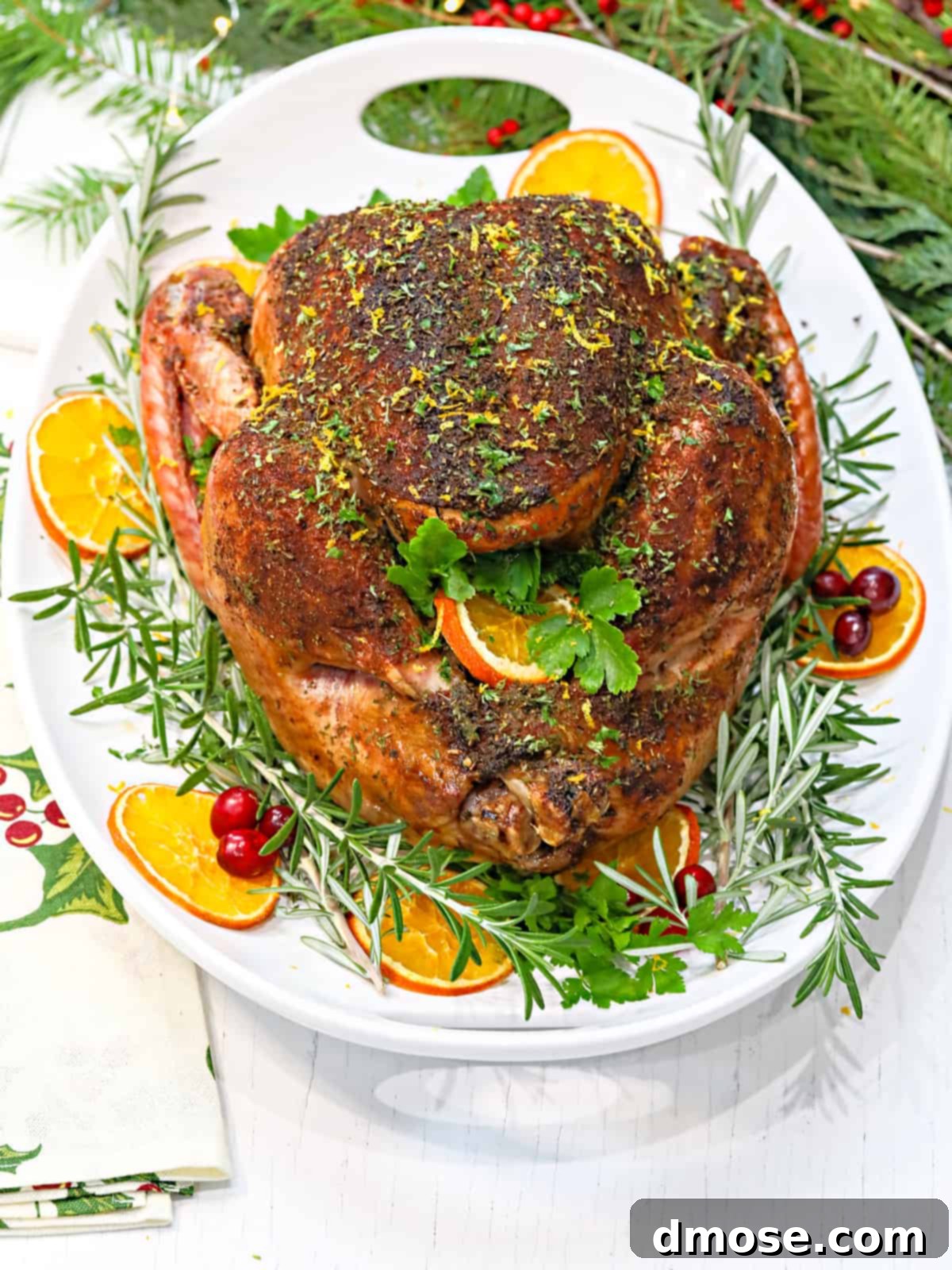
You’re aiming for the breast meat to reach an internal temperature of 165 degrees Fahrenheit (74°C). Additionally, check the thickest part of the thigh; it should register 175 degrees Fahrenheit (79°C). Once these safe cooking temperatures are met, remove the turkey from the oven and transfer it to a large carving board. This next step is crucial for the juiciest turkey: allow it to rest for at least 10-15 minutes. Resist the temptation to cover it, as this will trap steam and soften the crispy skin you worked so hard to achieve. Resting allows the meat fibers to relax and reabsorb the flavorful juices, ensuring every slice is incredibly moist. After resting, carve the turkey with a sharp knife and serve warm with your favorite side dishes, or prepare it for delicious leftover recipes.
Turkey Seasoning Recipe: Flavor Variations and Tips
While a dry brine is an exceptional method for a flavorful and moist turkey, the culinary world offers a spectrum of approaches, each with its own merits. Some enthusiasts swear by the precision of a flavor injector for delivering marinades deep into the meat (a technique I’m exploring for an upcoming grilled turkey breast recipe!). Others prefer the overnight magic of a dry brine like this one, or the immersive bath of a wet brining solution. This section explores various ways to customize and amplify your turkey’s flavor profile.
Transforming into a Wet Rub
If you prefer a wet rub for easier adhesion or a slightly different texture, this dry rub recipe can be easily adapted. Simply take your prepared dry mixture and add about a tablespoon of olive oil or avocado oil. Mix it thoroughly until it forms a paste-like consistency. This wet rub can be massaged directly onto the turkey, adhering well and locking in moisture while roasting. It’s a fantastic alternative that still delivers incredible flavor.
For those who love a bit of heat and a vibrant kick, try incorporating my Cajun Seasoning into your turkey prep. This spicy blend, featuring a touch of cayenne pepper, makes for one of the best Cajun turkey rubs, adding a dynamic and exciting flavor dimension to your holiday bird.
Elevating Flavor with Additional Aromatics
Beyond the rub, you can layer in even more flavor using fresh aromatics within the turkey’s cavity. As mentioned before, half-cut lemons, with their juice squeezed inside, offer a bright, zesty counterpoint to the rich turkey meat. For a warmer, slightly sweeter citrus note, consider using oranges in the same manner. Squeezing the orange juice into the cavity not only adds flavor but also contributes to the turkey’s overall moisture.
Fresh herbs are another powerful tool for flavor enhancement. Place sprigs of fresh rosemary, parsley, and sage leaves generously inside the cavity. These are truly among the best herbs for turkeys, infusing the meat with their distinct, fragrant essences as it roasts. Don’t forget garlic cloves—halved or crushed, they are always a welcome addition, providing a robust, savory aroma that permeates the entire bird.
Essential Safe Cooking Temperatures for Turkey
- Accurate Temperature Monitoring: For absolute food safety and ideal texture, always rely on a high-quality meat thermometer. Whether it’s a wireless meat thermometer with probes for continuous monitoring or an instant-read meat thermometer for quick checks, precision is key. Aim for an internal temperature of 165 degrees Fahrenheit (74°C) in the thickest part of the breast and 175 degrees Fahrenheit (79°C) in the thickest part of the thigh. Be careful to insert the probe without touching any bones, which can give an inaccurate reading.
- Crucial Resting Period: Once your turkey reaches the target temperatures, immediately remove it from the oven and transfer it to a clean carving board. A general rule of thumb for poultry is to let it rest for 10-15 minutes before carving. This critical resting period allows the muscle fibers to relax and reabsorb all those delicious juices, resulting in an exceptionally moist and tender turkey. Crucially, do not cover the turkey during this time; leaving it exposed helps to preserve that delectable crispy skin. After resting, carve the bird with a sharp knife and serve it warm alongside your holiday feast, or incorporate it into other creative recipes.
More Irresistible Holiday & Christmas Recipes
After enjoying your perfectly roasted turkey, don’t let any delicious leftovers go to waste! Transform them into culinary delights like my festive Thanksgiving Leftover Empanadas (Hand Pies), brimming with all the flavors of the holiday feast. Alternatively, try my comforting Turkey Shepherd’s Casserole, a hearty and flavorful dish that reimagines your turkey leftovers.
Here are some other fantastic recipes perfect for Thanksgiving, Christmas, or any holiday gathering:
- For a stress-free side, prepare these Make-Ahead Mashed Potatoes with 5 Ways to Reheat. One method even involves your slow cooker with cream and melted butter for ultimate convenience!
- My Sausage Dressing (also known as sausage stuffing) is an absolute holiday favorite. It boasts rich flavors from hot or mild Italian sausage, cornbread, crunchy celery, soft French bread, sweet dried cherries, and tart dried cranberries, taking traditional stuffing to an entirely new level!
- Create a show-stopping, easy, and festive Christmas Tree Salad with a homemade Cranberry Vinaigrette. Shaped like a Christmas tree and adorned with “garland, ornaments, and snow,” this salad will be the talk of your holiday party.
- This Sweet Potato Casserole recipe is inspired by Ruth’s Chris, featuring a delectable pecan crumble topping, rich vanilla extract, and a hint of maple syrup.
- Make-Ahead Mashed Potatoes
- Sausage Stuffing Dressing
- Christmas Tree Salad
- Sweet Potato Casserole (Ruth’s Chris Recipe)
Delectable Thanksgiving Side Dishes
Complement your magnificent turkey with an array of unforgettable Thanksgiving side dishes that will complete your holiday feast:
- Prepare a vibrant Cranberry Orange Relish that will truly delight your friends and family. It offers a light, fresh taste, a subtle crunch, and is less sugary than a traditional cranberry sauce.
- These Dinner Rolls are a fantastic pull-apart bread that people absolutely adore. Decorated with cheese and herbs, they are a guaranteed party hit every time.
- For irresistible sweet potatoes, choose between my creamy Coconut-Pecan Sweet Potatoes with fluffy marshmallows or the decadent Sweet Potato Casserole featuring a crunchy crumble topping and two secret ingredients – both are incredibly delicious!
- This tropical Pineapple Orange Cranberry Sauce is a refreshing addition to any holiday table. It’s made in minutes with a food processor, offering a clean and vibrant contrast to rich holiday dishes.
- Cranberry Relish
- Dinner Rolls
- Sweet Potato Casserole With Marshmallows
- Pineapple-Orange Cranberry Sauce
Additional Thanksgiving Dinner Turkey Recipes
Expanding your turkey repertoire beyond the traditional whole roast can open up a world of culinary possibilities, especially for different serving sizes or specific cooking goals.
- Spatchcock Turkey: With this complete guide, a spatchcock turkey ensures that every bit of the surface has a chance to turn an even golden brown. This cooking method, where the turkey is butterflied by removing the backbone, allows the entire bird to cook more uniformly. Light meat (white meat) cooks faster than dark meat (thigh meat), and spatchcocking helps all parts reach doneness simultaneously, preventing overcooking in any one area while still achieving a perfect roast.
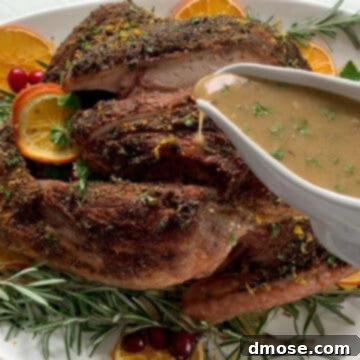
- Turkey Breast: Cooking a boneless turkey breast is an excellent option for smaller gatherings or to ensure ample white meat for leftovers. You’ll love the incredibly flavorful Turkey Gravy made from the rich pan drippings.
Turkey Gravy Recipe
Make a perfect turkey gravy in just 10 minutes with this step-by-step guide and four simple ingredients. The rich pan drippings from your Thanksgiving turkey add an incredible depth of flavor. Learn my Chef’s secret for velvety smooth results and no lumpy gravy!
GET THE RECIPE
This is the best Thanksgiving turkey recipe to serve a small number of people or to have for leftovers the next day! Dotted with Herb Butter, this compound butter mixture keeps the meat tender and moist, adding amazing flavor from the fresh herbs into the best turkey recipe and the accompanying gravy.
Wondering what to do with Thanksgiving leftovers? Make Thanksgiving Empanadas (Hand Pies) or bake a Leftover Casserole that is just like a Shepherd’s Pie and stands as the best recipe for transforming your holiday remnants.
- Spatchcock Turkey
- Turkey Breast Recipe
- Empanadas ~ Turkey Leftover Recipe
- Leftover Turkey Shepherd’s Pie
CRAVING MORE?
Did you love this recipe? We would love to hear from you! If you make this recipe and love it, give it a 5-star rating ⭐⭐⭐⭐⭐ with a comment. THANK YOU!! Follow Delicious Table with my free newsletter and share this recipe with your friends on Facebook, Pinterest, and Instagram.
Print Recipe
Pin Recipe
Turkey Dry Brine Recipe
Prep Time: 30 minutes
Cook Time: 2 hours 30 minutes
Total Time: 3 hours
Servings: 8
Calories: 928 kcal
Author: Lisa Hatfield
Equipment
- Spice Storage Jar
- Digital Meat Thermometer
- Wireless Bluetooth Oven/BBQ/Smoke Meat Thermometer (4 Probe)
- Turkey Baster
- Roasting Pan
Ingredients
- 2 whole zest of lemons
- 1 tablespoon granulated garlic
- 1 tablespoon granulated onion powder
- 1 tablespoon brown sugar
- 1 teaspoon sea salt
- 1 teaspoon black pepper
- 1 teaspoon dried parsley
- 1 teaspoon dried thyme
- 1 teaspoon crushed dried rosemary
- 1 teaspoon paprika (not smoked or hot)
- 1 teaspoon poultry seasoning
- 12 pound turkey
- 2 – 32 ounces chicken stock (8 cups homemade or storebought)
Instructions
- Make the dry rub: put all the spices and seasonings in a small bowl, and whisk to combine well. You can keep it in a large clamp spice jar or an airtight container if you make it ahead of time.
- Pat the entire whole bird dry with paper towels; this helps the skin turn brown. Season all sides and surface area of the skin with the seasoning. Tuck the wing tips under so they don’t overcook.
- Place turkey on the wire roasting rack on a large roasting pan, and pour 32 ounces (4 cups) chicken stock into the bottom of the pan. This helps keep the meat moist and creates pan juices for gravy. Put lemons cut in half in the cavity squeezing the lemon juice inside. You can also add fresh herbs. Place sprigs of rosemary, parsley and sage leaves inside add lots of flavor. Garlic cloves are always good too!
- Preheat oven temperature to 400 degrees. Roast for 1 hour, check the turkey. If browning too fast, tent with a piece of aluminum foil. Turn oven down to 375 degrees, and roast for another 90 minutes. Pour another 32 ounces of chicken stock (4 cups) if your liquid is low in the roasting pan. Tent with foil if the skin is browning too fast. I recommend this at the 60 minute cooking time mark.
- Use a good quality meat thermometer or instant-read thermometer. There are also wireless probe thermometers available which are great. You want the breast meat to be 165 degrees f temperature in the thickest part. Be careful to not have the thermometer tip touching the breast bone or that throws off the accuracy of the reading. Also, check the thickest part of the turkey thighs; it needs to reach 175 degrees. Once it reaches a safe temperature, let it rest for 10-15 minutes on a large cutting board. This makes the meat juicy! Don’t cover it so the skin stays crisp. Carve with a sharp knife, and serve warm with side dishes or use in other recipes.
Notes
Seasoning Flavor Variations & Ideas
How To Make A Wet Rub: You can take this dry rub, and turn it into a wet rub by adding a tablespoon of olive oil or avocado oil until it turns into a paste-like consistency.
You can also try my Cajun Seasoning to create one of the best cajun turkey rubs; it has a bit of cayenne pepper so it is spicy if you like it hot!
Adding Flavor: Put lemons cut in half in the cavity, squeezing the lemon juice inside for more flavor. You can also add fresh herbs! Place fresh rosemary sprigs, parsley and sage leaves inside adds great flavor. Garlic cloves are always good too.
What Salt To Use: Kosher sea salt in your rub and not table salt! Table salt is much more dense and saltier due to the size of the salt granules.